Maori Hino’s recovery from amnesia
Even If This Love Disappears From the World TonightMaori Hino’s recovery from amnesia is a gradual change in how she can carry experience from one day into the next, not an instant return of every lost memory. After roughly three years of nightly resets, she wakes remembering the previous day; repeated confirmations at home and in hospital turn that fragile surprise into evidence of recovery. The process also reveals that memory is not a single faculty: written records preserve her account of herself, practiced skills persist in her hands, and sounds or smells can bring her nearer to a past she cannot yet consciously retrieve.
The condition and the first break in the cycle
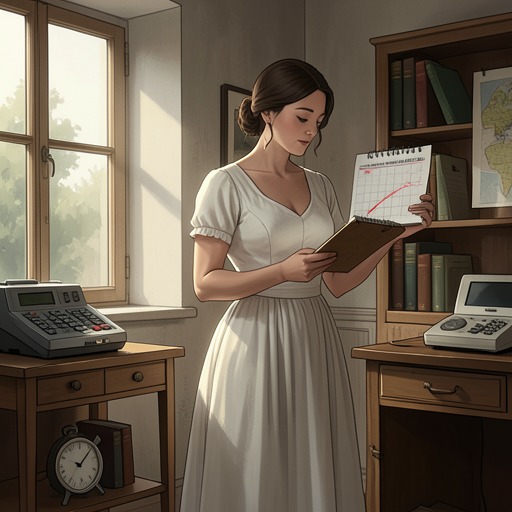
Maori’s amnesia began after an accident during her second year of high school. As she had explained to Tooru Kamiya, the brain trauma affected the part responsible for storing memories: she could retain the day’s experiences while awake, but sleep and the brain’s processing of those experiences erased them. Each morning she returned to the self she had been before the accident. She used a binder and journal to piece together information about her daily life, while photographs and phone notes also helped make otherwise inaccessible days legible.
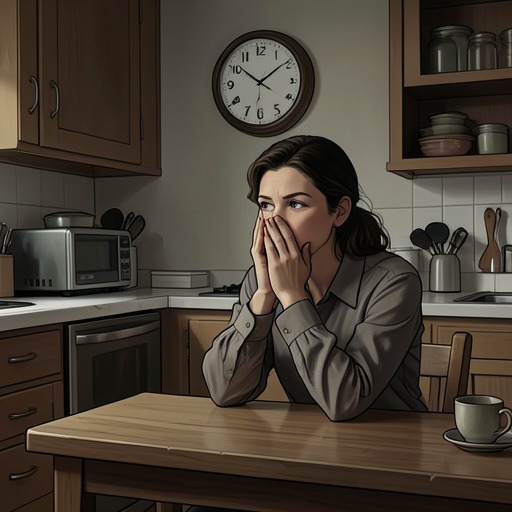
The first clear sign that this pattern had changed came after a night she had feared going to sleep. The previous day, according to her journal, she had spent much of her time drawing and felt newly happy at being able to make the lines and forms she wanted. She still lay down frightened that the next day would erase the experience. On waking, she noticed only that something felt unusual; the decisive realization arrived as she stared at notes on her wall and understood that she remembered what had happened the day before. What most people experience as ordinary continuity—the fact that one day connects to the next—was, for Maori, astonishing evidence that the old cycle might have loosened.
Confirmation and the family’s response
Maori asked her mother whether she could normally remember things briefly after waking, then told her that the previous day was clear in her mind. Her parents first wondered whether she had slept poorly and suggested she return to bed. Instead, they arranged a hospital visit. Her father changed his work plans, and her parents arrived half an hour before the appointment. The doctor confirmed the remembered events with them, performed an examination, and advised the family to monitor the change and return the next day; the exam itself could not establish much.
The uncertainty made the family’s hope more palpable, not less. On the drive home, Maori’s parents were happy, though her father’s cheerful reassurance coexisted with visible strain. When Maori returned to the hospital with her mother, she could remember the previous day and the day before that. The same held on the following days. The doctor still avoided a definite judgment, but said Maori seemed to be recovering. Her mother silently cried, and her father laughed with relief on the phone, though Maori could hear him crying by the end of the call. The evidence of recovery accumulated through repetition: one remembered day became several connected days.
Records, relationships, and the risk of a rewritten past
Recovery unfolded against a record of the years when Maori could not retain new memories. Before she understood the significance of her own past, a section in her binder told her that she had a boyfriend and directed her to entries beginning on May 27. The information offered hope, but also raised an immediate question: what could a relationship mean under the circumstances of her memory loss? When she later reviewed the binder and her phone, a folder labeled “My Boyfriend” contained photos and videos of Tooru Kamiya. Watching a video of them riding together, she recognized the happiness of the person on screen without feeling that person’s experience as her own. She felt a longing for her previous-day self, while also allowing that she might find joy with Tooru in the present.
Records preserved evidence, but they did not make it identical to living memory. After Tooru’s death, Izumi Wataya and Tooru’s sister worked to remove him from Maori’s journal, binder, and digital life, including by preparing replacement entries and transferring edited records to her laptop. In the process, Izumi found a note hidden on the back of one of Maori’s reminders: “Even if I recover, always remember Tooru Kamiya. The important things will always be in an important place.” The note suggested that Maori had anticipated the possibility of recovery and had left a message for a future self who could not yet remember why Tooru mattered. Her recovery thus involves not only retaining new days, but confronting how other people have preserved, altered, or withheld parts of her history.
Skills and sensory approaches to memory
Tooru’s research into memory offers a way to understand why Maori’s abilities could develop even during the daily resets. He distinguishes short-term memory from long-term memory, and explains that anterograde amnesia prevents the formation of new long-term memories without necessarily erasing older ones. Long-term memory, in turn, includes declarative memory—the conscious, recordable recollection of facts and events—and procedural memory, the embodied knowledge involved in activities such as riding a bicycle. That distinction helps account for how Maori can lose a day’s conscious recollection while retaining skills practiced across days.
Drawing becomes a particularly clear instance of this continuity. Maori reads the binder’s section on art and tries croquis sketches, using an actor in a film as a model. Instead of reasoning through each mark, she focuses on the sensations of drawing and lets her hand work. Her lines are more confident than in her earlier attempts, and she recognizes that the accumulated skill belongs to the efforts of her previous selves. The improvement gives her evidence that she can continue to grow even when the conscious memory of each day does not remain. In this account, recovery is not the only route by which experience leaves a trace: practiced ability can carry development forward before autobiographical memory can do so.
Later, when Izumi offers to share photos and videos of Tooru, Maori worries that the images might replace rather than restore her own sense of him. They agree instead to try an audio file extracted from a video. Maori hears the recording, including her own happy reactions and the sound of the wind, and gradually remembers that it was made on the day she insisted they ride a bicycle together. The sound does not deliver a complete account of the past all at once; it gives her a way into a specific remembered occasion. A smell provides a more tentative clue. While drinking tea, Maori hears that smell is connected to the hippocampus and can evoke memories. She considers the possibility of being close to remembering Tooru only to have the memory slip away, showing that a cue may approach the past without guaranteeing its recovery.
Recovery as an ongoing relation to the past
About three months before describing the experience, in April, Maori’s amnesia had lifted after lasting for around three years. She tells her prep-school friends about neither that history nor her recovery. Reading her high-school journal, she has no recollection of the events recorded there, yet recognizes the person in its pages as herself and finds the entries comforting. She is surprised that she graduated despite the condition, and that accomplishment gives her hope even as anxiety remains. The capacity to remember the preceding day changes her daily continuity; it does not instantly return every earlier episode to conscious awareness.
The remaining gap is especially visible in Maori’s drawings of Tooru. She discovers sketches she had not seen before, portraying him with an expression unlike the shy or faintly smiling figures in the older sketchbooks. The drawings show Tooru as Maori remembers him, and their repeated, carefully rendered presence makes him feel like a person who truly existed rather than a name confined to edited records. They mark a meaningful recovery of memory, but not a simple reversal of forgetting: the path back runs through her own artistic work, other people’s testimony, records, and sensory clues. The account therefore distinguishes remembering yesterday from recovering a whole past, while allowing daily practice and preserved traces to help bridge the two.