Maori chooses to recover her memories of Tooru
Even If This Love Disappears From the World TonightMaori chooses to recover her memories of Tooru not because she expects the search to be painless or complete, but because she believes the important parts of her life should remain within her. Her decision sets remembrance beside the work of continuing to live: she keeps up with her studies while returning, patiently and deliberately, to a past she cannot yet recall.
The choice to remember
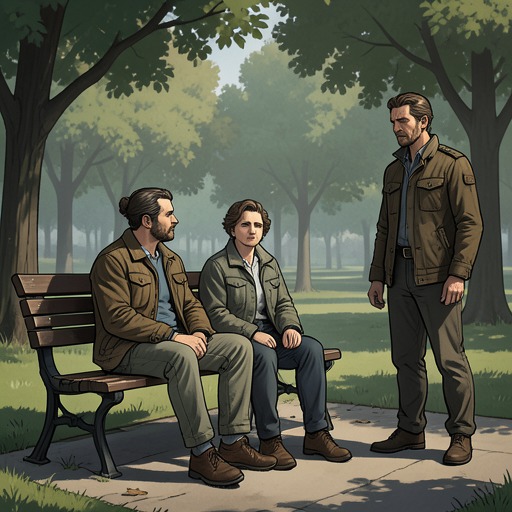
After learning that Tooru had been her boyfriend, Maori faces a past that exists in records but is not available to her as lived recollection. The possibility of remembering carries a risk: Tooru’s sister warns that the search may hurt and asks Maori to promise she will not become captive to the past or neglect her own life. Maori agrees, but does not treat that caution as a reason to abandon the search. She wants to remember for herself, insisting that what matters should still be inside her rather than existing only in other people’s accounts.
That distinction gives her choice its force. Memory is not presented as a prize she can demand from the past, nor as a duty owed to those who remember Tooru. It is a personal undertaking whose possible pain she accepts, while reserving the right to decide what is important to her. Tooru’s sister counsels her to love a future partner wholeheartedly and put Tooru behind her; Maori promises to live forward, but also maintains her wish to recover what she has lost. The two commitments are not made to cancel each other out.
A past held in records
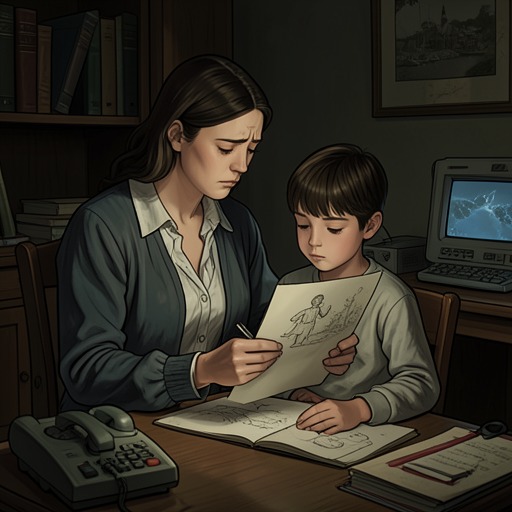
During her amnesia, Maori depends on written records to reconstruct her daily life. She reads the binder and journal each morning, and the binder gathers important information in an organized form so it will not be lost with the changing contents of her phone. The arrangement makes a distinction between information that can be reread and experience that Maori can remember herself. Discovering that she has a boyfriend, for example, gives her a fact to investigate, not an immediate memory of being with him.
The records also show how other people try to care for her without making her illness the whole of her life. Her mother adjusts her schedule to Maori’s early-morning reading and gives her space to absorb what she learns. Izumi tells Maori that she helps because it is what she wants to do, rather than treating her memory loss as an imposition. When Tooru is still part of Maori’s life, his wish to fill her journal with happy experiences is directed toward the person who will wake the next day: he hopes each future Maori will find ordinary life more inviting and feel less afraid of what lies ahead.
Those acts of support do not remove Maori’s agency. They give her means to study her own past and to decide what she wants to do with it. The records can preserve facts, photographs, and descriptions, but their existence does not settle what the past means to her. Her later decision to remember is therefore not simply the recovery of an archive; it is an effort to make a relationship with that archive on her own terms.
Living alongside the search
Maori’s recovery from amnesia restores her ability to retain new memories, but it does not return the lost past all at once. She reads the notes and journal on her laptop each morning to understand her circumstances, and, after graduating from high school, attends art classes several times a week with the support of her parents and Izumi. Although she had given up drawing before the accident, she finds that procedural memory—knowledge rooted in physical sensation—has remained available to her. By practicing, she improves as an artist and spends much of her time drawing.
This continuing development matters to the shape of her decision. The day before she recovers from amnesia, Maori is absorbed in drawing: her lines are becoming the ones she wants, and she can instinctively capture the forms of people and objects. The resulting happiness is new, even though it grows from a capacity that memory loss did not erase. Her life is not placed on hold until she can recall Tooru. Skill, work, and present experience continue to accumulate while the past remains uncertain.
After promising Tooru’s sister that she will not neglect her current life, Maori keeps her studies going and begins trying to remember him. She passes university entrance examinations and enters a university in the prefecture two years later than her former classmates. The delay does not mean that the search has displaced her future: she has made room for both. Her thought that the present is the future Tooru created links her continued education to the care he once showed her, without reducing her achievements to a memorial to him.
The long work of recall
Three years after telling Izumi that she wants to remember, Maori is in her fourth year of university and still searching. She uses her journal and Izumi’s stories as guides, visits places she and Tooru went together, and repeats things they did in the hope that familiar settings and actions will make the past accessible. The search is slow. The text contrasts it with the ease of recalling a taste such as Lady Grey tea: retracing a relationship does not produce memory on demand.
Maori nevertheless keeps looking inward and does not give up. Little by little, she remembers Tooru. Her progress is neither a sudden cure nor a simple consequence of reading what others preserved; it comes through persistence, repeated encounters with the traces of a shared life, and her own developing recollection. The distinction between records and memory remains important: journals and stories can point her toward the past, but they cannot perform the remembering in her place.
At the cherry-blossom park, Izumi sees drawings of Tooru that she has never encountered in Maori’s earlier sketchbooks. In those older sketches he appears looking aside, shyly frowning or faintly smiling; the new drawings show him as Maori remembers him. Their careful, varied depictions make visible a change that neither documents nor another person’s testimony could certify in the same way: Tooru has become present in Maori’s own recovered memory. The choice she made to remember has not erased grief or guaranteed a painless past. It has allowed her to pursue a life in which remembrance belongs to her, alongside the future she continues to build.