Maori graduates from high school despite her amnesia
Even If This Love Disappears From the World TonightMaori graduates from high school despite her amnesia after continuing to attend through years in which sleep erases her memories of the preceding day. The achievement is more than an academic milestone: it demonstrates how institutional accommodation, other people’s sustained care, written records, and her own developing artistic practice make a future possible without restoring the memories she loses each morning.
Conditions and Stakes
Maori’s amnesia began after an accident in her second year of high school. Each night, as her brain processed the day, it erased rather than stored those memories; she could not recall the previous day when she woke. The condition had no known cure, and the account describes recovery as dependent on the body’s natural healing, not an available treatment.
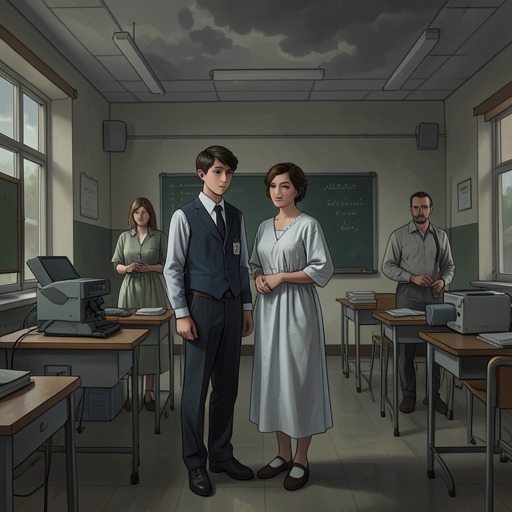
The school’s response made graduation possible while also revealing the limits of what attendance meant. When Maori and her parents consulted the school, administrators explained that under a national law for disabled people, she could graduate if she attended school and met the required number of days. Her teachers, including her homeroom teacher, knew about her condition and did not call on her in class. She handed in blank homework and sat for tests even though getting the answers wrong had no bearing on whether she could fulfill the attendance requirement.
The arrangement protected her access to school, but it did not make the ordinary work of education possible in the usual way. Maori had worked hard to enter the advanced class; after her memory loss, that achievement seemed meaningless to her. She had not yet considered what she would do after graduation. The immediate task was narrower and more difficult: to keep showing up despite discovering, morning after morning, that her memory had reset.
Records and Daily Support
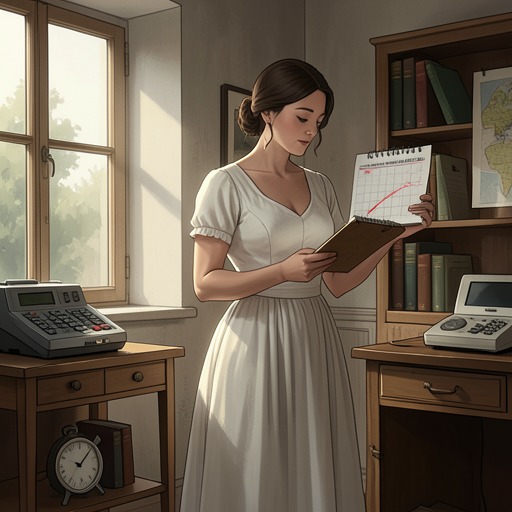
Because her days did not accumulate in memory, Maori depended on records to understand her own life. She read her notes and journal every morning, and her mother adjusted her schedule to match Maori’s routine, leaving her space while remaining available downstairs. The journal ran from the day after the accident onward and included weekly summaries; Maori tried to maintain her previous routine so that others would not notice how different her life had become.
Izumi was among the few people who knew about the amnesia and remained close to Maori. When Maori apologized for involving her, Izumi answered that she did only what she could and wanted to do. The support was practical as well as emotional: Maori’s parents and Izumi helped sustain the daily structure that enabled her to remain at school and later attend art classes.
Tooru’s encouragement gave the journal a future-facing purpose. Seeing how much Maori wanted to do, he wanted to fill its pages with happy experiences, so that the version of her who woke the next morning might find ordinary life a little less daunting. The effort did not give her continuous recollection, but it offered her future selves a record to read and reasons to look forward.
Skills That Outlasted the Reset
Maori’s memory loss did not erase every kind of learning. She had stopped drawing when she entered high school in order to concentrate on studying, but during summer vacation she began to draw again. Her boyfriend was connected with that return to art: after learning about procedural memory, the people recording her life reasoned that physical skills might persist even when memories of events did not, and that practice could allow her to improve.
That possibility proved real. Maori’s sketchpad showed gradual progress across the drawings she made, and her callus had not disappeared. She practiced regularly, including croquis sketches, and later spent much of her time drawing. After graduating, she attended art class a few times a week. Drawing therefore provided more than an activity to fill time: it was a form of learning through which effort could carry forward, even when autobiographical memory could not.
Graduation and Its Meaning
As the years passed, the demands of school changed around her. The account moves from the study-heavy third year through summer exam preparation, winter entrance tests, and the approach of spring. When graduation day arrived, Maori said, “I can’t believe it.” What astonished her was not simply how much time had passed, but that she had managed to stay in school long enough to graduate despite her condition.
Izumi watched Maori move about with her diploma and believed she would be all right. The reassurance rested on specific supports rather than a promise that the amnesia had ended: Maori had completed school, had a journal connecting her past selves to her present one, could continue improving through drawing, and had Tooru, even though they would no longer see each other every day. Graduation closes the school chapter without resolving the condition or deciding Maori’s next course; it confirms that a life can advance through repeated resets when records, relationships, institutional access, and retained skills give each new day a point of connection.