Maori recovers from anterograde amnesia
Even If This Love Disappears From the World TonightMaori recovers from anterograde amnesia after about three years in which sleep erased the previous day’s experiences. The decisive change is first recognized not through a dramatic revelation but through an ordinary morning: she remembers yesterday. Her recovery is then tested and confirmed over several days, turning the continuity most people take for granted into a source of astonishment and hope. It arrives after she has already built ways to study, create, and remain connected to life despite the daily reset.
The condition and the life built around it
At the start of her second year of high school, an accident caused brain trauma that left Maori unable to form new long-term memories. She could retain the day’s experiences while awake, but after sleeping she returned to the person she had been before the accident. Her condition therefore divided time into daily stretches: each day could be lived, yet ordinarily could not be carried into the next as a remembered personal experience.
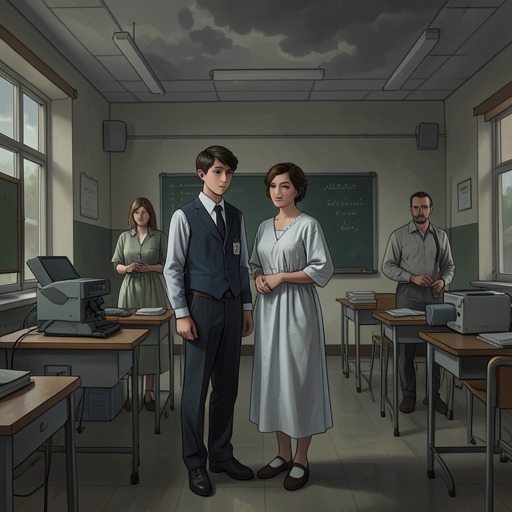
Her family and school treated this as both a medical and a social condition. School administrators warned that disclosure could expose Maori to unwanted attention and that, because she might forget what happened, she could be particularly vulnerable if others mistreated her. Her parents and teachers knew about the amnesia, as did Izumi Wataya, but her classmates did not. The doctor’s advice, as recorded in Maori’s binder, was to avoid stress, enjoy life, and stay calm. The school also explained that attendance for the required number of days would allow her to graduate, even though her assignments were blank and her test performance did not determine that outcome.
Maori’s binder and journal helped her make a life under those conditions, but served different purposes. The binder gathered essential facts and instructions; the journal kept dated entries and weekly summaries, beginning the day after the accident. She also relied on a routine resembling her pre-accident life so that other students would not notice how much had changed. These records could tell her what she had done and who mattered to her, but reading them was not the same as remembering those events firsthand.
Skills and experience across the daily reset
The novel distinguishes explicit recollection from procedural memory, a distinction that gives Maori a form of continuity before her autobiographical memories return. In researching her condition, Tooru Kamiya learns that anterograde amnesia can prevent the creation of new long-term memories without destroying every earlier memory or every capacity for learning. Procedural memory includes embodied skills that cannot simply be written down, such as riding a bicycle. The distinction helps explain how repeated practice might endure even when the day’s events do not.
Drawing becomes the clearest example of that persistence. Maori had stopped making art when she entered high school to concentrate on studying, but during summer vacation she begins drawing daily. Her boyfriend has a part in encouraging the return to art, and her successive selves reason that practice may still improve a skill held through procedural memory. The evidence appears in the drawings themselves: while sketching from a paused scene in a foreign film, she lets her hand work through sensation rather than conscious recollection. Compared with her first efforts, her lines are more confident. She recognizes in them the accumulated work of previous days and the possibility that she can continue to develop, even without remembering the process that produced each improvement.
This continuity is not the same as remembering a shared past. A video of Maori riding with Tooru lets her see herself laughing and enjoying the trip, but the person in the recording feels like yesterday’s self, not someone she can fully claim through memory. The gap produces a quiet longing for that earlier version of herself. Yet the recording also prompts her to anticipate that she may find joy in the present day, too. Her life is not reduced to what the condition withholds: it includes new activities, relationships, and skills that can matter even before they become lasting memories.
The first remembered day
After graduating from high school, Maori continues to live with the fear that sleep will erase what she has experienced. On the evening recorded in her journal as the day before recovery, she spends much of the day drawing and finds happiness in being able to render the lines and forms she intends. She is frightened to go to sleep, but also knows that staying awake would leave the next day’s self exhausted. She lies down and loses consciousness as usual.
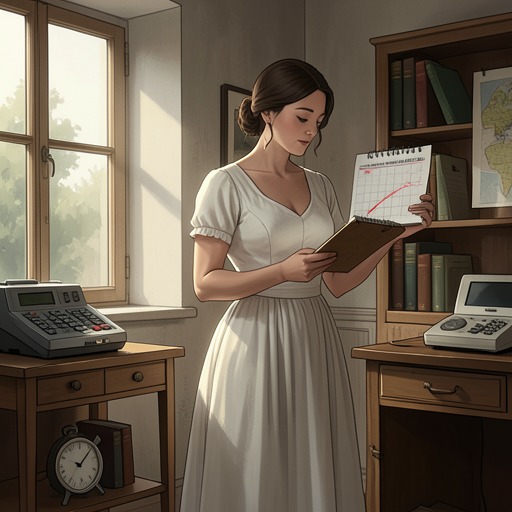
The following morning, she notices an indistinct sense that something is different, but initially dismisses it as an ordinary feeling on waking. Her mother comes into the room and finds her looking at notes on the wall. Maori asks whether she normally remembers things for a short time after waking; she can recall the previous day clearly. The notes include reminders to put her heart and soul into each day and to be grateful for her family. Their presence is familiar, but the remembered day behind them is new: for once, one day has connected to the next.
Her parents first wonder whether poor sleep explains the change. The family nevertheless goes to the hospital. Maori’s father postpones work, and her parents are so excited that they arrive half an hour before the appointment and wait in the car. The doctor checks Maori’s account of the previous day with her parents and conducts an examination, while cautioning that the examination itself will not reveal much. She asks the family to monitor what happens and return the next day. At home, Maori’s father tells her that everything will be fine, though his grip on the steering wheel betrays the strain beneath his reassurance.
Confirmation and consequence
The change persists. The next day, Maori remembers both the previous day and the day before that; the continuity continues on subsequent days. The doctor remains cautious, but tells the family that Maori seems to be recovering from her amnesia. Her mother turns away crying silently, and her father later laughs with relief when Maori calls to tell him the news, though she can hear him crying by the end of the conversation. Izumi, then a university student in their prefecture, comes to Maori’s home after hearing the news.
The recovery follows, rather than replaces, the years in which Maori has had to construct continuity by other means. She completes high school with her friends despite her memory loss, and at graduation she is astonished that she managed to stay in school long enough to finish. By then she has made substantial progress in drawing and plans to take art classes while waiting for her amnesia to be cured. The achievement is significant in its own right: education and artistic growth have not been merely deferred until recovery arrives.
About three months after the recovery begins, Maori describes the previous three years to friends at prep school as a secret: each night, her brain erased the day instead of storing it, and there is no cure apart from the body’s natural healing. She can now remember what happened the day before. That new ability brings hope, but not immediate certainty; the anxiety remains. Recovery therefore marks a change in the conditions of her life, not an instant undoing of its accumulated effects.
The story also keeps different kinds of memory distinct after the reset begins to lift. Maori can read entries about her earlier life without recalling the events as her own remembered experience. Later, the sound of a recording—wind, movement, and her own happy cries—helps her recognize the day she insisted on riding a bicycle with Tooru. A conversation with Izumi about an aquarium visit and the smell of tea likewise approaches memory through a sensory association, but the recollection remains uncertain. Such moments show that continuity can return unevenly: records can establish facts, practice can preserve skill, and a sound or smell can offer a path toward recollection, without making all of the past immediately accessible.
Maori’s recovery is thus both a medical turn and a narrative change in how time can be carried. During the illness, days recur without becoming a remembered sequence, while written records and practiced skills preserve partial continuities. When Maori finally remembers yesterday, the ordinary link between days becomes newly remarkable. The recovery gives her access to a future in which experience may accumulate, but the story honors the life she has already made through adaptation, effort, relationships, and art.