Maori takes up drawing again
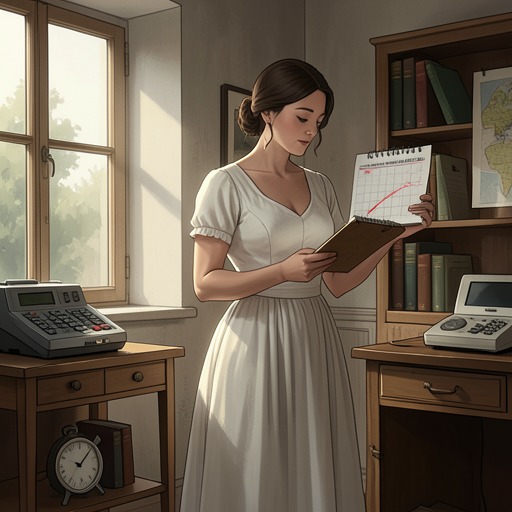
Even If This Love Disappears From the World TonightMaori Hino’s return to drawing turns an old skill into a way of living through the gaps left by her anterograde amnesia. After Tooru Kamiya helps her understand that practiced abilities may endure even when the day’s conscious memories do not, she begins drawing again during summer vacation. Each new page records work she cannot remember doing, yet the improving lines make visible a continuity that her daily memory cannot provide.
Background and the possibility of procedural memory
Maori had stopped making art when she entered High school, choosing to concentrate on her studies. After the accident that caused her anterograde amnesia, she could not form new long-term declarative memories: the events of each day remained available while she was awake but were lost after sleep. Her binder and journal helped her reconstruct each morning who she was and what had happened, but they could not restore the experience of having lived through the preceding day.
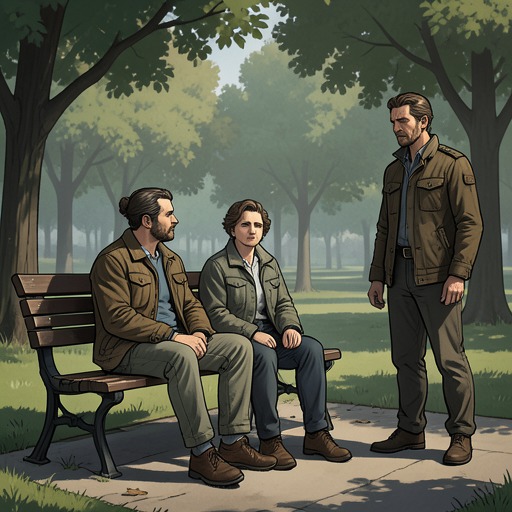
Tooru looks for a different kind of continuity. He researches the distinction between declarative and procedural memory, explaining that procedural memory concerns learned abilities that are difficult to put into words, such as riding a bike. He cautiously proposes that drawing may work in a similar way: even if Maori cannot recall practicing, her body may retain what her hand has learned. The idea gives her an opening beyond the written account of her life—not a promise that she will remember, but the possibility that practice can still accumulate.
Taking up the practice again
When Maori shows Tooru a portrait, she explains that she had quit drawing on entering High school but had suddenly felt like drawing him. Tooru responds with enthusiasm and suggests that drawing, like riding a bike, may remain once learned. Maori modestly doubts her ability, but her expression crumples into a smile that betrays how pleased she is. Their exchange makes her return to art both a personal rediscovery and a possibility Tooru actively encourages.
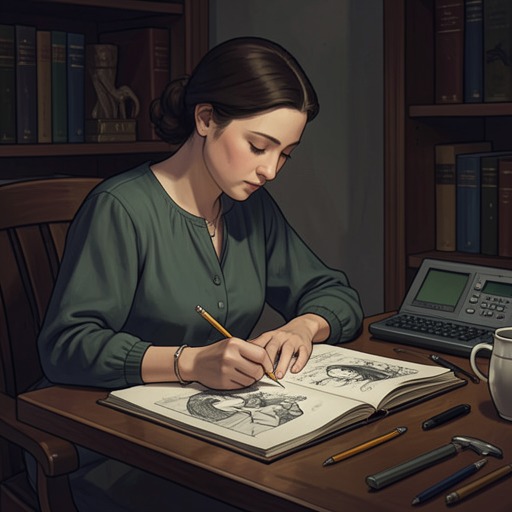
By summer vacation, the sketchbook contains a few dozen pages. Maori has apparently been drawing every day, and the callus on her hand has not entirely disappeared. The evidence is small but physical: alongside the new pages, her hand still bears a trace of earlier practice. Her progress is gradual, which she compares to a turtle’s pace, but she recognizes that she is getting better. The sketchbook therefore holds both the uncertain beginnings of the renewed habit and a visible record of its persistence.
Drawing across the daily reset
Maori tests the idea for herself by reading the binder section on art and trying croquis sketches, a technique her recent selves have been practicing. She plays a foreign film on her laptop, pauses at a scene she likes, and uses an actor as her model. Rather than consciously working through remembered instruction, she lets her hand move and attends to the sensations of sketching. The drawing comes together with the ease she associates with the period in junior high when she drew every day; compared with her first recent attempts, the lines are more confident.
She understands that the skillful lines belong to practice she does not remember. In that sense, the drawings do not function like diary entries: they do not tell her what happened on a particular day or restore a conscious recollection of making them. They demonstrate instead that repeated action can leave a form of learning behind. The previous day’s Maori is absent from her recollection, but not wholly absent from the work her hand can do.
Relationships and significance
Tooru is central to the return. Maori’s binder identifies him as her boyfriend, and her phone contains a folder of photographs and videos of him. Watching a video of them riding together, she feels a complicated longing for the happy person on screen, recognizing that the person she sees is not quite the self she experiences today. Yet she also believes she may find new happiness with him in the present. The relationship thus connects her to both the day she cannot remember and the day she is about to live.
Her renewed drawing gives that connection a different form. Tooru’s encouragement helps her see art as a skill that might outlast her conscious recollection, but the resulting achievement belongs to Maori: she practices, notices the change, and finds the work enjoyable. Her happiness comes not from recovering yesterday’s experience but from discovering that today’s effort can build on it. She is pleased that she can continue, achieve something over time, and develop.
The episode distinguishes memory from learning without treating either as a complete measure of the self. Maori cannot retain the ordinary autobiographical record of a day, yet procedural knowledge and its gradual effects remain available. Drawing makes that survival legible in the confident lines of a sketch, turning a private bodily skill into visible evidence that her days can contribute to something even when their experiences disappear from conscious memory.