Maori’s journal
Even If This Love Disappears From the World TonightMaori’s journal is more than a diary: for Maori, who loses her memory in an accident and cannot retain new experiences from day to day, it becomes a daily guide to her own life. Its entries let her encounter feelings and relationships that seem to belong to a stranger, while the journal’s later transfer to a laptop and editing by people close to her reveal how a record can both preserve memory and mediate access to it.
Identity and Form
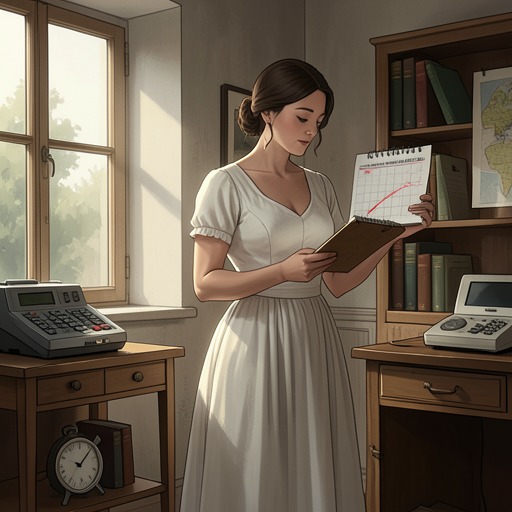
The journal exists alongside Maori’s binder, which organizes information more formally. When she first turns to the journal after learning that an accident caused her memory loss, she finds a freer, less formal voice than the binder’s. She has little time and starts by glancing over summaries, but the difference in tone matters: the binder helps explain her circumstances, while the journal preserves a more immediate account of living through them.
The entries offer ordinary headings and subjects—“After school,” “Date,” “My boyfriend,” “Izumi,” and “Black tea”—alongside reflections on her condition and its emotional cost. Their mixture of mundane routine and painful reflection makes the journal a record of a life rather than a bare medical chronology. It includes the effort Maori made to maintain her previous routine so that other people would not notice how different she had become.
Reading a Life She Cannot Recall
The journal’s use is shaped by the daily reset of Maori’s memory. She reads it to learn what has happened and to orient herself in the present, yet the entries remain reports of experiences she cannot retrieve as memories. Reading them, she struggles to believe they describe her own life. The written record supplies continuity, but it does not make the remembered feeling of having lived those moments available on demand.
The gap between record and recollection is especially sharp when Maori reads about her boyfriend. She is directed to the binder’s section labeled “My Boyfriend” and to diary entries beginning on May 27, then checks the corresponding page and opens a newly created “My Boyfriend” folder on her phone. The folder contains photos and videos of Tooru Kamiya. Together, the writing and media establish a relationship she cannot simply recover by remembering it; she has to learn its existence from the records she left herself.
A dated entry from June 9 describes a bicycle ride with Tooru on a country road far from school, where teachers and police would not see them. He pedaled hard; the wind was strong; in the entry, the ride lifts her from that morning’s hopelessness into delight at being in love. When Maori later rereads recent entries after breakfast, she blushes at their girlish enthusiasm and cannot believe how giddy she had been. The journal thus preserves not just what happened but a change in feeling within a single day: despair gives way to happiness, even though the next morning may not carry that change forward as recollection.
Care, Routine, and Shared Memory
Maori’s morning reading becomes part of a supported daily routine. She gets up early to read her binder and journal, and her mother adjusts her own schedule to match, while leaving Maori space to read alone and offering to be downstairs if questions arise. The books are therefore private records used within a family practice of care. Their presence makes each morning an encounter with difficult information, not a simple reassurance: even a favorite cinnamon latte fails to calm Maori when she learns about her accident and sees the records of her life.
The journal also gives other people a way to understand the discontinuity Maori faces. Tooru sees that, when she falls asleep, the day’s experiences disappear from her accessible memory and cannot build up from one day to the next. He wants to fill the journal with happy memories so that the Maori of tomorrow can look forward to ordinary life. That intention turns the journal into a place where a boyfriend can contribute to the future emotional conditions of someone he loves, even though she will have to read his contribution anew.
Over time, the physical notebooks cease to be the only medium. After Tooru’s death, Izumi Wataya learns that Maori has written about his death and read those entries; the news leaves her looking haggard. Izumi and Tooru’s sister agree that the handwritten journal and binder will need to be transferred to Maori’s laptop, removing references to him and repairing the gaps in the text. The plan is not merely to hide a name from one page: it is to create a usable digital version of Maori’s ongoing self-record while withholding the relationship that would expose her to grief she cannot carry forward in memory.
Digitization, Editing, and Consequences
Izumi gathers the binder and the many volumes of the journal, then transfers digital notes and entries supplied by Tooru’s sister onto Maori’s computer. The sister has also written entries covering the days since Tooru’s death and used a program to falsify the timestamps on folders and documents. From then on, Maori reads the digital records each day and adds new entries there. Her mother tells her that she has always done it this way, helping the altered archive fit into the routine Maori depends upon.
The change preserves the practical function of the journal: Maori can still learn about herself each morning and write new entries. But it changes who has shaped the record and what it contains. The deletion is an act of care undertaken by people who believe they are doing what is best for her, yet it also restricts her access to a consequential part of her own past. When Maori’s mother says that Izumi, Tooru, and his sister all struggled and acted as they thought best, the record’s history comes into view as a conflict between protection and truthful self-knowledge, not as a simple choice between caring and uncaring people.
Memory, Authorship, and Continuity
Even after reading entries repeatedly, Maori can have no recollection of what she wrote. Still, the writing makes her feel good, and she recognizes the person recorded there as herself. This recognition is not the same as recovering an event: the journal offers evidence of a life and a way to affirm its author, even where personal memory remains absent. Its continuing usefulness rests on that distinction between knowing that an experience belongs to her and remembering the experience from within.
The journal’s movement from handwritten volumes to a laptop also shifts it from a personal object into an archive maintained by a small circle of family and friends. Maori writes it, her mother supports the routine that makes it readable, Tooru adds meaning to its future pages, and Izumi and Tooru’s sister copy and alter its contents after his death. The archive can sustain daily continuity, but its ability to be transferred, timestamped, and edited means that continuity is never neutral: what tomorrow’s Maori learns depends on what others have preserved and what they have removed.
At the same time, Maori’s own resolve resists reducing the record to a managed account of her condition. In the journal she writes, “Even if I recover, always remember Tooru Kamiya. The important things will always be in an important place.” The line treats remembering as a task entrusted to a future self, and gives the journal a purpose beyond explaining the present: it becomes a message across the very break in time that defines her illness. The volumes and their digital successor cannot restore every lost recollection, but they let Maori leave herself a trace of what mattered—and give that trace a place to survive.