Procedural memory
Even If This Love Disappears From the World TonightProcedural memory is the form of long-term memory through which learned skills persist as bodily know-how rather than as consciously recalled information. In the story of Maori Hino’s anterograde amnesia, that distinction becomes more than a technical explanation: although sleep erases the day’s new memories, her practiced ability to draw survives and improves. The skill supplies evidence of continuity where autobiographical recollection fails, and gives Maori a way to make progress that cannot be carried by a diary alone.
Definition and contrast with other memories
Tooru Kamiya researches Maori’s condition after an aquarium outing goes badly. He learns that short-term memory holds information briefly, while long-term memory can be established through repeated recall; anterograde amnesia prevents the creation of new long-term memories without erasing what was already remembered. Within long-term memory, he distinguishes declarative memory from procedural memory. Declarative memory supports conscious recollection and facts that can be written down, such as what happened the previous day. Procedural memory, by contrast, is the largely unspoken knowledge involved in a skill—for example, knowing how to ride a bicycle.
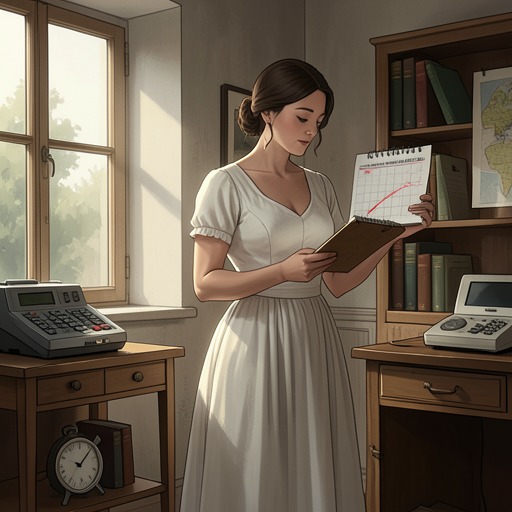
The distinction clarifies the shape of Maori’s daily reset. She can remain herself through the waking day, but after sleep the new memories of that day are gone. Notes, a binder, photographs, and journal entries can tell her what happened, but they do not make the experience an automatically retained personal memory. Tooru’s account of procedural memory offers a different kind of continuity: bodily learning may endure even when conscious recollection does not. His suggestion that drawing might work this way begins as a hypothesis, not a guaranteed cure.
Drawing as retained and developing skill
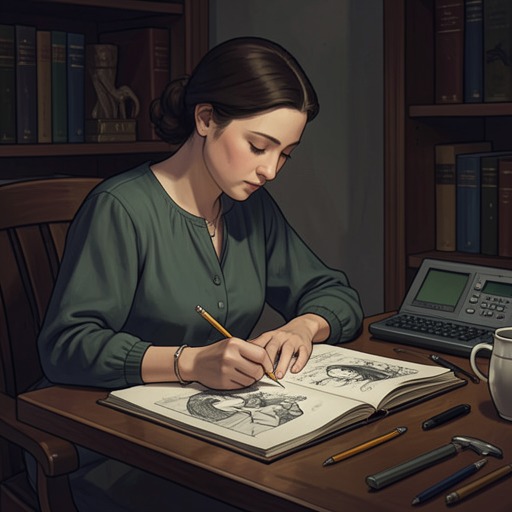
Maori had stopped making art when she entered high school to focus on her studies. During summer vacation, however, she begins drawing again, encouraged by Tooru. Her sketchpad shows that she has been practicing regularly; the callus on her hand has not entirely disappeared, and the improvement across its pages is gradual rather than dramatic. Tooru’s idea helps her understand why returning to the activity could matter: if drawing depends partly on procedural memory, then her body may retain something that her day-to-day recollection cannot.
The possibility is tested through practice. Maori reads the notes about art, then sketches from a scene in a film on her laptop, using an actor as a model. Instead of consciously working through each decision, she lets her hand follow the sensations of drawing. The lines come together with a confidence absent from her first attempts, and the drawings show that she has been building skill over successive days. Her past selves are present not as remembered episodes but in the practiced movements that shape the page. That accumulated ability gives her a concrete reason to believe she can continue learning and developing despite the reset.
The change also matters emotionally. Izumi Wataya observes that Tooru’s encouragement helped Maori restart drawing and that, since then, Maori has become more emotionally stable. This follows a severe breakdown in May, when Maori woke to an explanation of her amnesia and said she could not bear it. Izumi also notes that emotional states can sometimes carry over from one day to the next even when memories reset. Procedural memory and emotional persistence are distinct in the account, but together they complicate any simple equation of forgetting with starting over completely.
What the skill can—and cannot—preserve
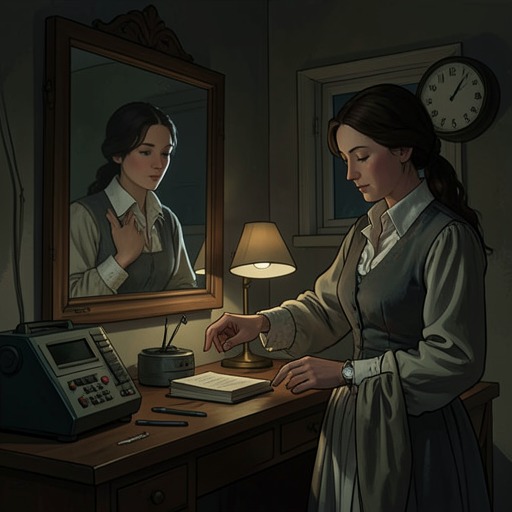
Drawing does not restore Maori’s recollection of the days in which she practiced. She can recognize that the sketchbook contains work by her recent selves without remembering making each picture. When she later reads her journal, she learns that, while living with amnesia, she attended art classes several times a week after graduating from high school and spent much of her time drawing. Her skill persisted across that period; her diary supplies the conscious account of how she used it.
The day before her amnesia ends, Maori spends most of the day drawing. She can make the lines she wants and instinctively capture the forms of the people and objects before her. The achievement brings a fresh happiness and moves her, even as she fears going to sleep and losing the day. The next morning, when she wakes, she senses that something is different. The sequence shows procedural learning reaching a point of fluency, but it does not imply that drawing itself cures her condition: the skill and the recovery are related in the story, not presented as a medical treatment or sufficient cause.
A bodily record and a lasting trace
Procedural memory gives the novel a counterpoint to its written records. Maori’s journals and binder preserve information for her to read each morning; her drawings preserve neither a full explanation nor an exact recollection, but they show what repeated practice has made possible. A drawing can therefore testify to continuity without supplying access to the experience that produced it. The body has learned across days even when the conscious self cannot narrate those days from memory.
The idea also extends beyond the immediate problem of drawing. Tooru’s research identifies practicing music and similar activities as ways of developing implicit memory, another name for procedural memory. Later, Izumi wonders whether love, too, might persist as a sensation from one day to the next. That is posed as a question, not established as a scientific conclusion; the story keeps emotional carryover separate from the skill-based memory Tooru describes.
After Tooru’s death and Maori’s recovery, a hidden sketchbook becomes important for a different reason. Izumi finds drawings of Tooru that she has not seen before and recognizes them as images of him as Maori remembers him. The practiced hand that had continued working through the amnesia has left a record that outlasts the concealed journals and removed digital traces. Procedural memory cannot by itself restore every lost episode or explain every feeling, but drawing makes persistence visible: a skill survives, grows through repetition, and ultimately helps give form to a remembered person.