Tooru asks Izumi to erase him from Maori’s records if he dies
Even If This Love Disappears From the World TonightTooru Kamiya’s request that Izumi Wataya erase him from Maori Hino’s records if he dies is an act of anticipated protection that places the authority to shape Maori’s past in someone else’s hands. He asks Izumi to remove the evidence of their relationship not because it meant little, but because he fears that learning of his death could harm Maori; the request becomes a painful test of whether care means preserving the truth or shielding her from it.
The request and its reasoning
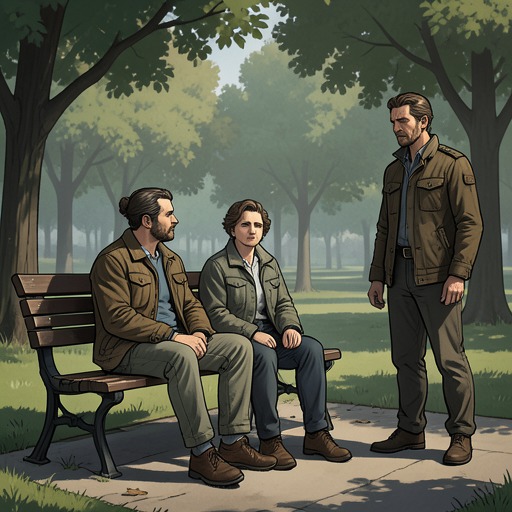
The conversation begins with Tooru turning serious after Izumi jokes that she will do only what she wants to do. He introduces the possibility of sudden death as a remote hypothetical, then asks her directly to erase him from Maori’s journal if he dies. The abruptness changes the exchange from teasing into a burden Izumi cannot dismiss. She is left staring at him and asking what he means.
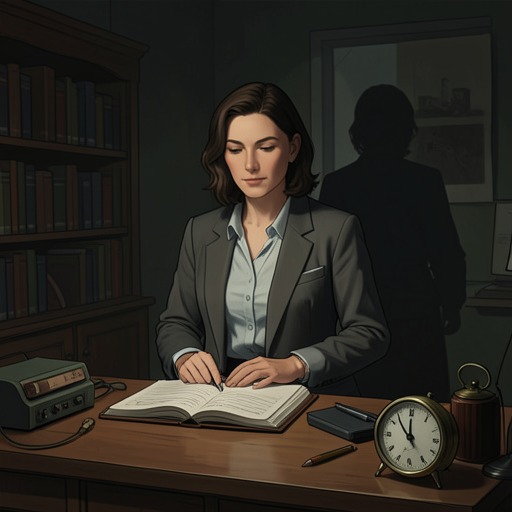
Tooru’s plan is specific because Maori’s account of her life is spread across more than one medium. He says she keeps a journal in a notebook and summarizes important information in a separate binder. Izumi would have to transfer the contents of both to a laptop, removing only references to him. The proposed act is therefore not simply a single omission: it would require rebuilding the record of Maori’s daily life while selectively editing out the person making the request.
He explains that he had hardly interacted with Maori before her memory loss. If he were absent from her journal, he says, their relationship could be made to seem as though it had never happened. A breakup would not accomplish the same thing: Maori might look for him. If she discovered that he had died, he fears the knowledge would be damaging to her mental health. He therefore asks for a more complete erasure, even though it would take work and make it seem they had never dated.
The records at stake
The request carries weight because Maori’s records are not incidental keepsakes. During her amnesia, she relies on a binder and journal to learn what has happened and what she needs to know; her mother says she reads them every morning and keeps to an early bedtime so she has time to do so. The binder’s tabs help her locate subjects, while its pages preserve important information beyond notes kept on her phone. Her boyfriend is among the subjects she is told to find in the records.
The journal also gives Maori a way to face a life whose continuity her memory cannot supply. Tooru wants its entries to contain happy experiences that can encourage the next day’s version of her to look forward to ordinary life and feel less afraid of the future. He proposes shared activities, including library visits and studying, as memories that can be written down. His later request to remove himself from the same system reveals the contradiction within this care: the records he helped make hopeful could become the means by which Maori discovers his death.
The records also preserve the work of others who sustain Maori’s independence. After she graduates from high school, she reads notes and a journal each morning to understand her situation. Those entries help her recognize that her parents and Izumi’s devotion and self-sacrifice enabled her to graduate and return to art classes. Tooru’s proposed deletion thus concerns an archive woven into family care and daily orientation, not a private account isolated from the rest of Maori’s life.
Izumi’s dilemma
Izumi does not receive the request as an easy instruction. She asks whether Tooru is sure, and his sad response that he thinks he will be all right offers no reassurance that the choice is painless. She understands the stakes in both directions: erasing him would make him vanish from Maori’s life, while refusing might leave Maori to suffer every day if she learned what had happened. She also anticipates that she herself could suffer if she saw Maori and wished she had honored Tooru’s request.
When Izumi seeks advice from Tooru’s sister, she explains that the journal and binder would need to be altered and that Maori may be at risk of depression. His sister offers to type the materials into a computer and repair the passages where Tooru is removed, but she does not claim that technical skill can settle the moral question. She argues that the outcome is uncertain: deleting him might help Maori, yet leave Izumi with a guilty conscience; keeping the record might expose Maori to pain and leave Izumi with regret. She leaves the decision with Izumi, emphasizing that Tooru entrusted it to her and that she must decide whether she wants to carry it out.
Fulfillment and cost
After Tooru’s funeral, Izumi consults Maori’s parents and his sister. They know about Tooru, grieve his death, and are grateful for what he meant to Maori. The practical work of fulfilling his request is consequently undertaken in the knowledge that those closest to her understand the relationship, even as they agree to hide it from her. The family also replaces Maori’s phone, dividing the cost between her parents and Tooru’s sister.
The replacement is necessary because the old phone contains Tooru in photographs, videos, messages, and conversations with Izumi. Izumi plans for Maori’s parents to say that the old phone broke, and for the new digital journal and notes to give the same explanation for the lost messages. She takes the new device to Maori’s room on the morning of the third day after the funeral, when Maori is sleeping in her parents’ room because she is still weak. She gathers the binder and many journal volumes, transfers the digital records Tooru’s sister prepared, and uses a program that changes the timestamps on the folders and documents. From then on, Maori is to read and add to the digital versions on her laptop.
Izumi also removes physical traces that a rewritten digital archive alone could not erase. She takes the old phone with her to keep it, then carefully tears drawings of Tooru from Maori’s sketchbooks and cuts away the torn edges. She replaces all the notes taped to the wall, rather than changing only the one that directs Maori to read the records on her desk; identical printed sheets avoid making a single alteration conspicuous. These measures carry the request from written history into the devices, images, and daily instructions through which Maori might encounter her past.
The erasure cannot prevent every emotional consequence. When Izumi visits the next day, Maori does not know Tooru has died, but she feels distressed without knowing why. She remarks that the messaging-app transfer seems to have failed and that she can no longer look at reminders of how much fun she and Izumi had. Izumi hugs her and promises to make the tomorrows ahead enjoyable, in real life as well as through messages. Maori is confused by the uncharacteristic response, then rests her face on Izumi’s shoulder. The moment gives Tooru’s request its immediate human cost: the record has been altered, but the loss still registers as an unnamed disturbance.
Narrative significance
Tooru’s request places the conflict between memory and forgetting in the hands of a friend who must act on behalf of someone unable to remember each day. It treats written records as both support and potential source of injury: the journal can guide Maori through her present, preserve the care that makes school and art possible, and also disclose a death she may struggle to bear. Editing it is therefore at once an act of protection and a change to the account through which she understands herself.
The request is also defined by its asymmetry. Tooru can state what he wants while alive, but Maori cannot participate in deciding whether the relationship should be removed from her records. Izumi must weigh his stated wish against the possibility that concealment will itself hurt Maori, and the surviving family members help carry out a choice whose consequences remain uncertain. The careful transfer, timestamp changes, cut-out drawings, and replacement notes make that uncertainty concrete: a life can be made harder to find on paper and devices, but the records’ absence does not guarantee that its emotional traces disappear.