
J. K. Rowling’s Charitable Partnership
Fantastic Beasts and Where to Find ThemThis flow traces how J. K. Rowling’s enthusiasm for companion books develops into a publishing partnership that directs royalties and sales income toward children’s causes.
increasing Bearing strength in each event
 decreasing
Bearing strength in each eventdecreasingAn Ambition Meets an Opportunity
An Ambition Meets an Opportunity
A long-held wish
J. K. Rowling has always wanted to write Fantastic Beasts and Where to Find Them and Quidditch Through the Ages. When Richard Curtis of Comic Relief U.K. writes to her, she sees a chance to make the projects serve a charity she already supports.
Creative work with a public aim
The request connects an author’s personal interest to an established charitable organization. The books can be both playful extensions of a fictional world and tools for raising support.
This point begins a partnership in which authorship and giving reinforce each other. Rowling’s creative ambition finds a purpose beyond publication alone.
A Collective Publishing Effort
A Collective Publishing Effort
Contributions across the chain
Publishers, vendors, retailers, paper suppliers, printers, binders, and booksellers contribute their time, materials, or services free or at reduced cost. The undertaking depends on many partners rather than the author alone.
Making a donation possible
Their participation helps direct a portion of each cover price to Comic Relief U.K.’s Harry’s Books fund. Reduced production and distribution costs support the charitable structure.
The project presents giving as collaborative labour. The books reach readers because a broad network chooses to make the charitable contribution possible.
Royalties Donated
Royalties Donated
A further contribution
J. K. Rowling donates all royalties to which she is entitled. This commitment sits alongside the portion of the retail price directed to the Harry’s Books fund.
The purchase explained
The publication information clarifies that the purchase itself is not tax deductible. It also specifies the charitable arrangement so that readers can understand what their money supports.
The choice makes the author’s role visible without making her the only source of support. Royalties, sales contributions, and reduced-cost work combine to form the project’s charitable mechanism.
Children’s Causes Defined
Children’s Causes Defined
A broad set of needs
The fund supports education, action against child slavery, and the reunification of families separated by war. It also addresses AIDS and HIV education and support for child victims of landmines.
A global scope
The range of aims makes clear that the project is intended for children across the world, not one local population. The book directs the reader toward a fund designed for varied circumstances.
The charitable partnership gains substance through these stated goals. Its emotional appeal is connected to concrete forms of assistance rather than a vague promise to help.
An Appeal to Readers
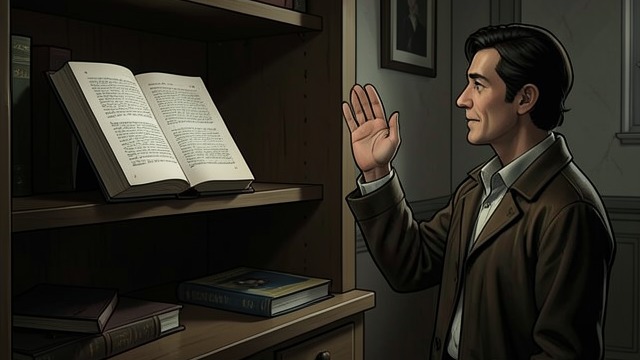
An Appeal to Readers
A book with two audiences
The special edition reaches Muggle bookshops as well as Flourish and Blotts. It combines a fictional wizarding frame with an explicit appeal to readers in the real world.
An invitation to contribute
The book thanks purchasers and explains that every sale supports children’s causes. Dumbledore’s foreword also invites further donations, extending participation beyond the purchase itself.
The partnership reaches its readers by making giving part of the book’s identity. Rowling’s creative work becomes a shared channel for charitable action.
when Richard Curtis approaches J. K. Rowling
during production of the charity books
when the publication terms are announced
when the Harry’s Books fund’s aims are presented
September 2001
