
The Joke as a Bridge Between Worlds
Fantastic Beasts and Where to Find ThemThis flow traces how comic details help readers engage with difficult topics, from creature habits and mistaken encounters to charity and secrecy.
increasing Bearing strength in each event
 decreasing
Bearing strength in each eventdecreasingThe Monk’s Talking Ferret
The Monk’s Talking Ferret
Fear in comic detail
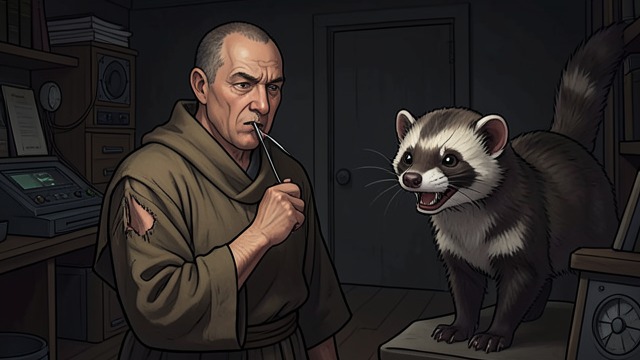
A monk reports being attacked by a giant talking ferret that insults him and bites his nose. His account is frightening to its narrator, yet its phrasing also gives the episode a comic edge.
A more likely identity
Newt Scamander suggests that the creature was a Jarvey hunting Gnomes. The reinterpretation lets readers laugh at the misunderstanding without denying the monk’s pain.
Humour creates room to learn from a frightening encounter. The joke softens the telling, while the explanation reminds readers that mistaken identity can have real consequences.
Uric and the Augureys
Uric and the Augureys
Taking the omen literally
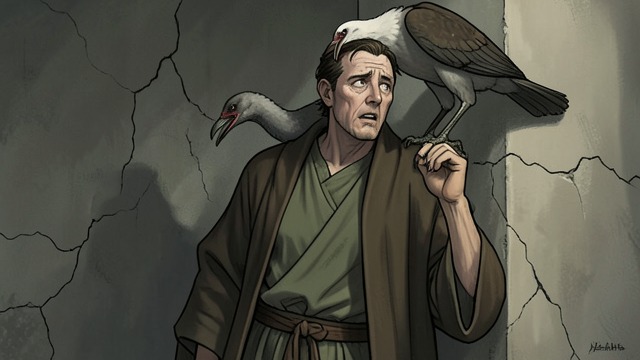
Uric the Oddball keeps fifty pet Augureys in a room and becomes convinced, after a wet winter of moaning, that he has died and become a ghost. The story turns an old fear of the bird’s cry into absurdity.
A comic consequence
Uric attempts to walk through his walls and suffers a concussion. The anecdote makes the danger of misreading the Augurey memorable without presenting the bird as malicious.
The humour separates a creature’s ordinary call from the meanings people impose on it. A joke becomes a lesson in how belief can turn harmless behaviour into needless distress.
An Unusual Defence of Song
An Unusual Defence of Song
A doubtful theory
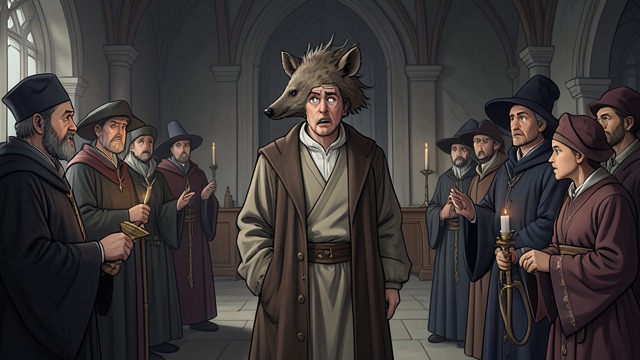
Uric the Oddball tries to prove that Fwooper song benefits health by listening without interruption for three months. His experiment carries an absurd confidence in the face of a known danger.
Evidence in appearance
He reports to the Wizards’ Council wearing a toupee that proves to be a dead badger. His appearance makes the council’s doubt immediate and vivid.
The anecdote turns a warning about insanity into comedy while reinforcing its seriousness. Some claims about harmlessness become less convincing when the claimant’s behaviour tells another story.
A Ghost and a Wordplay
A Ghost and a Wordplay
Objection to a label
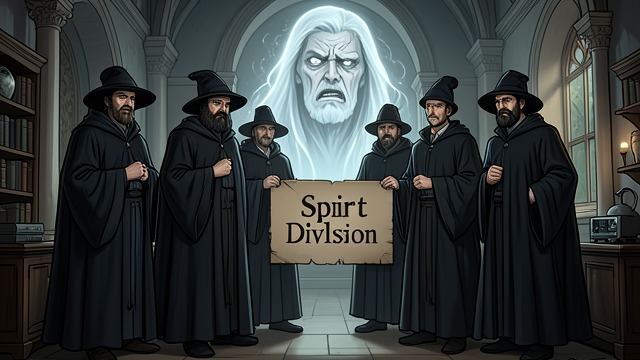
Ghosts argue that calling them “beings” is insensitive when they are clearly “has-beens.” The pun turns a bureaucratic classification into an opportunity for wit.
A separate division
Grogan Stump responds by creating a Spirit Division alongside Beast and Being divisions. The joke is tied to a practical change in administration.
The wordplay gives a marginal group a memorable way to express its objection. Humour does not replace political consequence here; it helps articulate a claim that the system has to address.
Dumbledore’s Purchase Warning
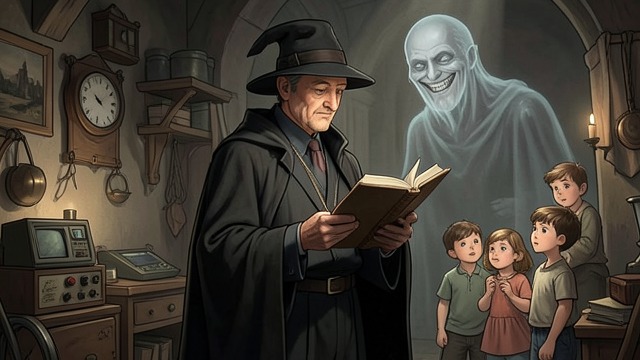
Dumbledore’s Purchase Warning
A playful threat
Albus Dumbledore jokes that the book carries a Thief’s Curse for anyone who has read the foreword without buying it. The joke converts an appeal to purchase into wizarding mischief.
Charity underneath the joke
The proceeds support children’s causes, and the foreword has already explained the fund’s purpose. Dumbledore’s humour draws readers back to the serious reason for buying the book.
The joke makes a charitable request feel companionable rather than solemn. Its levity helps carry a real invitation to give across the boundary between fictional magic and practical support.
during the medieval herb-garden account
during Uric the Oddball’s reported experiment
during Uric the Oddball’s Fwooper experiment
during Grogan Stump’s classification reform
at the close of the foreword
