
Defining the Beast
Fantastic Beasts and Where to Find ThemThis flow follows the unresolved question of which magical creatures count as legal persons and how successive definitions expose the limits of simple tests.
increasing Bearing strength in each event
 decreasing
Bearing strength in each eventdecreasingThree Difficult Cases
Three Difficult Cases
Uneasy categories
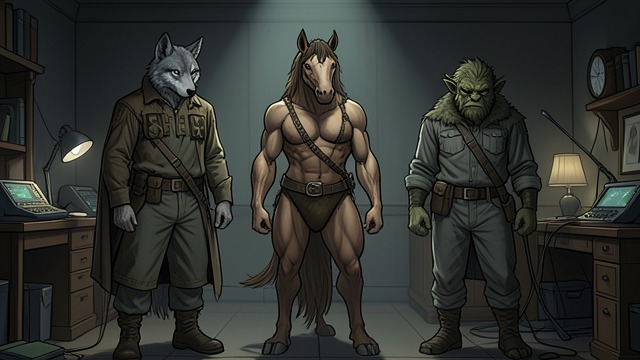
Newt Scamander introduces Werewolves, Centaurs, and Trolls as examples that unsettle the division between “beings” and “beasts.” Their human forms, intelligence, language, and powers do not line up neatly.
Rights at stake
The classification is not merely descriptive: being status brings a claim to legal rights and a voice in governance. A wrong boundary can therefore exclude intelligent creatures or grant standing where meaningful participation is absent.
The introduction turns taxonomy into a political question. It asks who is entitled to help shape the laws that govern the magical community.
The Two-Legged Test
The Two-Legged Test
Muldoon’s rule
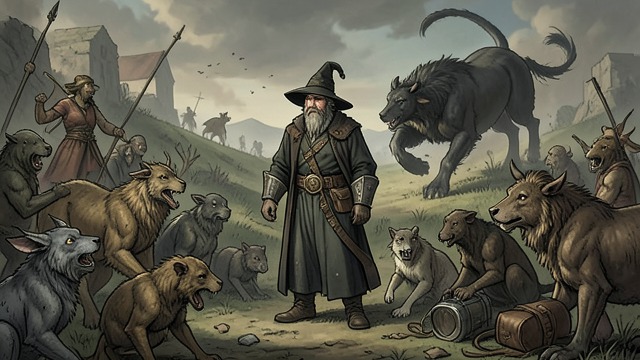
Burdock Muldoon declares that any magical community member who walks on two legs will count as a “being.” He then summons eligible creatures to meet wizards at a summit about magical laws.
A failed assembly
Goblins bring a crowd of creatures, and noise, disorder, and danger overwhelm the meeting. The test has included many animals with no interest in governing and excluded creatures whose claims cannot be measured by gait.
Muldoon abandons further attempts at integration. The collapse shows that a visible physical trait cannot reliably identify intelligence, political interest, or the capacity to participate.
The Language Test
The Language Test
A revised criterion
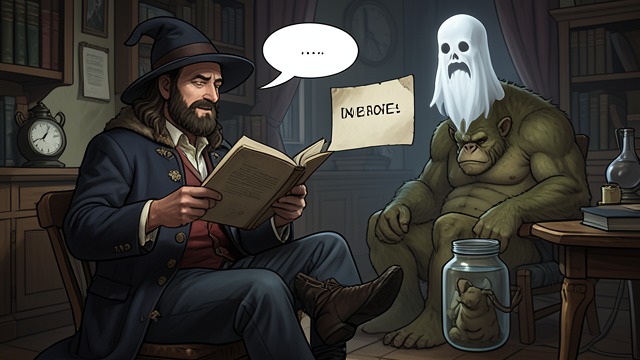
Madame Elfrida Clagg defines “beings” as those able to speak the human tongue and invites them to a council meeting. The new rule tries to replace a bodily test with communication.
New exclusions and disruption
Trolls taught simple sentences cause destruction, while Jarveys attack ankles and ghosts object to a meeting focused on the living. Centaurs also refuse to attend in protest at the exclusion of Merpeople who cannot converse in anything but Mermish above water.
Speech proves no more decisive than walking on two legs. Language can be taught, may not match the council’s preferred form, and does not by itself demonstrate understanding or willingness to share governance.
A Capacity-Based Definition
A Capacity-Based Definition
Stump’s proposal
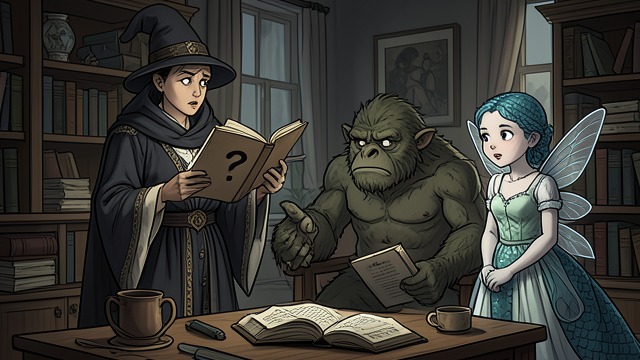
Grogan Stump defines a “being” as a creature sufficiently intelligent to understand magical laws and bear part of the responsibility for shaping them. The proposal shifts attention from physical form and speech to comprehension and civic capacity.
Uneven outcomes
Troll representatives are judged unable to understand the discussion, while Merpeople gain access through translators. Fairies, Pixies, and Gnomes remain classified as beasts despite humanoid appearances.
The decree produces a more workable standard, but it does not end disagreement. The definition rests on judgments about intelligence and responsibility, leaving classification open to political pressure and contested self-understanding.
Status Remains Contested
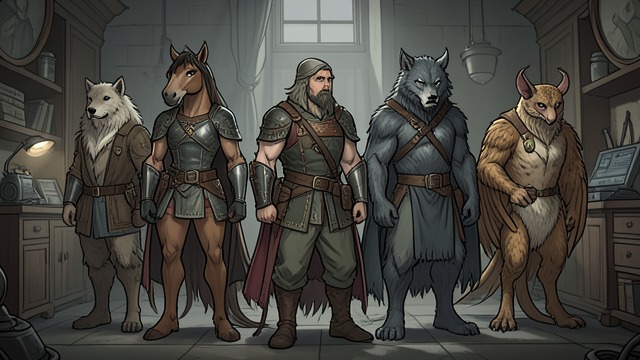
Status Remains Contested
Categories do not settle identity
Centaurs reject being status and request to remain beasts; Werewolves move between divisions, while highly intelligent Acromantulas and Manticores remain classified as beasts because of their violence.
Administrative consequences
The Ministry divides oversight among Beast, Being, and Spirit divisions, yet cases do not always fit those offices neatly. The Werewolf Support Services office and Werewolf Registry fall into different divisions.
The unresolved classifications reveal that categories can reflect safety and bureaucracy as much as intelligence. Legal labels organize institutional action, but they cannot eliminate disagreement about rights, identity, or danger.
in the introduction to the book
fourteenth century
after Burdock Muldoon’s failed summit
1811
at the time Newt writes his introduction
