
The Magical Community’s Attempts at Governance
Fantastic Beasts and Where to Find ThemThis flow follows successive efforts to include magical creatures in lawmaking and the friction created when councils mistake visible traits for political capacity.
increasing Bearing strength in each event
 decreasing
Bearing strength in each eventdecreasingMuldoon Calls a Summit
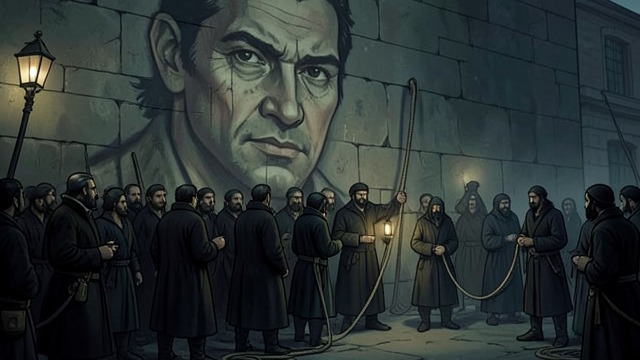
Muldoon Calls a Summit
An inclusive intention
Burdock Muldoon rules that creatures walking on two legs qualify as “beings” and calls them to meet wizards about magical laws. His test is simple, visible, and intended to define a political community.
The rule attracts a crowd
Goblins bring many eligible creatures to the meeting, and the hall fills with noise and disorder. The proceedings become an illustration of how broad Muldoon’s definition is.
The summit begins with an attempt at inclusion, but its organizing principle does not account for what participation requires. Physical form proves an unreliable substitute for judgment and consent.
A Council Overwhelmed
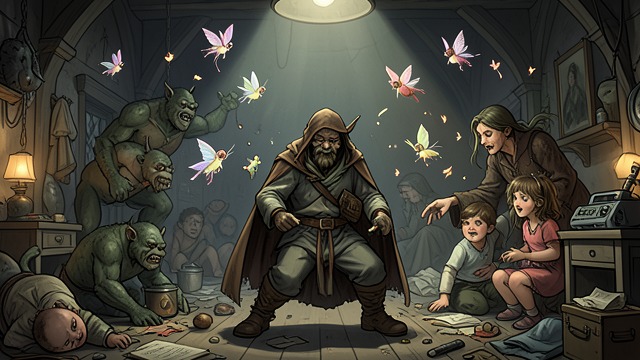
A Council Overwhelmed
Many kinds of disruption
Diricawls, Augureys, and Fwoopers make the gathering almost impossible to hear. Pixies and Fairies whirl around attendees, while Trolls smash parts of the chamber and hags search for children.
Muldoon’s retreat
Burdock Muldoon slips on Porlock dung and leaves cursing. He concludes that two-legged creatures do not necessarily care about wizard government or possess the temperament for council debate.
The comic scene carries a serious lesson about representation. Inviting bodies into a room is not the same as creating conditions for meaningful political participation.
Clagg Tries Speech
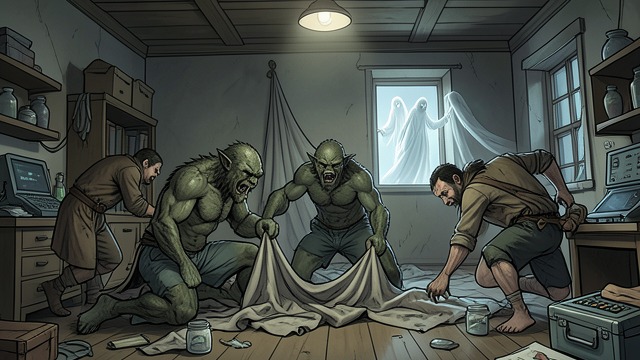
Clagg Tries Speech
A second definition
Madame Elfrida Clagg invites creatures capable of speaking the human tongue to a council meeting. Her test seems to offer a clearer sign of communication than Muldoon’s two-legged rule.
Familiar disorder returns
Trolls taught a few sentences by Goblins destroy the hall, while Jarveys tear at ankles. Ghosts leave in disgust at the Council’s emphasis on the living, revealing another group whose interests the definition cannot accommodate.
The meeting exposes the difference between producing words and understanding political responsibility. A language test can open the door while still failing to distinguish participation from mere speech.
A Protest over Translation
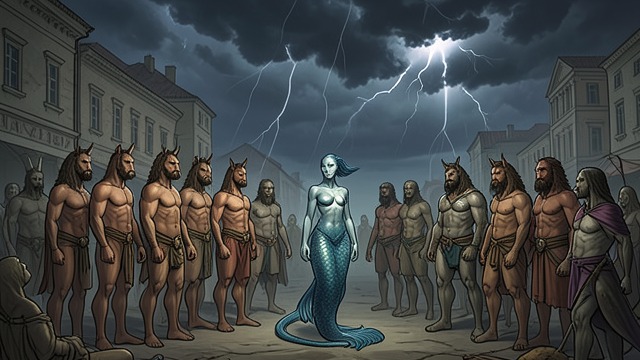
A Protest over Translation
An excluded language
Centaurs refuse to attend because Merpeople, unable to converse above water except in Mermish, have been excluded. The protest shifts the dispute from individual qualifications to whether institutions will accommodate different ways of speaking.
Solidarity across groups
Centaurs themselves have moved from beast to being status under Clagg’s definition, but they use that standing to challenge the exclusion of another community. Their refusal makes political solidarity more important than their own new classification.
The episode shows that access depends on the rules of communication chosen by those in power. Translation could widen participation, but the council has not yet made it a principle.
A More Durable Standard
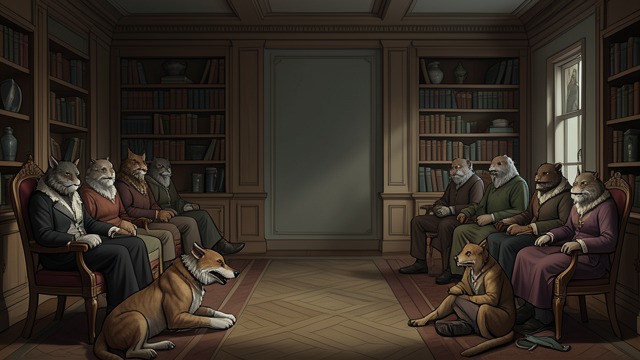
A More Durable Standard
Understanding and responsibility
Grogan Stump defines a “being” through sufficient intelligence to understand the laws and bear some responsibility for shaping them. The test addresses the political purpose earlier definitions missed.
Exceptions and divisions
Merpeople can participate through translators, while Trolls are judged not to understand the discussion. Ghosts receive a separate Spirit Division after rejecting the label “beings.”
The resulting framework makes governance more workable without making classification final. It acknowledges that participation may require interpretation and that legal categories must accommodate more than living, speaking bodies.
fourteenth century
during Burdock Muldoon’s summit
at Madame Elfrida Clagg’s council meeting
during Clagg’s meeting
1811
