
Creature Encounters and Human Safety
Fantastic Beasts and Where to Find ThemThis flow traces the changing balance between human contact and creature danger, from close approaches to emergency remedies and cautionary guidance.
increasing Bearing strength in each event
 decreasing
Bearing strength in each eventdecreasingThe Risk of a Close Approach
The Risk of a Close Approach
Contact in the field
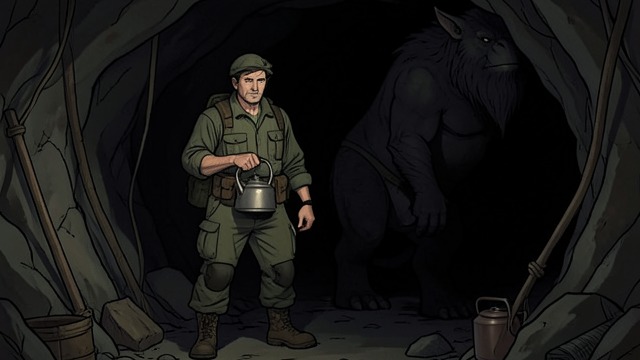
Newt visits magical creatures in their nests, burrows, and lairs, seeking to observe them directly and sometimes gain their trust. Such contact gives his research depth but carries real physical risk.
Improvised defence
When an encounter turns threatening, he may need to beat a creature off with his travelling kettle. The practical detail undercuts any idea that expertise makes fieldwork safe.
Knowledge grows through proximity, but proximity is never neutral. The researcher must be prepared for animals whose behaviour is not arranged around human comfort.
Warnings in the Entries

Warnings in the Entries
Varied kinds of threat
The guide describes venom, claws, bites, dangerous breath, and creatures that lure people into water. A warning may concern direct violence, a hazardous substance, or a seemingly harmless animal’s unexpected effect.
Practical knowledge
Readers learn that a Kelpie can devour a rider and that a Kappa may be weakened by emptying the water from its head. The entries offer specific precautions rather than a single response to every danger.
The book turns fear into informed caution. Its descriptions help readers recognize that safety depends on understanding a creature’s particular habits and vulnerabilities.
The Patronus Against a Lethifold
The Patronus Against a Lethifold
A night attack
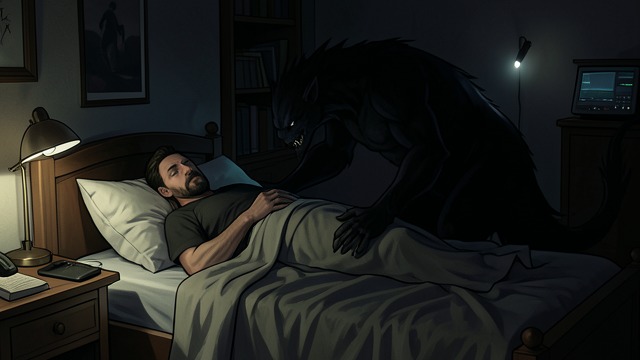
While holidaying in Papua New Guinea, Flavius Belby is attacked in bed by a Lethifold that tries to suffocate him. Stupefying and Impediment spells fail to stop the creature.
A decisive defence
Belby casts a Patronus, which throws the Lethifold away and allows him to breathe again. The account identifies the Patronus as the only known spell that repels this predator.
The encounter makes survival depend on a specific countermeasure rather than general courage. Its retelling gives readers practical knowledge from an experience in which a mistake or delay could have been fatal.
A Child’s Improvised Victory
A Child’s Improvised Victory
A dangerous lure
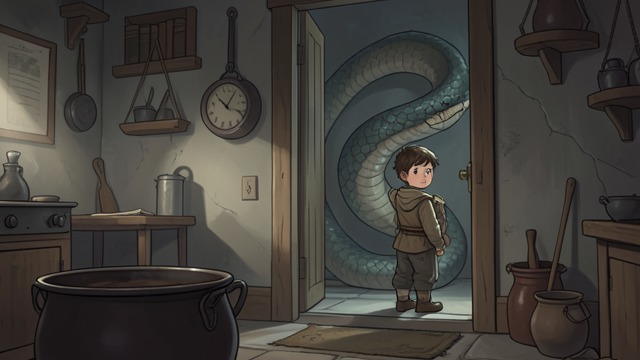
An Erkling attempts to lure six-year-old wizard Bruno Schmidt away from his guardians so it can eat him. The creature’s entrancing cackle turns its apparent smallness into a serious threat.
The cauldron blow
Bruno strikes the Erkling over the head with his father’s collapsible cauldron, killing it. The account presents the outcome as a striking end to the last known attack.
The story complicates assumptions about who can prevail in danger. A child survives through quick action and an improvised object, while the creature’s danger explains why official controls matter.
Emergency Responses at Ilfracombe

Emergency Responses at Ilfracombe
A dragon reaches the public
A rogue Common Welsh Green Dragon appears above a crowded beach, turning an animal-management failure into a public emergency. The danger includes possible casualties and exposure of magic.
Repair on a mass scale
A holidaying wizarding family casts Memory Charms on the beachgoers, narrowly averting catastrophe. The incident shows how emergency responders must address both immediate harm and what witnesses remember.
The response succeeds, but only after the danger reaches the Muggle public. It makes prevention, supervision, and emergency readiness inseparable parts of creature management.
during Newt’s field research
through the A–Z creature accounts
1782
the last known Erkling attack
1932
