
The Loch Ness Problem
Fantastic Beasts and Where to Find ThemThis flow traces how an elusive Kelpie’s attraction to publicity turns an animal-management problem into a continuing challenge to wizarding secrecy.
increasing Bearing strength in each event
 decreasing
Bearing strength in each eventdecreasingA Creature That Draws People In
A Creature That Draws People In
A lure rather than concealment
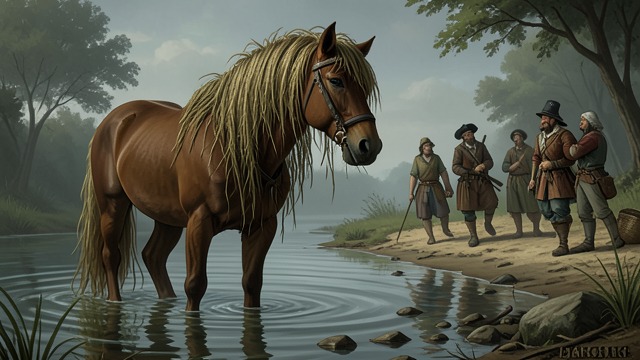
A Kelpie often takes the form of a horse with a bulrush mane and draws unwary people onto its back. Unlike shy creatures, it actively attracts human attention.
Defeating ordinary safeguards
Muggle-Repelling Charms may fail because the Kelpie’s own power works against them. Its behaviour makes distance difficult to maintain through standard protections.
The conflict begins with a creature whose instincts oppose the goals of secrecy. Managing it requires more than keeping people away; authorities must understand the lure itself.
The Largest Kelpie
The Largest Kelpie
A conspicuous resident
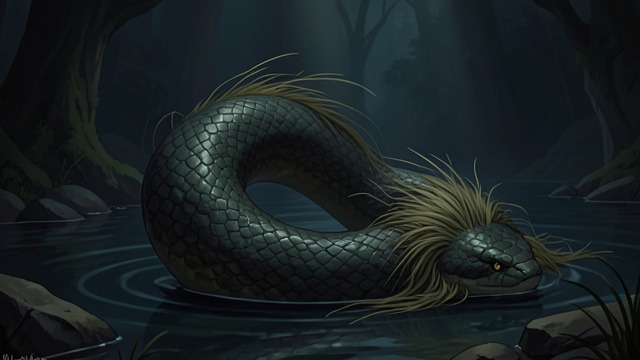
The world’s largest Kelpie lives at Loch Ness and appears to have developed a thirst for publicity. Its size and transformations make it a continuing focus for wizarding observers.
Maintaining uncertainty
The creature’s reputation becomes linked to Muggle interest in the loch. Its presence makes the boundary between magical secrecy and public fascination difficult to maintain.
The case differs from an isolated sighting. A persistent, famous creature creates recurring pressure on the authorities responsible for concealment.
The Serpent Appears
The Serpent Appears
A frightening shape
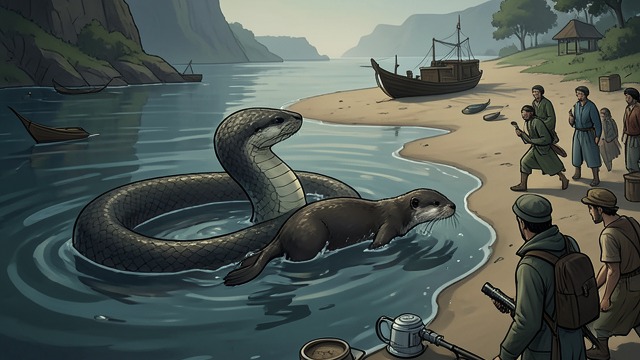
Observers see the Kelpie take the form of a sea serpent, an appearance likely to intensify the mystery surrounding Loch Ness. Its chosen shape gives the animal a public-facing image far larger than its ordinary habits.
Evidence of transformation
The observers recognize that it is not a true serpent when it changes into an otter as Muggle investigators approach. The change confirms that appearances cannot settle the creature’s identity.
The encounter turns observation into a contest of interpretation. The same animal can present different forms to different audiences, complicating attempts to produce a stable account.
A Publicity-Sensitive Secrecy Effort

A Publicity-Sensitive Secrecy Effort
Attention persists
The Kelpie’s apparent appetite for publicity makes it difficult to rely on ordinary creature shyness. Muggle investigators remain drawn to the possibility of an extraordinary animal in the loch.
Authorities respond indirectly
Wizarding observers and the Office of Misinformation work to keep public explanations plausible. The wider concealment effort must account for reports and evidence, not just the creature itself.
The conflict shifts from capturing an animal to managing repeated attention. Secrecy becomes a negotiation with an audience that is curious, persistent, and equipped to record what it sees.
Photographs as a Continuing Threat
Photographs as a Continuing Threat
Evidence beyond witnesses
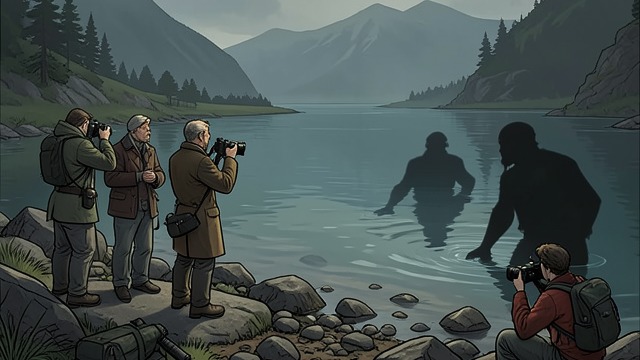
The Office of Misinformation works to persuade Muggles that photographic evidence of the Loch Ness Kelpie is fake. Images make the problem more persistent than a single witness’s memory.
Public belief as a tool
The campaign tries to preserve a non-magical explanation for what people think they have seen. Its success depends on credibility as much as on magical intervention.
The Loch Ness case reveals how secrecy changes with evidence. Once creatures enter photographs and public discussion, concealment must address the record that remains after the encounter ends.
when Kelpie behaviour is discussed
when the Loch Ness Kelpie is described
during an International Confederation of Wizards observation
after the Kelpie’s transformations are observed
during the Office of Misinformation’s campaign
