
Muggle Misreadings
Fantastic Beasts and Where to Find ThemThis flow traces how incomplete encounters with magical creatures produce mistaken explanations, fear, and increasingly elaborate concealment.
increasing Bearing strength in each event
 decreasing
Bearing strength in each eventdecreasingA Medieval Misidentification
A Medieval Misidentification
An encounter in a garden
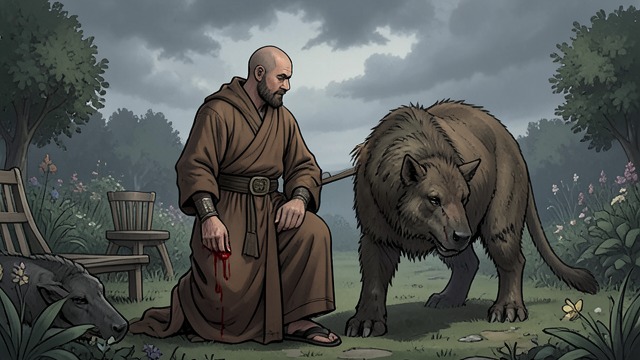
A Worcestershire monk describes a huge, talking ferret that attacks him while he tends an herb garden. His account records pain and surprise but gives the creature an ordinary name.
A Jarvey’s likely appearance
Newt Scamander identifies the supposed ferret as probably a Jarvey, likely pursuing Gnomes. The gap between the witness’s interpretation and the creature’s identity turns a strange encounter into a vivid example of incomplete knowledge.
The episode joins comedy to unease. A witness can notice something real and still misunderstand it, leaving fear to fill the space where accurate explanation is missing.
Fear in the Herb Garden
Fear in the Herb Garden
A bodily consequence
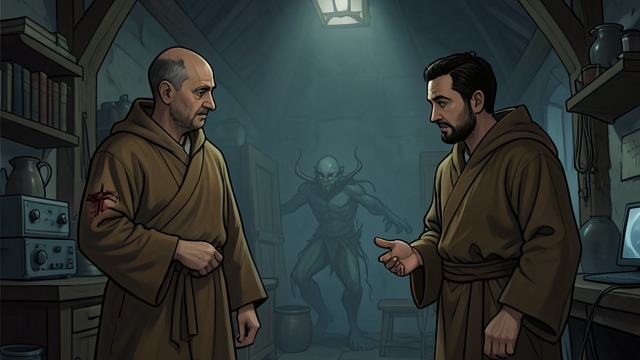
The monk is bitten and bleeds for hours, while his fellow friar doubts that a ferret could talk. The injured witness must negotiate both physical pain and disbelief from his community.
Misunderstanding deepens danger
Newt argues that imperfect understanding may be more dangerous than ignorance. The monk has encountered a magical creature but lacks the framework to recognize it safely.
The tale makes misinformation personal. The conflict is not only between Muggles and magical secrecy; it is also between lived experience and the explanations a frightened community finds plausible.
The Dodo’s Disappearance
The Dodo’s Disappearance
A familiar name
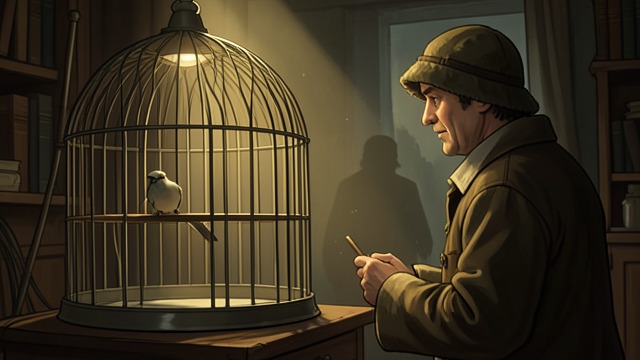
Muggles once knew the Diricawl as the dodo. Because it can vanish and reappear, they mistakenly believe they hunted it to extinction.
A deliberate silence
The International Confederation of Wizards decides not to correct that belief. Muggle awareness of the danger of indiscriminate hunting is judged more valuable than a revelation of the bird’s continued existence.
The decision complicates the relationship between truth and protection. Concealment preserves the species, while a mistaken account of extinction also becomes part of how its history is remembered.
The Flying Lizard Report
The Flying Lizard Report
A memory that survives
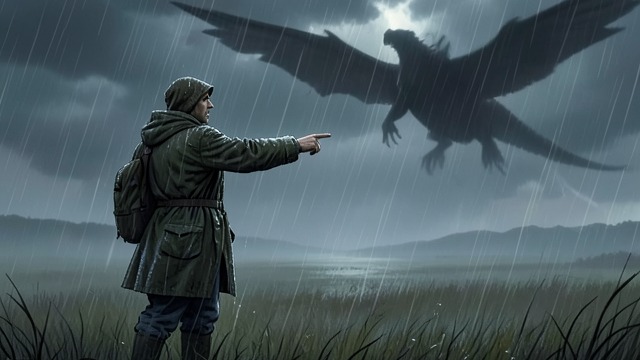
After a mass Memory Charm at Ilfracombe, a Muggle nicknamed Dodgy Dirk is said to continue telling people about a “dirty great flying lizard.” The account becomes a local story despite the attempted repair.
Credibility lost
The witness is generally treated as drunk or irrational. That dismissal protects secrecy, but it also leaves an individual’s genuine sighting without recognition.
The episode shows how social disbelief can function as an informal concealment tool. It reduces the danger of exposure, while making the witness bear the cost of being thought unreliable.
The Public Prefers Not to Know
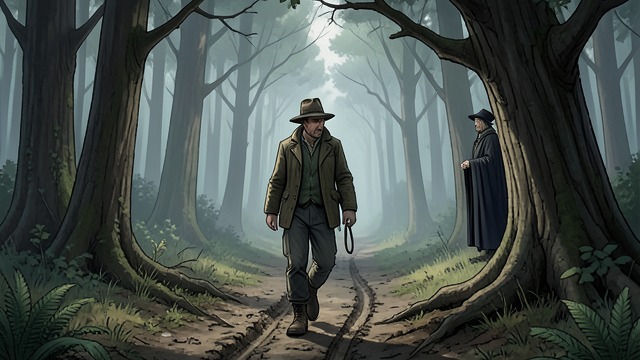
The Public Prefers Not to Know
Ordinary explanations
Muggles who encounter tracks or droppings often accept flimsy non-magical explanations. Even a claimed sighting of a Hippogriff may be dismissed as drunkenness or eccentricity.
A protective social habit
Newt notes that this response is preferable, from the wizarding perspective, to older forms of persecution. The secrecy system does not need to erase every trace if witnesses are unlikely to believe what they see.
The book treats disbelief as both protection and estrangement. It keeps communities safe from exposure while ensuring that Muggle experience of magical creatures is often denied or ridiculed.
the Middle Ages
during the monk’s reported encounter
when the Diricawl’s history is recounted
after the Ilfracombe Incident of 1932
in Newt’s account of modern Muggle attitudes
