Burdock Muldoon’s Wizards’ Council summit
Fantastic Beasts and Where to Find ThemBurdock Muldoon’s Wizards’ Council summit was a fourteenth-century attempt to include magical creatures in discussions of wizard law, and its failure exposed the limits of defining political membership by bodily appearance. After treating two-leggedness as a qualification for being a “being,” Burdock Muldoon summoned the creatures to meet with wizards; their gathering did not become the cooperative council he had hoped for. The episode ended with Muldoon abandoning attempts to integrate non-wizard members of the magical community into the Wizards’ Council, leaving later leaders to try different definitions of who merited a voice in government.
The test behind the invitation
As Chief of the Wizards’ Council, the body that preceded the Ministry of Magic, Muldoon decreed that any member of the magical community who walked on two legs would count as a “being.” The test made a visible physical trait the basis for inclusion. But the underlying question was not merely what a creature looked like: a “being” was understood as a creature deserving legal rights and a voice in the governance of the magical world, as distinct from a “beast.” Classification therefore determined not only a name but also the terms of political recognition.
The rule failed to account for the varied habits and preferences of the creatures it grouped together. Centaurs, for example, lived in the wild, refused clothing, preferred to keep apart from wizards and Muggles, and nevertheless possessed intelligence equal to theirs. Their example shows why neither outward form nor intelligence alone could guarantee participation. The summit brought this mismatch into view: an invitation extended under a broad category could not make its recipients share the wizards’ interest in their governing arrangements.
A summit that went awry
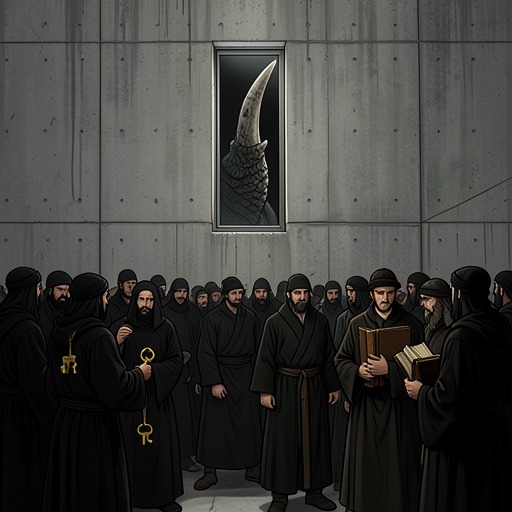
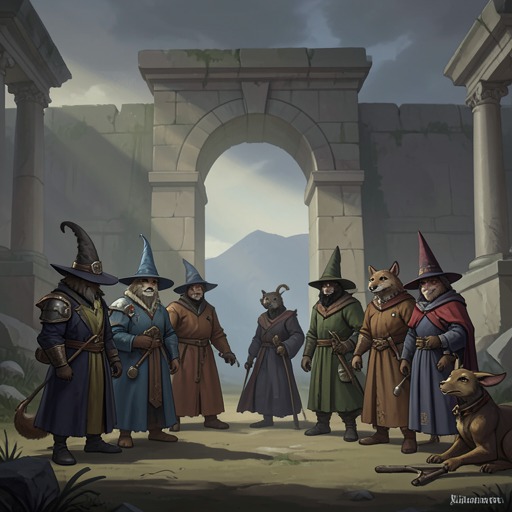
Muldoon summoned all those he counted as “beings” to meet with wizards at a summit about new magical laws. He acted in a spirit of friendship, but the assembly did not function as a deliberative body. The creatures gathered in the meeting hall had priorities and conduct that did not conform to the occasion as the wizards had imagined it; the account notes, among other disruptions, children being fed Porlock dung.
The meeting’s decisive moment was undignified rather than diplomatic. Muldoon stood to open the gathering, slipped on a pile of Porlock dung, and ran from the hall cursing. The physical accident gives the failed summit its bluntest image: the council’s attempt to order a mixed community ended in disorder, and the chief who had convened it could not continue the proceedings. The account does not describe a negotiated settlement or a new law emerging from the gathering; its consequence for Muldoon was withdrawal from the project.
From classification to refusal
The episode demonstrates that possessing two legs did not mean that a magical creature could or would take an interest in wizard government. Muldoon had treated eligibility as if it would produce engagement; the gathering showed that the two were not the same. Embittered by the failure, he renounced further attempts to integrate non-wizard members of the magical community into the Wizards’ Council. The summit thus closed not with a wider political partnership, but with a retreat from one.
That retreat did not settle the question of who should count as a “being.” Muldoon’s successor, Madame Elfrida Clagg, tried to redefine the category in the hope of forging closer ties with other magical creatures. Not until 1811 did definitions emerge that most of the magical community found acceptable: the later standard, decreed by Grogan Stump, tied “being” status to responsibility and capacity to understand the laws of the magical community. In contrast to Muldoon’s visible, bodily criterion, these efforts made the question more explicitly about participation and legal standing.
Afterlives of the boundary
Later arrangements show that even a more acceptable classification could not guarantee shared political membership. Centaurs objected to being placed in the same “being” category as creatures such as hags and vampires and declared that they would manage their affairs separately from wizards; merpeople made the same request a year later. The Ministry of Magic reluctantly accepted these demands. A Centaur Liaison Office remained on the books within the Beast Division of the Department for the Regulation and Control of Magical Creatures, but no centaur ever used it. At the Department, being sent to that office became an in-joke meaning that someone was about to be fired.
Seen in this longer history, Muldoon’s summit is an early failed experiment in political inclusion, not a lasting settlement. Its central contrast persists: administrative categories can assign status, but they cannot by themselves create consent, participation, or a desire to be governed alongside wizards. The summit’s fall—from a friendly invitation to a cursing departure—makes that difference concrete and helps explain why later debates over magical creatures continued to concern self-government as well as classification.