Centaur
Fantastic Beasts and Where to Find ThemCentaur are intelligent, speaking forest-dwellers with a human head, torso, and arms joined to a horse’s body. Their classification as beasts is distinctive: although their capacities might ordinarily qualify them as beings, the Ministry of Magic records them as beasts at their own request. The entry makes their status a test case in the wider dispute over who counts as a being entitled to legal rights and a voice in magical governance.
Appearance and habitat
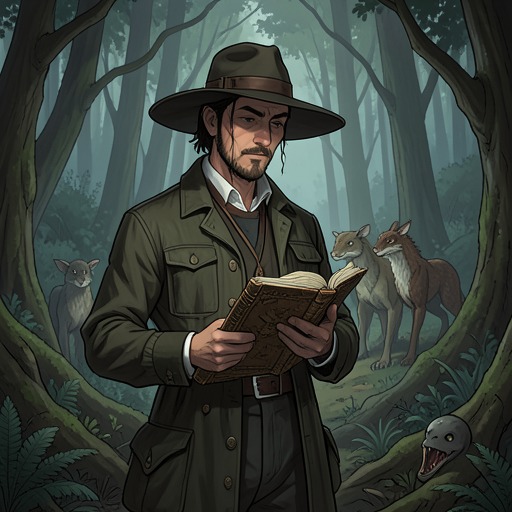
A Centaur’s human upper body is joined to a horse’s body, which may be any of several colours. The guide places Centaur in forests and describes their ways as shrouded in mystery. It also notes that they have their own means of hiding from humans and therefore stand in little need of wizard protection.
That independence complicates the usual framing of magical creatures as subjects of human protection or management. Centaur are presented as a community with its own practices and capacity to keep out of human sight, not simply as animals encountered and governed by wizards.
Classification and self-determination
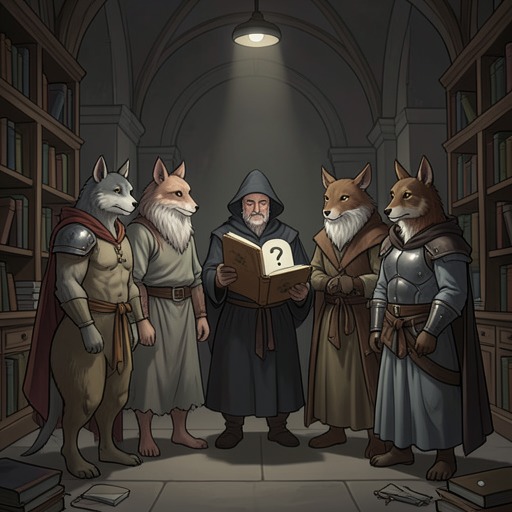
The guide introduces classification as a question of political standing: which creatures count as beings worthy of legal rights and a voice in governing the magical world, and which are assigned to the category of beasts? Early attempts to draw this boundary were crude. In the fourteenth century, Burdock Muldoon, Chief of the Wizards’ Council, decreed that any member of the magical community who walked on two legs would count as a being. The rule was promptly exposed as inadequate to the varied forms of magical life.
Muldoon’s successor, Madame Elfrida Clagg, tried a different test, defining beings by their ability to speak. That criterion also left difficulties: the account notes merpeople who could converse only in Mermish above water. Not until 1811 did Grogan Stump, the newly appointed Minister for Magic, establish definitions accepted by most of the magical community. The Centaur entry invokes this history because it shows how their intelligence and speech could place them on the being side of an administrative boundary, even as they declined that designation.
The Ministry of Magic classifies Centaur as beasts at their own request. Their case therefore differs from a simple exclusion imposed by a test of appearance, language, or intelligence: the official category reflects a stated preference by the people being classified. The result makes clear that recognition and representation are not always the same as inclusion in a governmental category.
Relations with wizards and Muggles
Centaur are generally as mistrustful of wizards as they are of Muggles, and appear to make little distinction between the two. Their wariness sits alongside their ability to hide from humans and their limited need for wizard protection. The guide does not describe them as seeking closer ties with either human community; instead, their account stresses distance and opacity.
This relationship helps explain the force of their requested classification. In a history where wizards repeatedly try to define who merits a voice in magical governance, Centaur do not simply occupy the position assigned to them by wizarding criteria. Their refusal of the being category preserves a distinction between administrative recognition and their own terms of relation to human authorities.
Significance in the guide
The Centaur entry appears within the Ministry’s system for classifying magical creatures, but it unsettles the assumption that such classifications transparently describe a creature’s nature. The history of Muldoon’s two-legged rule, Clagg’s speech-based definition, and Stump’s later settlement shows that the boundary between being and beast has been revised through political and practical disputes. Centaur sharpen that point: their intelligence and capacity for speech do not determine their official status, because their own request matters too.
Their treatment also contrasts with protective measures elsewhere in the guide. Some exceptionally dangerous creatures, such as the Quintaped, are associated with areas made unplottable; other policies regulate creature trade and breeding, including the 1965 Ban on Experimental Breeding. Centaur, by contrast, are described through their own forest dwelling, mistrust, and preference about classification. The entry thus presents a magical community whose agency cannot be reduced to a danger rating or a question of protection.