Gnome
Fantastic Beasts and Where to Find ThemThe Gnome is a widespread garden pest whose modest size and conspicuous, humanlike shape do not grant it the standing of a “being”: the Ministry’s classification places it among beasts. Its entry joins practical advice about removing it to a broader history of how the magical community has drawn—and redrawn—the boundary between beings and beasts.
Appearance and Habitat
The Gnome is common in gardens throughout northern Europe and North America. It may grow to a foot tall, with a disproportionately large head and hard, bony feet. The description is brief and utilitarian: it identifies a familiar pest by its scale, distinctive build, and place in the garden rather than presenting it as a rare or remote creature.
Classification and Legal Standing
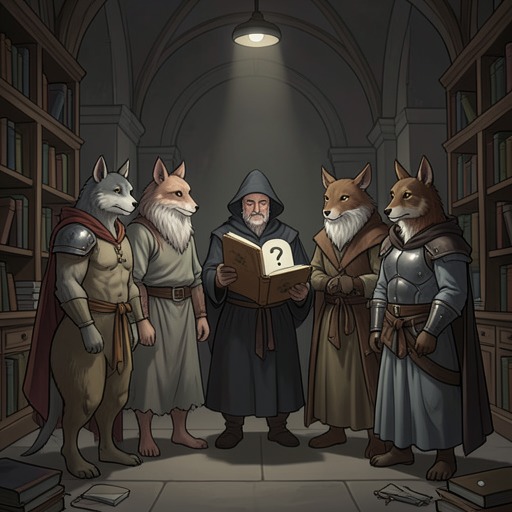
The Gnome’s humanoid appearance makes it relevant to the long-running question of which magical creatures count as “beings” and therefore merit legal rights and a voice in governance. Early definitions were crude. In the fourteenth century, Burdock Muldoon decreed that any member of the magical community who walked on two legs qualified as a being, a rule that excluded many other creatures from consideration and proved inadequate as a basis for integrating non-wizard members into the Wizards’ Council.
Muldoon’s successor, Madame Elfrida Clagg, tried a different test, seeking closer ties with other magical creatures by defining beings through their ability to speak human language. That approach also left difficult cases unresolved. Not until 1811 did Grogan Stump, the newly appointed Minister for Magic, issue a definition that most of the magical community accepted. Even under the resulting distinctions, gnomes—despite their humanoid appearance—were firmly categorized as beasts.
The classification system’s boundaries are therefore not simply descriptions of a creature’s body. Successive rules made different traits—walking upright, or communicating in human language—the test for legal and political standing, while the Gnome’s placement shows that resemblance to humans was not enough to secure inclusion. The Department for the Regulation and Control of Magical Creatures was divided into Beast, Being, and Spirit divisions under Stump’s settlement; the Gnome belongs to the first of those administrative categories.
Removal from Gardens
The account gives two ways to expel a Gnome from a garden. It may be swung in circles until dizzy and then dropped over the garden wall. Alternatively, a Jarvey may be used, though the available description does not elaborate on that method. The first procedure is presented as direct household pest control: it ends not with the Gnome killed, but removed beyond the garden boundary.
Place in the Creature Guide
The Gnome appears within the Ministry of Magic classification material, where magical creatures are organized for practical reference. Its treatment links an everyday garden nuisance to the guide’s wider concern with naming, regulating, and managing magical life. The contrast is pointed: the Gnome is physically described in ordinary, domestic terms, yet its place in the legal taxonomy reflects a much larger debate over which creatures may count as members of the magical community.