Isle of Drear
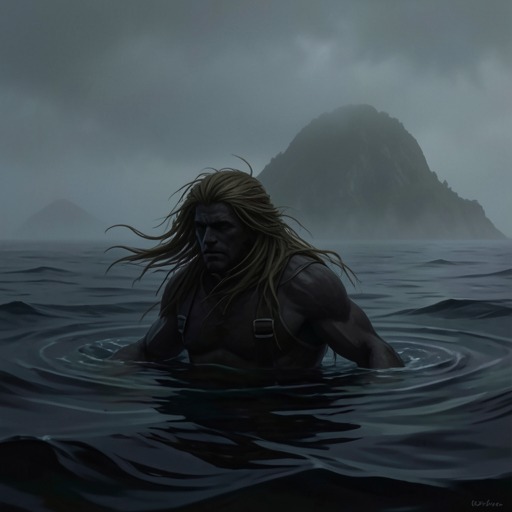
Fantastic Beasts and Where to Find ThemThe Isle of Drear is an unplottable island off the northernmost tip of Scotland, known as the sole place where Quintapeds are found. Its isolation is not merely geographical: the island’s concealment is explicitly associated with the danger of its inhabitants, while the story of how they came to live there remains impossible to verify.
Setting and Inhabitants
The island lies off Scotland’s northernmost tip and has been made unplottable because Quintapeds are found there. The creature’s entry identifies Drear as its exclusive habitat, making the island an unusually precise boundary between the wider wizarding world and a dangerous, localized population.
Quintapeds are described as having a particular taste for humans. Their low-slung bodies are covered in thick reddish-brown hair, including their five legs, each ending in a clubfoot. The description makes the island’s concealment legible as a protective measure: Drear is not simply remote, but a place associated with a creature that poses a direct threat to people.
Legend and Uncertainty
A legend says the island was once populated by two families, the McCliverts and MacBoons, and recounts their transformation into Quintapeds. The account presents this origin as a tale rather than established history. Whether it is true can never be known: no McCliverts or MacBoons survive to report what happened to their ancestors, and Quintapeds cannot talk.
The island therefore preserves a story that its inhabitants cannot confirm and its vanished human families cannot correct. Its unplottability and the silence surrounding the legend reinforce one another: Drear is hidden from maps, while the past that might explain its monstrous population is likewise beyond recovery.
Role in the Creature Catalogue
Drear appears within a reference work that assigns creatures descriptions, habitats, and danger classifications. Here, the island’s identity is supplied through the Quintaped entry: a named location, a specific position on the Scottish coast, and a reason for concealment. That documentary precision sits beside an explicitly unknowable origin story, allowing the entry to distinguish what the catalogue claims as fact—the creature’s restricted habitat—from what it leaves as legend.