J. K. Rowling and Comic Relief's charitable partnership
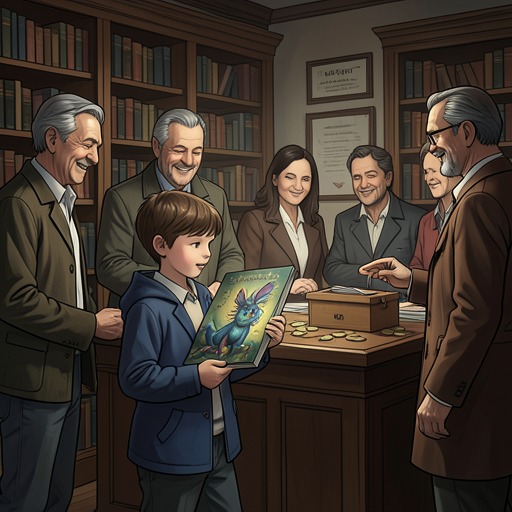
Fantastic Beasts and Where to Find ThemJ. K. Rowling and Comic Relief’s charitable partnership joined the publication of Fantastic Beasts and Where to Find Them and Quidditch Through the Ages to a fundraising appeal for children around the world. The arrangement assigned a share of book sales to Comic Relief’s Harry’s Books fund, added Rowling’s donated royalties, and asked readers to understand purchase as a direct contribution to charitable work. Set beside the book’s fictional wizarding apparatus, the appeal makes the edition itself an instrument of aid as well as a work of reference.
Origins and Shared Purpose
Comic Relief is presented as a major British charity, begun in 1985 and reported in the author’s note to have raised more than $250 million for organizations including the Red Cross, Oxfam, Sight Savers, the International HIV/AIDS Alliance, and Anti-Slavery International. Rowling describes herself as having long wanted to write the companion volumes and as someone who had always supported Comic Relief. When Richard Curtis of Comic Relief wrote to her, she regarded the project as an opportunity to help the charity; the books’ publication brought that pre-existing literary interest and charitable commitment together.
The partnership’s beneficiary was not left abstract. The Harry’s Books fund was created to support children’s causes internationally, and the edition lists education, opposition to child slavery, reunification of parents and children separated by war, education about the AIDS/HIV epidemic, and support for children injured by landmine explosions. These named aims give the appeal a wider scope than a general invitation to donate: the proceeds are framed as support for specific needs affecting children.
How the Fundraising Works
The edition states that twenty percent of the retail sales price, less taxes, from sales of both books would go to the Harry’s Books fund. It also reports that Rowling donated all royalties to which she was entitled. The publisher’s notice repeats the twenty-percent arrangement for this book and clarifies that the purchase is not tax deductible. The stated mechanism therefore combines a defined portion of sales revenue with the author’s royalty contribution, while distinguishing the charitable gift from a tax-deductible purchase.
The appeal also describes how production costs were reduced. Publishers, vendors, retailers, and others involved in bringing the books to readers contributed time, energy, and materials either free or at reduced cost; the notice includes paper suppliers, printers, binders, and booksellers among those who helped. This collective contribution is presented as making the promised share of the sales price possible. The account emphasizes not only the author’s role but also the participation of the publishing and retail chain through which the books reached buyers.
The Reader’s Part and the Charity’s Claims
The author’s note turns the transaction into a direct moral appeal: every copy sold counts, and the text offers the calculation that fifty cents could send a child to school for a week and change that child’s life. It directs readers to Comic Relief’s website to see how the money is being used, and the book closes the note with thanks for buying it. The appeal thus moves from the scale of the fund to a concrete illustration of what a small amount might accomplish, then back to the reader’s act of purchase.
Comic Relief’s funding model is also used to strengthen the appeal. The note says the charity’s costs are sponsored, so public donations do not pay its administration; it further claims that, through accumulated interest, the organization passes on more than 100 percent of what it raises to charity projects. These are claims made by the book’s charitable appeal, not independently assessed outcomes in the edition. Their rhetorical function is clear: they present the donation as reaching projects rather than being consumed by the charity’s operating costs, and portray the fund as capable of extending the value raised.
Publication, Framing, and Significance
The fundraising message appears within a deliberately layered edition. Readers are told that they hold a duplicate of Harry Potter’s own copy of Fantastic Beasts, complete with marginal notes by Harry and his friends, while the volume is also offered for sale in wizarding and Muggle bookshops. The fictional framing makes the book feel like an object circulating within the wizarding world; the accompanying real-world appeal redirects that circulation toward Comic Relief’s children’s fund. The same physical book therefore addresses two audiences at once: readers invited into a fictional reference work and buyers asked to participate in a real charitable scheme.
The project also depended on a broad network beyond Rowling and Comic Relief. The book credits the time, labor, and materials contributed by publishers, vendors, retailers, and production workers, and it identifies the fund as established by Comic Relief U.K. and Rowling. In this arrangement, authorship, publishing, distribution, and purchase are all brought into the charitable frame. The partnership’s defining achievement, as the edition presents it, is this conversion of a book’s commercial journey—from production to sale—into a stated channel for supporting children’s causes.