Madame Elfrida Clagg’s Wizards’ Council meeting
Fantastic Beasts and Where to Find ThemMadame Elfrida Clagg’s Wizards’ Council meeting was a failed attempt to draw magical creatures closer to wizarding government: Madame Elfrida Clagg broadened the definition of “beings” to include those able to speak the human tongue, but the new criterion neither prevented violence nor resolved disputes over representation. The episode shows how a supposedly inclusive category could still make participation depend on a wizard-defined standard, while the creatures it sought to include asserted interests and forms of autonomy the Council could not accommodate.
Background and Intended Reform
As successor to Burdock Muldoon, Madame Elfrida Clagg tried to redefine “beings” in the hope of creating closer ties with other magical creatures. Her proposal shifted the basis of inclusion away from the earlier two-legged test: those able to make themselves understood to Council members would qualify. The change treated communication, rather than bodily form, as the gateway to political recognition, and Clagg invited all who met that standard to the next Council meeting.
The invitation was expansive in principle, but its terms still made wizarding comprehension the measure of eligibility. The definition did not ask simply whether a creature possessed a language or could communicate within its own community; it privileged the ability to speak the human tongue or otherwise be understood by the Council. The resulting meeting tested the limits of that approach: an expanded category could bring more creatures into the room without making their interests compatible or granting them an equal say in how participation was defined.
Disorder at the Meeting
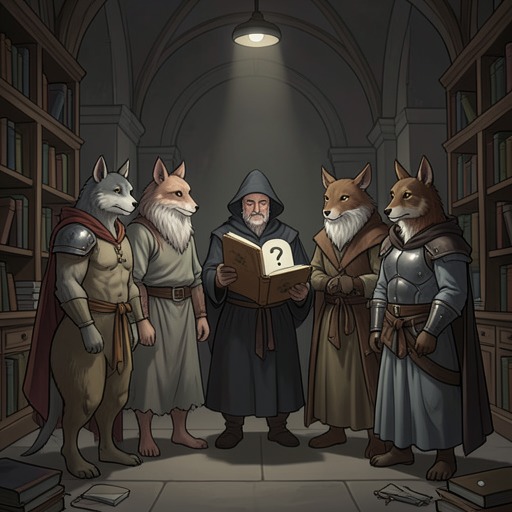
The attempt to broaden membership did not avert a repeat of the earlier disorder. Goblins had taught trolls a few simple sentences, and the trolls used this acquired speech to qualify under the new definition. They then proceeded to destroy the hall, showing that the ability to meet a verbal threshold offered no assurance that a gathering would proceed peacefully. The episode's reversal is pointed: speech makes the trolls eligible to attend, but does not make the Council's framework capable of containing what follows.
The meeting also drew beings whose objections concerned the Council's priorities rather than the mechanics of entry. The dead attended, although they had to glide rather than walk on two legs, and left in disgust at what they called the Council’s “unashamed emphasis on the needs of the living as opposed to the wishes of the dead.” Their departure makes visible a conflict of interests that a broad definition could not settle: formal attendance did not mean that the Council would treat every constituency's needs as consequential.
Exclusion, Protest, and Self-Government
The centaurs' position registered the change in classification and the limits of the reform at once. Under Burdock Muldoon they had been classified as “beasts”; under Madame Elfrida Clagg they were defined as “beings.” Yet they refused to attend the meeting, protesting the exclusion of the merpeople, who above water could converse only in Mermish. The centaurs' refusal therefore challenged not merely their own place in the Council but a system in which recognition depended on speech accessible to wizarding listeners.
The dispute continued beyond this meeting. Centaurs objected to being placed in the same “being” category as creatures such as hags and vampires, and declared that they would manage their own affairs separately from wizards. A year later, the merpeople made the same request. The Ministry of Magic reluctantly accepted their demands. The sequence turns the meeting's failed invitation into a wider argument about jurisdiction: inclusion in a common classification did not necessarily persuade a community to submit its affairs to wizarding administration.
That negotiated separation did not erase the institutions of oversight. A Centaur Liaison Office existed in the Beast Division of the Department for the Regulation and Control of Magical Creatures, but no centaur ever used it. Inside the department, “being sent to the Centaur Office” became an in-joke meaning that the person in question was shortly to be fired. The empty office is a compact aftermath to the Council's attempt at representation: an administrative channel remained on paper, while the people it was meant to connect with declined to use it.
Place in the History of Creature Governance
The meeting belongs to a longer, unresolved effort to decide who counted as a “being” and who could participate in wizarding institutions. Clagg's definition was more accommodating than a bodily test, but it made intelligibility to the Council decisive; the trolls' destruction of the hall, the dead's departure, and the centaurs' boycott each reveal a different failure in that model. The event is therefore not simply an unsuccessful meeting. It demonstrates that eligibility, meaningful representation, and agreement about shared government are separate questions.
Later efforts to govern magical creatures also combined formal rules with administrative control. In 1750, Clause 73 was inserted into the International Code of Wizarding Secrecy, assigning wizarding governing bodies responsibility for the concealment, care, and control of magical beasts, beings, and spirits in their jurisdictions. The Department for the Regulation and Control of Magical Creatures dealt with creatures that remained conspicuous to Muggles, and the trade in fantastic beasts was closely watched; the 1965 Ban on Experimental Breeding made the creation of new species illegal. These measures concern secrecy, care, control, and trade rather than Council membership, but they place the meeting within a broader governing structure whose reach depended on rules and offices as well as contested definitions.
The episode's central tension persists through these contrasts: a creature may be recognized as a “being” and still reject the category's company, its forum, or its authority. Clagg's reform widened the door, but the meeting showed that a doorway is not a settlement. Participation remained entangled with whose language counted, whose needs the Council prioritized, and whether any community wished to have its affairs managed by wizards.