Ministry of Magic
Fantastic Beasts and Where to Find ThemThe Ministry of Magic is the magical government whose authority reaches from creature classification and trade regulation to the concealment of magic from Muggles. It is presented not as a single abstract power but as a system of departments, international duties, negotiated boundaries, and practical interventions. Its work protects secrecy and manages dangerous creatures, while its definitions of who counts as a legal “being” determine who may claim a voice in magical governance—and do not always align with the wishes of those being classified.
Government and Legal Authority
The Ministry’s responsibilities sit within an international framework. In 1750, Clause 73 was inserted into the International Code of Wizarding Secrecy, placing responsibility on each wizarding governing body for the concealment, care, and control of magical beasts, beings, and spirits within its jurisdiction. The Ministry thus acts under a shared rule rather than an exclusively domestic mandate: it must keep magical creatures hidden, but is also charged with their care and control.
That framework is described as imperfect in practice. The account acknowledges occasional breaches of Clause 73, making secrecy an ongoing administrative undertaking rather than a condition secured once and for all. The Ministry’s role therefore includes both routine management and responses to exposure, with magical visibility treated as a problem that can require different levels of intervention.
The organization also has an internal structure for creature governance. The Department for the Regulation and Control of Magical Creatures is the Ministry’s second-largest department, a measure of the scale and variety of the work assigned to it. Its responsibilities encompass species with differing needs, from the management of habitats and trade to responses when creatures remain conspicuous to Muggle observers.
Classification and Political Membership
The Ministry’s system of creature administration rests on distinctions between “beings” and “beasts.” The underlying question is political as well as descriptive: a being is a creature considered worthy of legal rights and a voice in the magical world’s governance. The history of classification shows that these boundaries have been repeatedly revised, and that a formal category can determine access to representation without resolving whether a community accepts the arrangement.
Early definitions demonstrate the instability of the boundary. In the fourteenth century, Burdock Muldoon, Chief of the Wizards’ Council, decreed that magical beings who walked on two legs would qualify as beings. Later, Madame Elfrida Clagg tried to redefine the category in the hope of bringing other magical creatures into closer ties with wizards. These attempts show successive authorities trying to turn a contested political relationship into an administrable rule; the criteria did not, by themselves, settle who wanted to participate in wizarding governance.
In 1811, the newly appointed Minister for Magic, Grogan Stump, established a definition that most of the magical community accepted. The resulting divisions distinguish beasts, beings, and spirits, and the Ministry’s Department for the Regulation and Control of Magical Creatures is organized accordingly into Beast, Being, and Spirit divisions. The classifications are consequential institutional boundaries, not merely labels: they shape which part of government is responsible for a creature and how its status is understood.
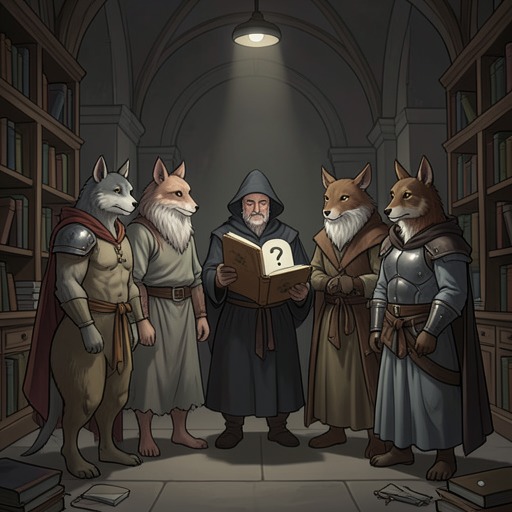
The system’s limits are clearest in the treatment of centaurs and merpeople. Centaurs objected to being grouped with creatures such as hags and vampires under the same being status, and declared that they would manage their own affairs separately from wizards. A year later, merpeople made the same request. The Ministry accepted these demands reluctantly. Although a Centaur Liaison Office remains within the Beast Division, no centaur has ever used it; within the department, being sent to that office has become an in-joke meaning that the employee in question is about to be fired. The official structure persists, but the community it is meant to serve refuses its channel of contact.
Creature Regulation and Concealment
The department’s practical work includes regulating the trade in magical creatures. The Ministry keeps strict watch on the trade in fantastic beasts, including the trade in their young and eggs. The 1965 Ban on Experimental Breeding made the creation of new species illegal, placing a direct prohibition on one form of human intervention in creature populations. The policy combines control over commerce with a limit on breeding, rather than treating the appearance of new species as an unregulated consequence of private activity.
Habitat protection is another part of the concealment regime. The book identifies safe habitats as an important means of keeping creatures out of sight, linking protection of living space to the wider requirement that magic remain hidden. This work is distinct from simply suppressing evidence after a sighting: it seeks to manage where creatures live so that their presence is less likely to produce a public breach.
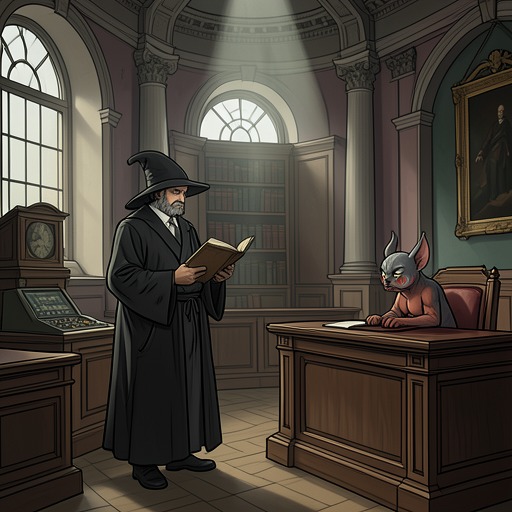
When a creature does become visible to a Muggle, the Ministry has measures for addressing the resulting exposure. Memory Charms are described as a response when a Muggle sees what they are not supposed to see, and trained Obliviators may be sent in. In the worst magical-Muggle collisions, the Office of Misinformation becomes involved. It can liaise directly with the Muggle prime minister to seek a plausible non-magical explanation. The office’s efforts to persuade Muggles that photographic evidence of the Loch Ness kelpie is fake illustrate how the Ministry’s response may extend from an individual memory to public evidence and government-level explanation.
Institutional Reach and Its Tensions
The Ministry’s administration brings together duties that can pull in different directions: care for magical creatures, control of their trade and breeding, and the concealment demanded by the international secrecy regime. Its large creature-regulation department reflects how much ongoing labor this combination requires, while the history of classification reveals that administrative efficiency cannot settle questions of political membership or self-determination.
The centaurs’ unused liaison office crystallizes that tension in a small bureaucratic detail. The Ministry has created a formal route for contact, yet the centaurs’ refusal gives that provision little practical force; inside the department, the office instead survives as a joke about dismissal. Across the broader account, the Ministry’s authority is therefore substantial but not absolute. It can classify, regulate, conceal, and negotiate, but the communities under its system may reject its categories or decline its institutions.