Newt Scamander
Fantastic Beasts and Where to Find ThemNewt Scamander is a wizard, author, and magizoologist whose work made the study of magical creatures both a lifelong vocation and a public record. Born in 1897, he travelled widely to research them, wrote the enduring guide Fantastic Beasts and Where to Find Them, and served in the Ministry of Magic; his career also reached into creature policy through his role in establishing the Werewolf Register and his advocacy of the Ban on Experimental Breeding.
Identity and Early Interest
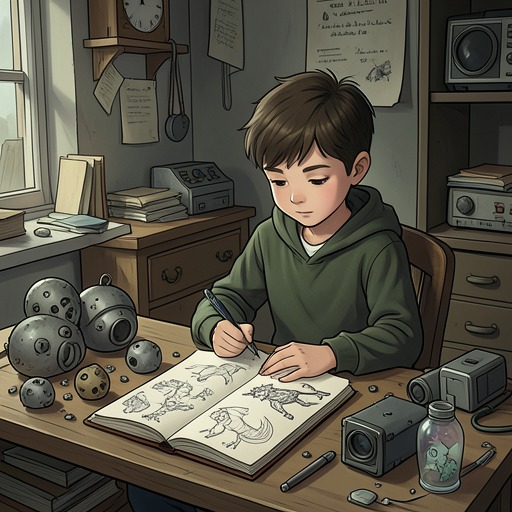
Newton Artemis Fido Scamander, known as Newt, was born in 1897. His interest in fabulous beasts began early and was encouraged at home by his mother, an enthusiastic breeder of fancy Hippogriffs. In the book’s account of his childhood, he looks back to the seven-year-old wizard spending hours in his bedroom dismembering Horklumps. That early, hands-on curiosity anticipates the combination that defines his later work: attention to creatures as subjects of study, and a willingness to encounter them directly rather than treat them as distant curiosities.
The personal history behind his guide is thus not presented as a sudden professional calling. Its roots lie in childhood observation and a family environment already involved in breeding magical animals. The book frames its contents as the fruit of many years of travel and research, connecting that early fascination to a lifetime of accumulated knowledge.
Ministry Career and Field Research
After graduating from Hogwarts School of Witchcraft and Wizardry, Scamander joined the Ministry of Magic, working in the Department for the Regulation and Control of Magical Creatures. His early Ministry career included two years at the Office for House-Elf Relocation. He later worked in the Beast Division’s Werewolf Capture Unit and transferred to the Werewolf Registry, where his exceptional knowledge of unusual magical animals ensured rapid promotion.
His Ministry work did not confine him to administration. His post in the Werewolf Capture Unit led to numerous research trips abroad, during which he collected information for his worldwide best-seller, Fantastic Beasts and Where to Find Them. The guide’s authority therefore rests, in the account of its making, on travel and accumulated field knowledge as well as written study. Its scope is global, and its continuing circulation is signalled by its having reached a fifty-second edition.
The book also gives a glimpse of the practical risks behind that research. Scamander recalls gaining creatures’ trust and, on occasion, beating them off with his travelling kettle. The kettle is an unassuming piece of field equipment, but it marks the distance between the ordered form of a compendium and the difficult encounters from which its knowledge came: the animals are not simply entries on a page, and observation could require both patience and defence.
Writing and Public Work
The first edition of Fantastic Beasts was commissioned in 1918 by Augustus Worme of Obscurus Books, who asked Scamander to write an authoritative compendium of magical creatures. The commission gave formal shape to a project rooted in years of travel and research. What began as a publisher’s request became a widely read work whose fiftieth-second edition signals a long afterlife beyond its first appearance.
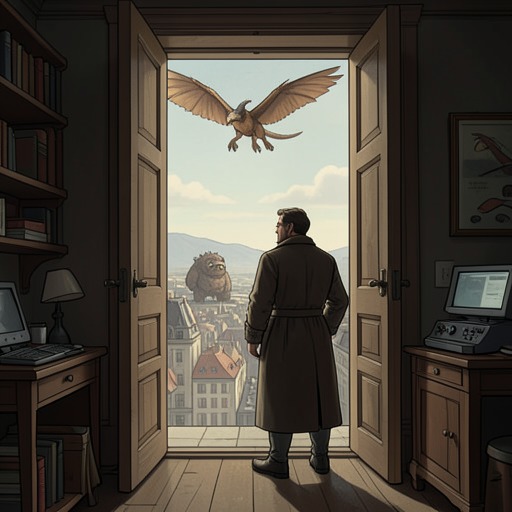
The guide’s purpose is more than a catalogue of extraordinary animals. Scamander’s introduction addresses a practical question that repeatedly arises in the study of magical creatures: why Muggles do not notice them. Elsewhere, the book describes the Ministry’s continuing burden of creatures that remain conspicuous to Muggles, whether deliberately or inadvertently. In this way, the compendium connects knowledge of the creatures themselves to the everyday problem of managing their presence in a world whose non-magical population is not meant to see them.
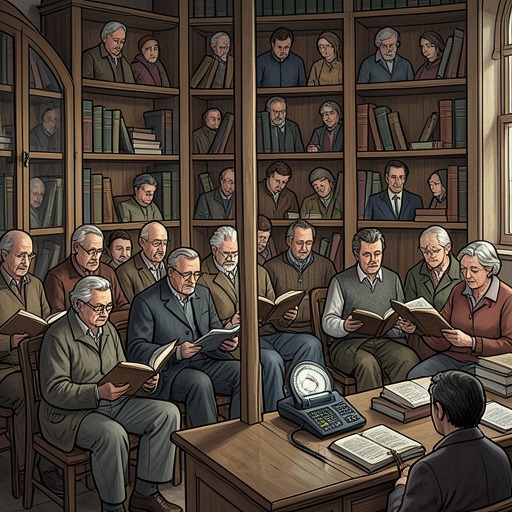
That concern places Scamander’s work within a wider structure of concealment and governance. In 1750, Clause 73 was inserted into the International Code of Wizarding Secrecy, assigning each wizarding governing body responsibility for concealing, caring for, and controlling magical beasts, beings, and spirits in its jurisdiction. The Department for the Regulation and Control of Magical Creatures, the Ministry’s second-largest department, handles the varied needs of magical creatures, including cases that threaten secrecy because an animal remains visible to Muggles. Scamander’s subject, then, sits at a junction between natural history and public administration: identifying creatures is inseparable from questions about how they are cared for, controlled, and kept hidden.
Regulation and Creature Autonomy
Scamander’s professional record includes work that altered the administrative treatment of magical creatures. He was almost solely responsible for creating the Werewolf Register in 1947, a substantial contribution to the Ministry’s institutional response to werewolves. The account presents the register as a major part of his service, while also noting that he himself identifies a different achievement as the work of which he is proudest.
That achievement is the Ban on Experimental Breeding, passed in 1965. The ban made the creation of new species illegal, while the Department for the Regulation and Control of Magical Creatures kept strict watch on the trade in magical beasts, their young, and their eggs. Scamander’s pride in the ban gives his career a distinct ethical and regulatory dimension: his work was not only to gather knowledge about fantastic creatures, but also to help restrict human practices that could produce new species through experimentation. The book does not supply a detailed account of his part in the ban’s passage, but makes clear both his pride in it and its legal consequence.
The limits of official classification and administration appear elsewhere in the guide. Centaurs objected to being assigned the same “being” status as creatures such as hags and vampires, and declared that they would manage their own affairs separately from wizards. A year later, merpeople made the same request; the Ministry of Magic accepted both demands reluctantly. Although a Centaur Liaison Office exists in the Beast Division, no centaur has ever used it, and within the Department the phrase “being sent to the Centaur Office” became an in-joke meaning that an employee was about to be fired. These details show that creature governance is not simply a matter of applying Ministry categories: the beings being classified may refuse the jurisdiction or status those categories impose.
Recognition and Legacy
In 1979, Scamander received the Order of Merlin, Second Class, in recognition of his services to the study of magical beasts, or magizoology. The honour provides formal recognition of a career built through research, writing, and public service, rather than marking a single discovery. By then his guide had become a worldwide best-seller, and its repeated editions carried his work well beyond the Ministry institutions in which he had served.
Scamander is retired and lives in Dorset with his wife, Porpentina, and their three Kneazles: Hoppy, Milly, and Mauler. The closing detail brings his life back to the creatures that shaped it, now in the domestic surroundings of retirement. His legacy is consequently both institutional and personal: a widely used record of magical beasts, a career in the Ministry’s creature services, and concrete interventions in how magical communities register and regulate them.