Bath
Far from the Madding CrowdBath is the destination of Bathsheba Everdene’s impulsive attempt to resolve her entanglement with Sergeant Troy, and a place whose distance makes the limits of her plan plain. Though she imagines a swift visit followed by a discreet return, the journey is far longer than she understands; later, Cain Ball’s account of seeing her with Troy there brings her private attachment into the knowledge of Weatherbury’s men.
Bath as a Distant Destination
After leaving the road to visit Liddy Smallbury at Yalbury, Bathsheba decides that she must see Troy at once. A letter cannot reach him in time, and she hopes to implore him in person to help her out of her dilemma. Her intended purpose is to bid him farewell and dismiss him, but the narrator observes the contradiction in seeking a lover’s physical support while trying to renounce him. Bath therefore enters the episode both as a practical destination and as the place where Bathsheba’s attempt to master her feelings will be tested.
Bathsheba returns toward Weatherbury so that she can take a horse and gig, waiting until the village is asleep before setting out. She plans to meet Troy in the morning, then rest the horse and begin the return journey early enough to reach Liddy at Yalbury that evening. Her secrecy is integral to the scheme: she expects to come home without anyone knowing that she has been away. But, as a newcomer with little knowledge of the local distances, she estimates the journey at less than half its actual length. The resolve to go overrides caution, while her mistaken geography makes the proposed schedule impossible.
The Night Journey and Its Discovery
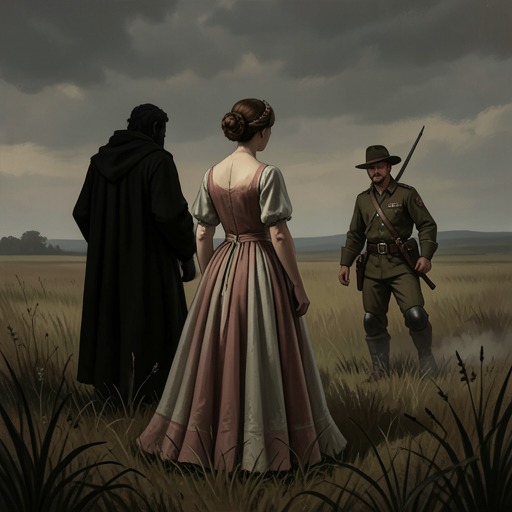
Bathsheba takes Dainty, whose lameness proves to be only a stone in her shoe, and drives through the night. When Gabriel Oak and Jan Coggan encounter her, they explain that they had thought a horse was stolen and followed the carriage. Bathsheba tells them she could not wake Maryann after hammering at her window for ten minutes, so she fetched the coach-house key herself. She had left a chalk message on the doors explaining that she had taken the horse and gig and would return, but the men could not have read it before daylight.
Once Bathsheba realizes why they followed her, her irritation gives way to appreciation of their concern. She asks them to return, and they comply, agreeing to keep the incident quiet. She continues toward Bath, confident that she will arrive by daylight; Gabriel doubts that she can do so. The scene sets her private determination against the physical demands of the road, while the men’s attempted protection creates a small but consequential breach in her secrecy.
Bath in Cain Ball’s Account
Bath becomes more than a destination when Cain Ball reports what he saw there. In conversation with Gabriel, he says that he saw Bathsheba in a park-like place with seats, shrubs, and flowers, arm in arm with a soldier whom he believes to be Troy. They sat together for more than half an hour, talking; Bathsheba appeared to cry, and afterward her eyes were shining while her face was pale. Cain describes them looking into each other’s faces with unmistakable intimacy.
The account reaches Gabriel through Cain’s recollection rather than through a narrated scene of the meeting itself. Its details—Bathsheba’s tears, her changed expression, and the couple’s closeness—give substance to Gabriel’s fear and contrast with Bathsheba’s stated intention to end the relationship. Cain’s imperfect certainty about the soldier is qualified, but the report is later corroborated when Troy returns from Bath to Weatherbury. Bath thus links a concealed encounter to the suspicions and confrontations that follow.
Return from Bath and Consequences
When William Boldwood sees Troy arrive in Weatherbury, he recognizes him as the man Bathsheba had gone to see. Boldwood approaches him that night and raises both Bathsheba and Fanny Robin, telling Troy that he ought to marry Fanny. Troy says he wishes to but cannot, and offers poverty as his reason. Bath is consequently part of the chain of events that brings Troy back into Boldwood’s immediate reach and turns private romantic conflict into a direct confrontation.
The city’s narrative importance lies in the difference between Bathsheba’s plan and what her journey sets in motion. She intends to control the crisis by travelling secretly, speaking to Troy, and returning unnoticed; instead, the distance defeats her timetable, her servants discover the departure, and Cain’s later testimony exposes the closeness of her meeting. Bath is both a real place on the road between Weatherbury and Troy and a point from which concealed relationships become visible to others.