Bathsheba's Conditional Promise to Boldwood
Far from the Madding CrowdBathsheba’s conditional promise to Boldwood is a pivotal negotiation between obligation and desire. In the private conversation that follows his proposal, she offers the possibility of marriage as a way to answer the hope she has helped awaken, but refuses to make that possibility a commitment. Her words give Boldwood grounds to wait while leaving her own decision unsettled.
Causes and Background
Bathsheba considers Boldwood’s offer with a clear sense of its practical attractions. He is respected, well-to-do, close at hand, and, by the standards of her community, an eminently suitable husband. Yet she esteems and likes him without wanting him. Marriage would also mean giving up some of the independence and novelty of managing a farm and household as their absolute mistress.
Her reluctance is complicated by her belief that she ought to accept the consequences of having begun the situation. The promise is therefore not born of reciprocated love: it is shaped by fairness, responsibility, and the difficulty of correcting an emotional disturbance she has helped create. She can reason that refusing Boldwood would be ungenerous and still feel that she cannot marry him.
The Conditional Promise
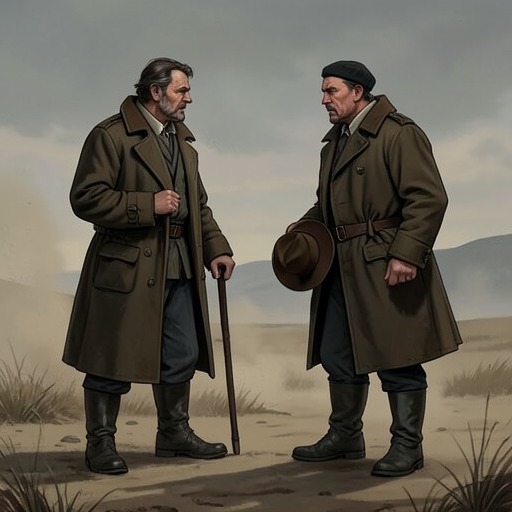
After the shearers have left, Boldwood and Bathsheba are alone. He holds her hand and kneels over the back of a chair; the unusual display of his love unsettles her even as it shows how completely he has exposed his feelings. Bathsheba tells him that she will try to love him and would be willing to marry him if she can believe she would make him a good wife. She does not, however, give him a solemn promise that night.
Instead, she asks him to wait several weeks, until she can see her situation more clearly. She points to the five or six weeks before harvest, when Boldwood expects to be away from home, and says she has reason to hope that by then she may be able to promise to become his wife. She makes the limit unmistakable: she has reason to hope, but does not promise yet. Boldwood accepts this distinction as enough and leaves reassured by the possibility she has offered.
Immediate Consequences
For Boldwood, the conditional answer turns uncertainty into expectation. He has disclosed the depth of his attachment, and Bathsheba’s reference to a possible future marriage gives him something definite to await, even though she has carefully reserved the right not to decide. The exchange thus establishes an uneven understanding: he receives hope, while she remains conscious that the central question—whether she can love him—has not been answered.
Bathsheba’s response also brings her own earlier conduct into sharper focus. She is troubled by the situation she has brought about and tries to make amends, but the possible remedy feels like a penalty she is schooling herself to pay. Her wish to act honorably does not settle her feelings; rather, it binds her to a future decision while leaving her present reluctance intact.
Significance
The scene turns a promise into an action with divided effects. Bathsheba’s careful qualifications preserve her freedom to refuse, but Boldwood hears enough to wait with confidence. Her words are neither a marriage agreement nor a simple rejection; their dramatic force lies in the distance between the limited assurance she intends and the hope he is prepared to take from it.
The exchange also crystallizes a recurring conflict in Bathsheba’s conduct: deliberation can identify the reasons for restraint, yet emotional impulse and a sense of responsibility still shape what she does. Here, the immediate consequence of her attempt at fairness is not resolution but a charged delay. Boldwood departs reassured; Bathsheba is left to consider whether the possible future she has described is one she can genuinely choose.