Boldwood’s proposal at the sheep-washing
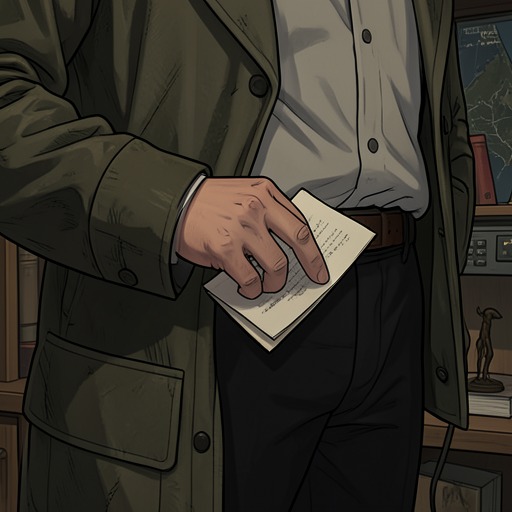
Far from the Madding CrowdBoldwood’s proposal at the sheep-washing is a turning point in the relationship between Boldwood and Bathsheba: his long-nurtured idealization becomes an explicit offer of marriage, while Bathsheba’s respect and sympathy prove distinct from romantic love. Her answer neither accepts nor conclusively rejects him. Instead, she asks for time, and her uncertainty is sharpened by the Valentine she had sent as a thoughtless act and which Boldwood has interpreted as a promise of feeling.
Background and Setting
By the end of May, Boldwood has decided he can no longer tolerate suspense. His love has grown in part through distance: he has observed Bathsheba from afar but has had little ordinary social contact with her. The resulting image excludes the commonplace realities of her life and elevates her in his imagination. He has also mistaken the Valentine she sent him for evidence that his feelings might be returned. When he goes to the sheep-washing, he is pursuing Bathsheba not simply as a fellow farmer but as the woman around whom he has built an ideal.
The scene unfolds during the working business of washing sheep. Gabriel Oak, Jan Coggan, Matthew Moon, Joseph Poorgrass, Cain Ball, and other farm workers are occupied in the pool, while Bathsheba watches nearby in a new riding-habit, her horse’s reins looped over her arm. Boldwood first greets her among the workers. She misreads his constrained manner as severity and withdraws along the river; he follows until they are out of sight of the washing. The proposal thus emerges from a public farm activity but is spoken in a private stretch of the riverbank, with the noise of the workers still audible nearby.
The Proposal
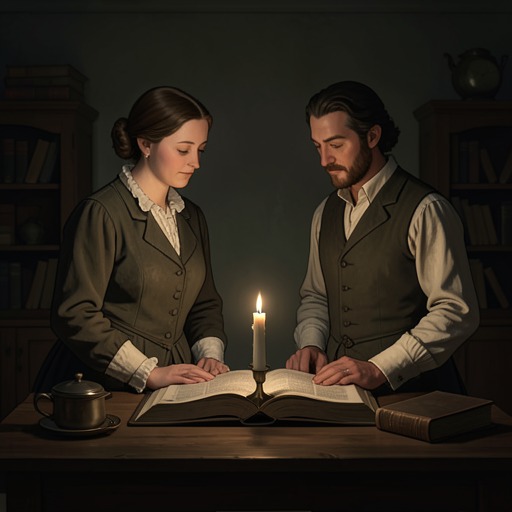
Boldwood opens with a quiet declaration that he has come without preface to ask Bathsheba to marry him. He explains that he is forty-one, had regarded himself as a confirmed bachelor, and had not previously imagined himself as a husband. Seeing Bathsheba has changed his view of his life. He tells her that he wants her as his wife and that his life feels burdensome without her.
Bathsheba answers that she respects him but does not feel what would justify accepting. Boldwood presses his hope rather than treating this as a settled refusal. He asks her not to say no, and appeals to the Valentine as a sign that she may have come to care for him, even unknowingly. Bathsheba recognizes the source of his belief: she had sent the card, and he has constructed a hopeful meaning from it. She tells him plainly that she has not fallen in love with him, while apologizing for the thoughtlessness of the Valentine and wishing she had not caused him pain.
Sympathy, Status, and Uncertainty
Boldwood tries to make the offer attractive in practical as well as emotional terms. He promises to protect and cherish Bathsheba, spare her household worries, and take over responsibilities such as dairy management. He says she would not need to concern herself with haymaking or the weather at harvest, and offers to replace his family chaise with a pony-carriage of her own if she preferred. His proposal imagines marriage as both devotion and protection, but its promised arrangements would also displace Bathsheba from the active farm management that defines her independence.
Bathsheba is moved by the simplicity and intensity of his appeal. She does not want him to suffer, and feels that she has wronged him, but sympathy does not supply the love she says is absent. Nor does she take the practical advantages of marriage as sufficient reason to accept. She asks him to let the matter rest because she cannot think clearly, and fears that the workers will notice them. When Boldwood asks whether she absolutely refuses, she says she cannot answer; she allows that he may think of her, but specifically tells him not to hope. She then asks him to give her time and not to call the next day.
Aftermath and Significance
Boldwood leaves grateful and happier because Bathsheba has not given him a final refusal, though she has cautioned him against hope. Once he is alone, the emotional intensity recedes and ordinary reality returns. The distinction between his interpretation and her actual feelings remains unresolved: the Valentine has encouraged his expectation, but her words have made clear that she is not in love with him.
The proposal also exposes Bathsheba’s own conflict. She recognizes that, as the person who began what she calls the game by sending the Valentine, she may owe Boldwood some answer for the consequences. At the same time, she cannot honestly accept a marriage she does not want. She regards him as worthy and desirable by the standards of security and social standing, yet does not want him as a husband; her continuing command of the farm gives her another reason not to hasten into marriage. The scene therefore turns on the gap between responsibility and consent, and between a gesture’s intended lightness and the serious meaning another person assigns to it. It begins Boldwood’s explicit pursuit, but leaves Bathsheba’s decision—and the cost of her earlier thoughtlessness—open.