Little Weatherbury Farm
Far from the Madding CrowdLittle Weatherbury Farm is the agricultural holding tenanted by Boldwood, whose secluded house and working farm make it both a practical center of rural life and the setting for his private meditations. Its proximity to Bathsheba Everdene’s meadows connects Boldwood’s inward romantic fixation with the neighboring farm’s visible rhythms of labor, while the novel’s wider agricultural scenes show how seasonal work and weather bind the farms together.
Setting and Farm Life
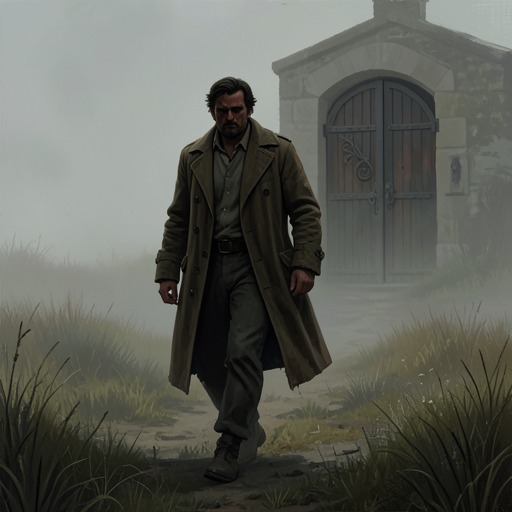
Boldwood’s house stands back from the road, with its stables behind it among laurel bushes. The stable is a working space as well as a refuge: six horses occupy the stalls, and Boldwood walks there in the evenings after checking that his animals have been fed. The routine places him within the material life of a farm even as his inward reserve sets him apart from the sociability of the parish.
The narrative introduces the farm through Boldwood’s repeated journeys out and back. To visitors hoping to glimpse a local gentleman, the sound of light wheels raises expectations of a lord or squire, only for the passing figure to be Boldwood. The contrast establishes his local standing without making the farm a seat of grand society: it is a substantial, self-contained holding whose tenant is regarded as the nearest approach to aristocracy in that remote part of the parish.
Neighboring Farms and Seasonal Work
Little Weatherbury Farm lies beside fields belonging to Bathsheba’s farm. In early spring, when sheep are first put to grass, Boldwood looks across the hedge and sees Bathsheba, Gabriel Oak, and Cainy Ball in the neighboring meadow. This ordinary view becomes decisive for him: Bathsheba’s appearance breaks through his habitual reserve and prompts him to resolve to speak with her.
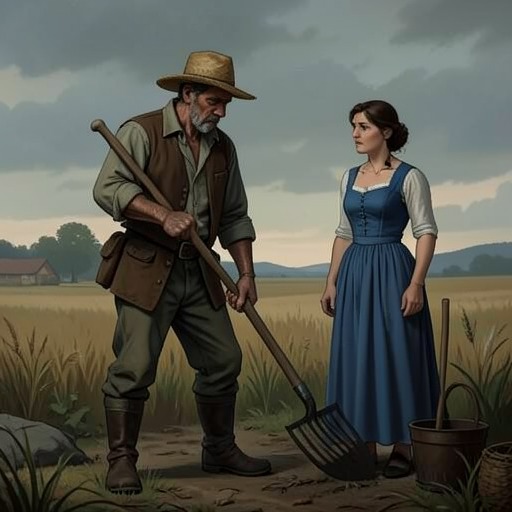
The farms are also joined by the calendar of agricultural labor. At the end of May, Boldwood learns that Bathsheba is at the sheep-washing and goes there to find her. The circular brick pool, the workers handling the sheep, and Bathsheba standing nearby in riding clothes situate his courtship within communal farm work rather than a private social visit. Later, on the first day of June, the sheep-shearing at Bathsheba’s farm brings together workers from the district, with Gabriel supervising and Bathsheba watching the handling of the flock. These scenes place the separate holdings within a shared rural economy of seasonal tasks.
Boldwood and the Farm
Boldwood’s relation to the farm is marked by regularity and solitude. In the stables he attends to his horses and then paces alone, a repeated practice that gives physical form to a temperament the narrator describes as outwardly still but capable of extreme feeling. The farm’s order does not prevent emotional upheaval; instead, the quiet setting makes the contrast between his established habits and his sudden attachment especially clear.
His feelings develop through distance and limited acquaintance. He watches Bathsheba from across the fields, while the lack of ordinary social intercourse leaves her everyday circumstances largely unknown to him. The neighboring meadow and the route to the sheep-washing thus become more than geographical details: they are the spaces through which Boldwood’s idealized image of Bathsheba takes shape, before his decision to approach her brings that private preoccupation into the open.
Place in the Wider Agricultural Landscape
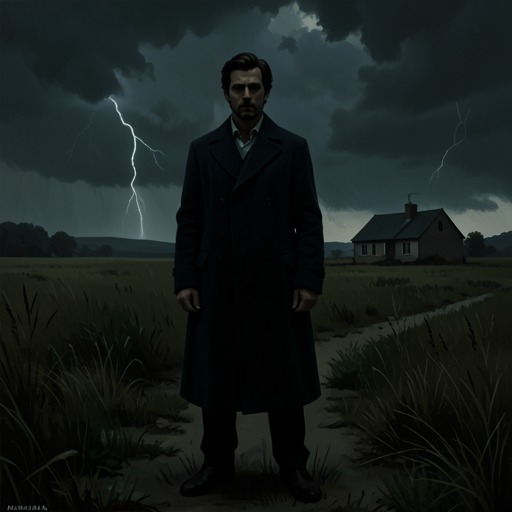
The novel’s other farm scenes clarify the conditions that shape life around Little Weatherbury Farm. Sheep, hay, shearing, and grain harvest all demand timely labor, while changing weather can threaten the value of a season’s work. At Weatherbury Upper Farm, Gabriel Oak reads signs in the sky and among the animals before a storm, then works through the night to protect the ricks; the episode shows the practical knowledge and emergency effort on which agricultural property depends.
At Greenhill sheep fair, the flocks of Bathsheba and Boldwood form a large combined presence among the annual gathering. Their holdings remain distinct, but their shared participation in the fair links them to the wider pastoral community. Little Weatherbury Farm therefore matters not as an isolated backdrop but as one working property within a landscape organized by neighboring fields, common seasons, and collective rural custom.