Lulwind Cove
Far from the Madding CrowdLulwind Cove is the inlet where Sergeant Troy’s attempt to escape his life at Weatherbury turns into a near-fatal swim. Its deceptive calm, dangerous current, and eventual rescue make the cove a pivotal setting: Troy survives, but the evidence of his disappearance leaves Bathsheba suspended between hope and bereavement.
Setting and Approach
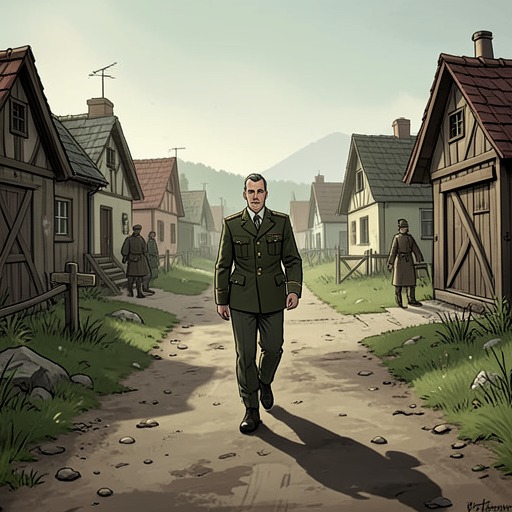
After leaving Weatherbury, Troy reaches the coast and descends into a small basin of sea enclosed by cliffs. The cove’s sheltered water seems smooth and inviting, but swimming beyond its rocky entrance brings him into a current that carries him away from shore. What appears to be a place for rest and bathing thus conceals a hazard invisible to an unwary swimmer.
The coast also gives the episode its scale and isolation. Troy is swept outward with no boat in sight; Budmouth lies in the distance, apparently watching as he struggles. The shoreline’s familiar landmarks pass slowly while he tries to angle toward a spit of land, making survival depend less on strength than on finding some reachable point of shore.
Troy’s Ordeal and Rescue
Troy enters the water intending to bathe before continuing his journey. Once outside the cove, the current carries him left and then out to sea. He recognizes the place’s sinister reputation: bathers have previously been caught there and drowned. Exhausted by attempts to return to the cove’s mouth, he changes tactics, treading water at an incline and allowing the tide to carry him while he makes a slow effort toward land.
When a ship’s boat appears near the spit, Troy revives his effort, raises an arm, and calls to the sailors. They see him against the sea, turn the boat toward him, and haul him aboard within minutes. The men, members of a brig’s crew who had come ashore for sand, lend him what clothing they can. The rescue reverses the immediate prospect of death, but it does not return Troy to Weatherbury or resolve the troubles that drove him away.
Consequences and Narrative Role
The cove’s importance extends beyond Troy’s survival because the rescue is not known to Bathsheba. Afterward, his clothes are recovered and the circumstances of his disappearance support the belief that he drowned. Bathsheba initially resists that conclusion, insisting to Liddy that Troy is still alive; a newspaper account by a Budmouth doctor who witnessed the accident, together with the recovered clothes, gradually makes his death seem more likely to her.
The difference between what happens at the cove and what can be known at home gives the setting its narrative force. The reader sees Troy saved, while Bathsheba receives signs pointing toward his death. Lulwind Cove therefore marks not a confirmed ending but the beginning of an interval of mistaken certainty, during which Troy’s actual survival remains hidden from his wife.