The consequences of trivial acts
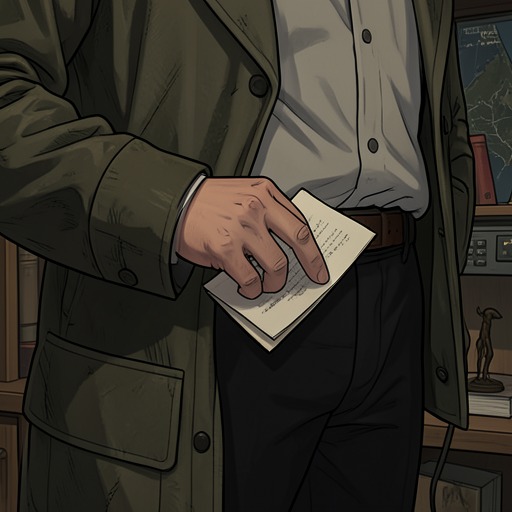
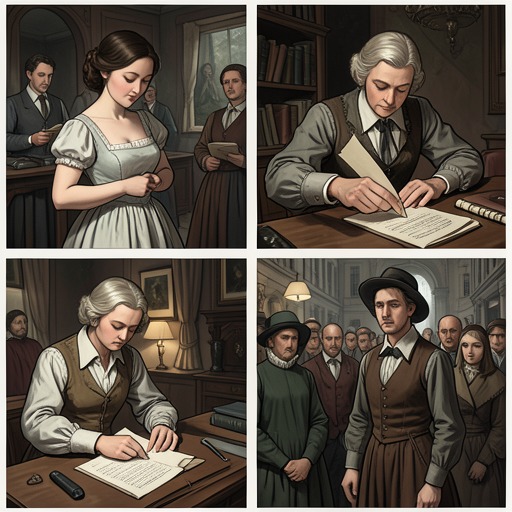
Far from the Madding CrowdIn Far from the Madding Crowd, the consequences of trivial acts emerge most sharply from Bathsheba Everdene’s Valentine to Boldwood: an impulsive, playful gesture becomes, in Boldwood’s understanding, an invitation to marry. The incident matters not because the card itself contains a settled commitment, but because the two characters assign it radically different meanings. The ensuing courtship makes the novel’s central irony plain: a small action can set powerful emotions in motion, while regret and good intentions may come too late to restore the lives they disturb.
A Small Gesture and a Misreading
The chain begins when Boldwood sees Bathsheba in the Casterbridge market house. Until then, women had remained remote from his attention; now he studies her closely and finds her beautiful, though he doubts his own judgment. He asks a neighbour whether she is considered handsome, and the confirmation settles his uncertainty. The narrative links this awakening to the Valentine: Boldwood believes Bathsheba has, in effect, said, “Marry me.” The card’s significance thus grows from his newly awakened feeling as much as from anything Bathsheba meant by sending it.
The mismatch is decisive. Boldwood cannot distinguish between responding to what circumstances suggest and originating an intention himself. Bathsheba, meanwhile, has failed to consider how large an outcome a little beginning might produce. He takes the Valentine as evidence of a proposal; she regards the triumph of capturing his attention as artificial and unsatisfying. Once she recognizes that the gesture has disturbed a man she respects, she regrets it and considers apologizing. Yet she sees no safe way to explain herself: Boldwood might disbelieve an apology, or take it as further encouragement.
The Gesture Gathers Force
At the market, Boldwood watches Bathsheba attend to a young farmer and feels jealousy for the first time. He considers interrupting their conversation, but the only pretext he can imagine is to ask to see a sample of her corn, an ordinary business request that seems to him incompatible with the idealized woman he now perceives. The same encounter therefore registers two unequal realities: Bathsheba is going about practical work, while Boldwood’s feelings turn her ordinary actions into signs within a romance he believes has already begun.
The consequences intensify when Boldwood later sees Bathsheba and Gabriel Oak together in a meadow. She is helping Oak make a lamb “take” by placing the skin of a dead lamb on another ewe’s living lamb, so that the ewe may accept it. Boldwood notices Bathsheba’s self-conscious blush and reads it as part of an emotional situation he cannot understand. Oak connects her manner with the letter Boldwood had shown him and suspects that she has begun a coquettish course of conduct. Neither man possesses a complete account of her intentions, but the Valentine has made every subsequent look vulnerable to interpretation.
Bathsheba, for her part, understands that Boldwood’s appearance is connected to her own conduct. She is troubled by the prospect that a small “Wildfire” may kindle a great flame, and resolves not to interrupt the steady course of his life again by look or sign. The narrator qualifies that resolution: people often decide to avoid an evil only after it has advanced too far to be avoided. The gesture has already altered how Boldwood sees her, and restraint cannot simply restore their earlier relations.
From Inference to Proposal
At the sheep-washing, Boldwood follows Bathsheba away from the busy work by the river and speaks with her apart from the other washers. His declaration is direct: since seeing her clearly, he says, his life has ceased to be his own, and he has come to offer marriage. He explains that he is forty-one, had been a confirmed bachelor, and had not previously imagined himself as a husband. Seeing Bathsheba, he says, changed his view of his life; he now wants her as his wife.
Bathsheba answers that she respects him but does not feel what would justify accepting. Boldwood’s response reveals the depth to which his interpretation has carried him: he calls his life a burden without her and says he wants to repeat that he loves her. He explains that he would not have spoken so plainly had he not been led to hope. Bathsheba recognizes the Valentine as the source of that hope. Her original gesture has become the premise for a serious proposal, and the gap between its playful origin and its grave consequence can no longer be concealed.
Meaning and Limits of the Theme
The episode traces consequence through a sequence of unequal readings rather than through a deliberate plan. Bathsheba sends the Valentine without reckoning with the emotional weight Boldwood may give it; Boldwood treats it as meaningful evidence, then interprets later encounters through that belief. Jealousy, hesitation, regret, and the proposal follow from this discrepancy. Each development remains connected to the first small act, yet none is simply contained in what Bathsheba intended when she made it.
The narrative does not make the two characters’ errors identical. Boldwood’s intense response grows from his inexperience and from his conviction that the Valentine expresses an invitation. Bathsheba comes to see the possible consequences and regrets having set them in motion, but her respect for him complicates an apology and her wish to avoid further harm arrives after he has already formed his hope. The episode therefore presents a sober limit on intention: a gesture may be slight to the person who makes it and momentous to the person who receives it. Once that unequal meaning has taken hold, good intentions alone cannot make the consequences trivial again.