
March’s Murder Inquiry
FatherlandThis flow follows March from a routine lakeside body discovery into an investigation that reveals coordinated murder and a concealed state crime.
increasing Bearing strength in each event
 decreasing
Bearing strength in each eventdecreasingA Body in the Havel
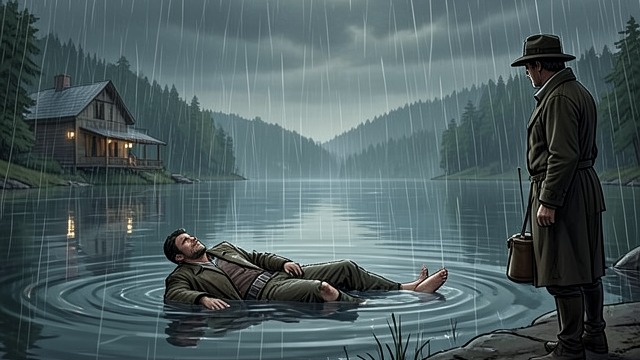
A Body in the Havel
Routine Scene
March reaches the lakeshore in rain and finds an elderly man with one foot missing. The apparent drowning initially looks like ordinary police work.
First Anomalies
The corpse is unusually well fed, and its amputation is old rather than the result of a propeller. A witness’s account also leaves unexplained time.
A Name from the Past
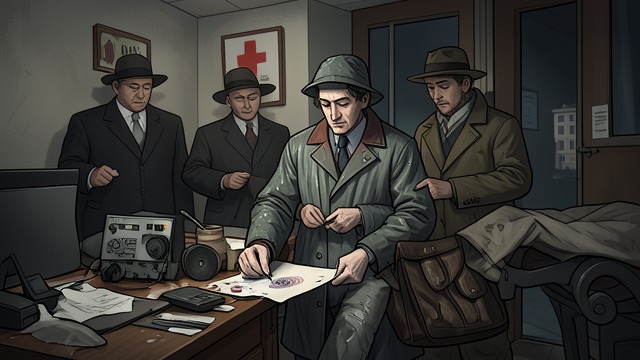
A Name from the Past
Fingerprint Match
March secures a rapid fingerprint check, which identifies the dead man as Josef Buhler, a prominent former official in the General Government.
A Political Threshold
Buhler’s history makes the discovery sensitive, but March’s initial report still calls the death nonsuspicious. He has not yet understood the danger of pursuing it.
The Inquiry Is Seized
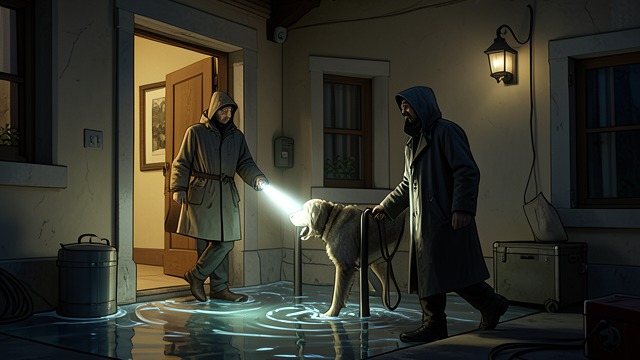
The Inquiry Is Seized
Security Reclassification
After March learns that Buhler owned a villa on Schwanenwerder Island, the Gestapo takes the case from the Kripo. The official explanation is Buhler’s rank and past office.
A Defiant Search
March ignores the warning and enters the villa. There he finds an injured dog, a hidden diary, traces of a boat’s use, and Buhler’s artificial foot in the water.
Two Death Scenes
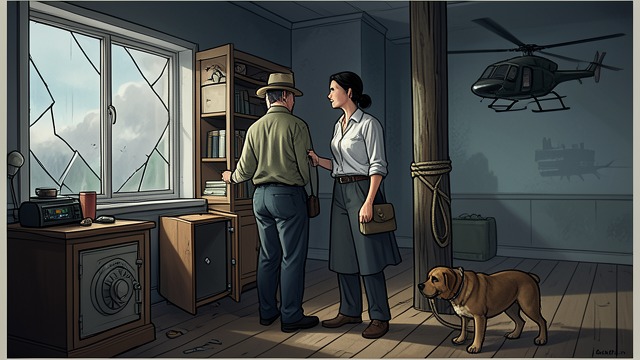
Two Death Scenes
Stuckart’s Apartment
March and Charlotte examine the apartment where Wilhelm Stuckart and Maria Dymarski died. Clues suggest that Stuckart’s apparent suicide was staged after a murder.
A Narrow Escape
A safe reveals a Swiss bank authorization, but Gestapo troops arrive before the investigators can finish. The group escapes through the building’s air shaft.
The Murder Pattern
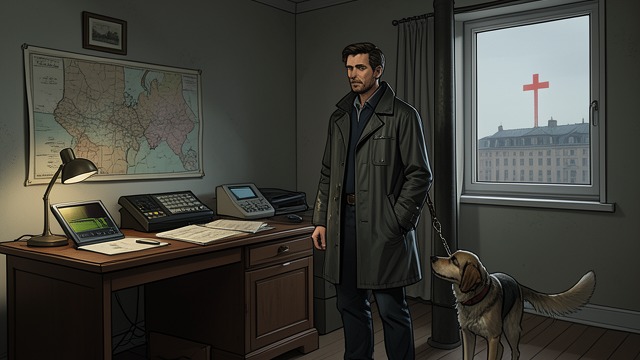
The Murder Pattern
Evidence Converges
March connects the killings to the Wannsee meeting and finds that its participants have been dying or disappearing. The supposed art-fraud explanation cannot account for this broader pattern.
A Case Becomes a Reckoning
The investigation exposes evidence of the genocide and the effort to erase its witnesses. March’s work is no longer simply identifying killers; it is a struggle over whether the truth can survive.
Tuesday morning, April 14, 1964
Late Tuesday night, April 14
Wednesday morning, April 15
Wednesday night, April 15
Saturday, April 18
