
The City Built for the Führer
FatherlandThis flow traces how monumental Berlin makes ideology visible in architecture, ceremony, and everyday movement.
increasing Bearing strength in each event
 decreasing
Bearing strength in each eventdecreasingA Monumental Entrance
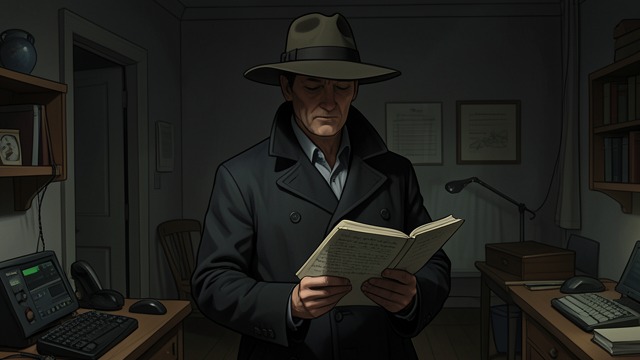
A Monumental Entrance
The Arch and the Avenue
A tour guide describes the huge triumphal arch and avenue as proof of national greatness. The measurements encourage visitors to judge buildings by their size and rivals by comparison.
March’s Skepticism
March reads the architecture as evidence of insecurity rather than confidence. The capital’s scale makes private life appear small and easily absorbed.
The Great Hall
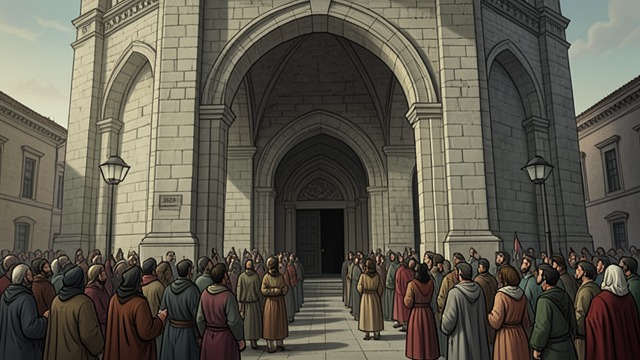
The Great Hall
A Building as a Political Body
The Great Hall dominates the skyline and is presented as a ceremonial home for enormous crowds. Its scale turns the state into a structure meant to contain its people.
A Child’s Awe
Pili asks whether he will see Hitler. March sees the same building as an instrument of spectacle, while his son experiences it as a source of wonder.
The Capital on Display
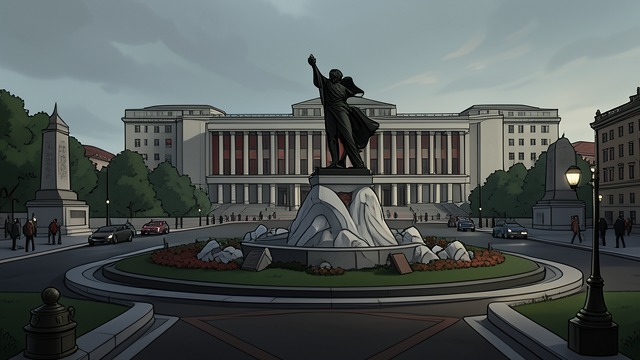
The Capital on Display
Ordered Sightseeing
Tourists, settlers, and visitors pass through a city designed to impress them. Ministries, memorials, and rebuilt streets guide their attention toward imperial power.
A Managed Image
The city’s visible order conceals the labor and violence that sustain it. Berlin’s polished surfaces work like propaganda made permanent in stone.
A Gathering Ground
A Gathering Ground
The Summit Stage
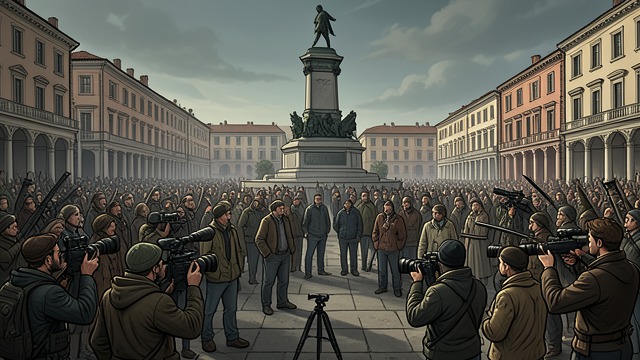
The Great Hall’s steps are prepared for ceremonies and filled with tourists, officials, and cameras. The setting offers both a public platform and a surveillance opportunity.
A Failed Refuge
Luther chooses the crowd as cover, but the openness of the plaza makes him visible to a sniper. The monumental center becomes a killing ground rather than a sanctuary.
The Streets After the Spectacle
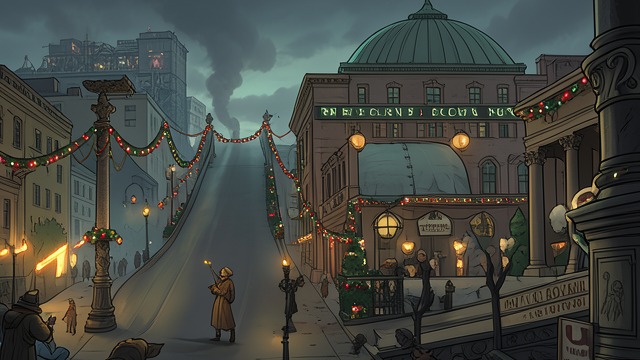
The Streets After the Spectacle
Ceremony Continues
While March is pursued, the capital prepares to celebrate its leader’s birthday. The public display proceeds alongside private coercion and evidence of mass murder.
Scale Against Reality
The contrast between festive monuments and hidden crimes captures the regime’s central strategy: make its preferred history visible and everything else disappear.
Tuesday afternoon, April 14
Tuesday afternoon, April 14
Wednesday, April 15
Saturday morning, April 18
Führertag morning, April 20
