
The Disappearing Jews
FatherlandThis flow traces how the regime’s language of evacuation conceals the disappearance of Jewish communities and how that concealment is challenged.
increasing Bearing strength in each event
 decreasing
Bearing strength in each eventdecreasingThe Empty Apartment
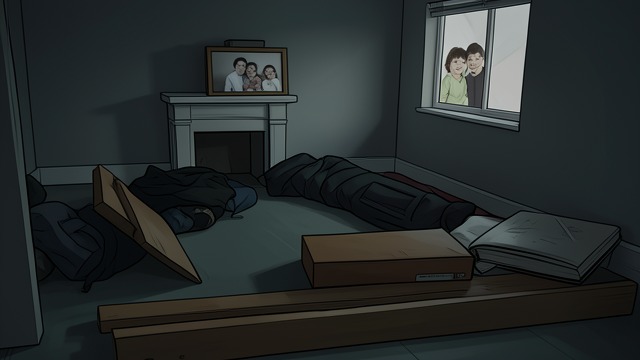
The Empty Apartment
A Household Erased
March finds a photograph of a family who once lived in his apartment. Records contain their name but no clear account of their departure or death.
A Blank in Public Memory
The absence is treated as normal because Jews were said to have been evacuated east. The ordinary apartment and missing tenants expose how disappearance is domesticated.
The Neighbor’s Answer

The Neighbor’s Answer
A Moment of Candor
An elderly neighbor tells March that the Weisses were Jewish. The answer confirms what he already suspects but offers no further account of their fate.
Silence After Naming
Knowing the family’s identity does not make inquiry safe. The conversation reveals how a fact can be acknowledged privately while its consequences remain forbidden.
The State’s Vocabulary

The State’s Vocabulary
Evacuation and Resettlement
March’s newspapers and official tours describe eastern population movements as orderly resettlement. The language replaces people with administrative categories.
A Convenient Distance
The East is far enough away that citizens can accept not knowing what happens there. Geographic distance and political fear reinforce each other.
The Records of the Camps

The Records of the Camps
Hidden Operations
The recovered papers name transport routes, camps, and killing procedures. They expose the meaning concealed behind the language of labor and resettlement.
A System Made Visible
The records turn absence into a documented process: people were selected, transported, killed, and stripped of possessions. The official euphemism cannot contain the evidence.
The Question of Belief

The Question of Belief
Evidence Against Denial
Charlotte argues that dates, names, and records give the crime a form that can be measured. March fears that even detailed evidence may be rejected.
Memory as Responsibility
The novel does not promise universal belief or immediate justice. It argues that evidence makes denial answerable and preserves the possibility of a later reckoning.
Several years before April 1964
Winter 1963
Tuesday, April 14
Saturday, April 18
Near the ending, April 19–20
