
The Life of Martin Luther Before the Flight
FatherlandThis flow reconstructs Luther’s movement from wartime official to private conspirator, witness, and fugitive.
increasing Bearing strength in each event
 decreasing
Bearing strength in each eventdecreasingA Foreign Ministry Official
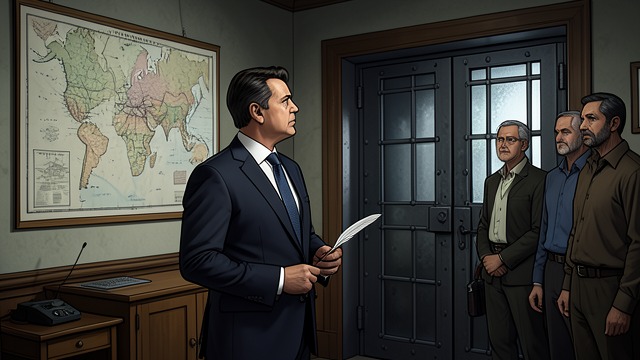
A Foreign Ministry Official
A Position of Access
Luther heads the German Division of the Foreign Office and coordinates with the SS and police. His office gives him travel privileges and influence over documents.
Participation in Policy
He attends the Wannsee meeting and later travels to Auschwitz. His access makes him both a participant in the system and a potential source of evidence.
The Swiss Account

The Swiss Account
A Shared Arrangement
Luther opens a numbered account with four keys and letters of authorization. The arrangement can preserve assets and information beyond German oversight.
A Contingency Built In
The account is rarely accessed for decades. Its structure allows future beneficiaries to retrieve material if the original holder disappears or is unable to return.
A Visit to the Camps
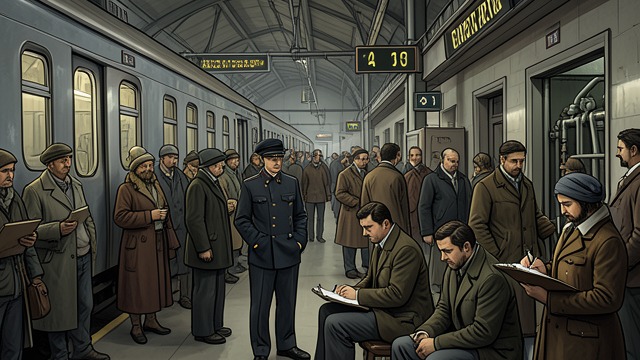
A Visit to the Camps
An Official Inspection
Luther records what he sees at Auschwitz-Birkenau, including arrival procedures, the gas chambers, and the processing of possessions and bodies.
Complicity and Recordkeeping
His notes do not make him innocent, but they preserve direct knowledge of the killing system. He becomes a potential witness to crimes in which he had participated administratively.
Fear of Exposure

Fear of Exposure
A Renewed Danger
The deaths of former colleagues and the pressure on the remaining conference participants make Luther fear that he will be killed. He travels to Zürich to retrieve the account’s contents.
A Defection Plan
He seeks a direct route to the Americans through Charlotte. His knowledge and documents become bargaining power for a new life.
A Fugitive’s Final Attempt
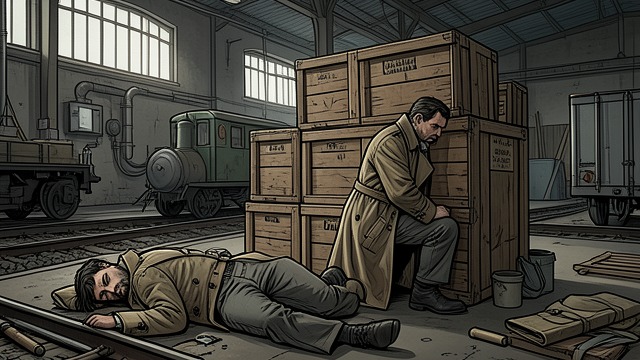
A Fugitive’s Final Attempt
Hiding in the Railway Yard
Luther abandons his case and hides among railway-yard drifters. He arranges a substitute corpse to persuade the Gestapo that he is dead.
A Failed Asylum Bid
He reaches Charlotte by telephone and chooses a public rendezvous, but a sniper kills him at the Great Hall. His papers survive; his testimony does not.
1930s–1940s
Summer 1942
July 15, 1943
April 1964, before April 13
April 13–18, 1964
