
The Jewelry Scheme
FaustMephistopheles uses stolen-looking jewels to turn Margaret’s curiosity into a courtship opportunity, exposing the relation between desire, wealth, and manipulation.
increasing Bearing strength in each event
 decreasing
Bearing strength in each eventdecreasingA Gift Planted
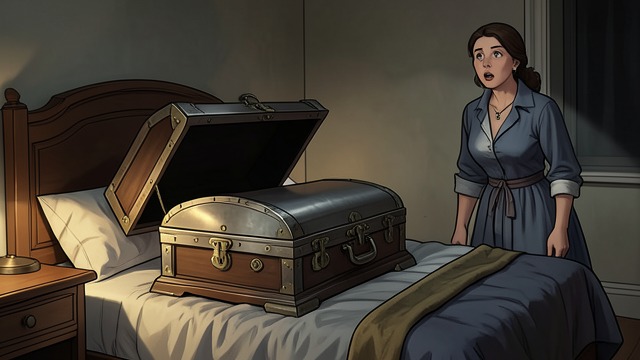
Ornaments in the Press
A calculated placement
Mephistopheles leaves a casket in Margaret’s room while Faust waits, transforming a private space into the first stage of his scheme.
The gift is designed to make a striking impression without requiring Faust to approach her honestly.
An unsuspecting recipient
Margaret finds the casket after the men have gone and wonders how it came to be there.
Her excitement begins in ignorance of the manipulation behind it.
Before the Mirror

Beauty and Status
The pleasure of adornment
Margaret tries on the ornaments and sees that jewelry changes how she appears in the mirror.
She recognizes the social power that gold can confer, especially on a poor young woman.
A fragile desire
Her reflection draws out a longing for attention and beauty, but she does not understand the gift’s connection to Faust.
The episode makes desire understandable without making the scheme innocent.
The Church Takes the Jewels
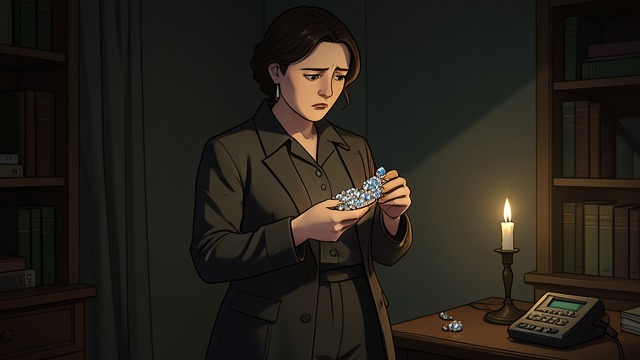
Piety and Possession
A mother’s response
Margaret’s mother discovers the ornaments and has them taken to the Church, fearing that a gift with an unknown source may imperil her daughter.
Her action expresses religious caution and maternal control.
The institution’s appetite
Mephistopheles reports that the priest welcomes the valuables as property the Church can absorb.
The episode satirizes the ease with which religious authority can turn moral concern into material acquisition.
A Second Casket
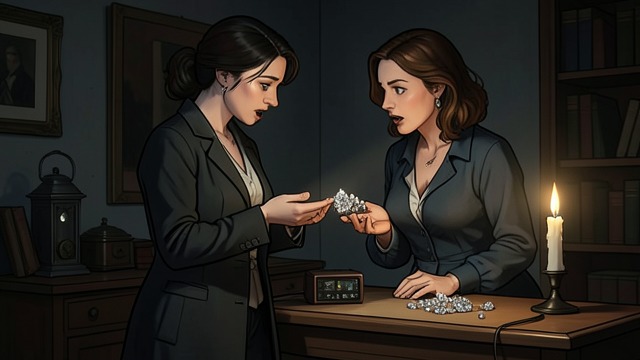
The Scheme Renewed
Mephistopheles escalates
Faust orders a richer gift and asks Mephistopheles to use Martha as an intermediary.
The second casket brings the courtship closer to Margaret while increasing the deliberate pressure surrounding her.
Private complicity
Margaret and Martha discuss how she might wear the jewels without her mother’s knowledge.
The ornaments become a shared secret that makes an eventual meeting with Faust easier to arrange.
From Ornament to Ruin

The Price of the First Approach
The gift’s afterlife
The jewels do not themselves cause the tragedy, but they help turn Faust’s attention into a calculated pursuit.
Their promise of beauty and recognition gives the affair a material beginning that contrasts with Margaret’s later loss.
A measure of inequality
Faust can arrange gifts and disappear into his broader adventures; Margaret bears the local scrutiny and consequences.
The scheme reveals how apparently flattering attention can conceal unequal risk.
The evening after Faust meets Margaret
Moments after Margaret opens the first casket
After Margaret’s mother discovers the first casket
After the first jewels are surrendered
By the time Margaret is imprisoned
