
Mephistopheles and Martha
FaustMephistopheles manipulates Martha’s grief and practical wishes to create the meeting that brings Faust and Margaret together.
increasing Bearing strength in each event
 decreasing
Bearing strength in each eventdecreasingA Neighbor’s Worry

Martha’s Domestic Grief
A missing husband
Martha laments that her husband left her and wonders whether he may be dead, wishing she had a certificate to settle the matter.
Her complaint mixes genuine grief with concern for the uncertainty his absence leaves behind.
An opening for deception
Mephistopheles will exploit the need for proof, turning Martha’s practical wish into an opportunity to arrange a meeting.
A False Death Notice
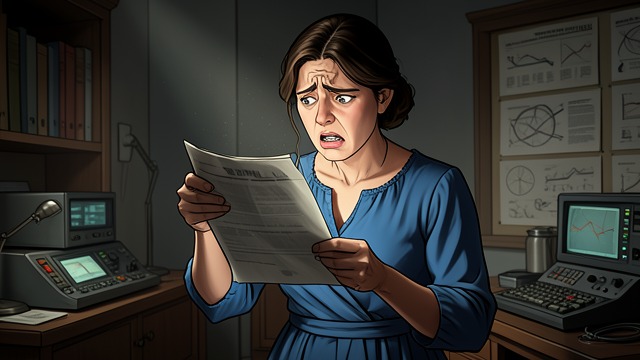
News Without Truth
The invented report
Mephistopheles tells Martha that her husband is dead and buried in Padua, although he offers no reliable proof.
He presents the story as sorrowful news and elaborates it with details designed to sound plausible.
Grief redirected
Martha reacts with distress, then asks whether her husband left money or any token.
Her questions show how emotional loss and material insecurity coexist in her response.
The Witness Requirement
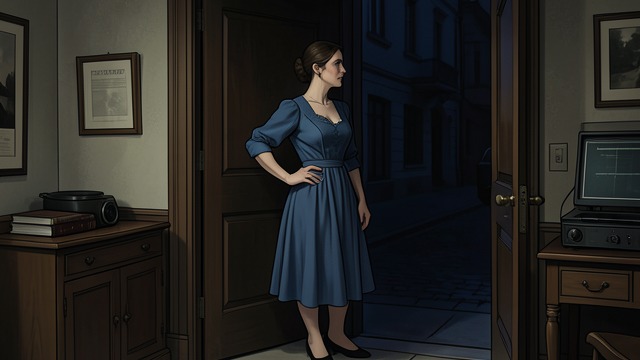
A Demand for Proof
Martha insists
Martha wants a legal witness to confirm the death and asks that the matter be properly documented.
Her preference for evidence creates an obstacle to Mephistopheles’s lie.
A second visitor promised
Mephistopheles claims he can bring a friend to serve as witness and arranges to return.
The false report thus supplies the pretext for bringing Faust into Martha’s garden.
The Garden Arrangement

Deception as Matchmaking
Two parallel conversations
Martha walks and talks with Mephistopheles while Faust speaks with Margaret nearby.
The arrangement lets the two men pursue their plans under the respectable appearance of a visit between neighbors.
A compromised setting
Martha’s hospitality is genuine, but it has been secured through a fabricated death and a promised false witness.
The garden’s tenderness is therefore framed by deception from the outset.
A Lie Left Unanswered
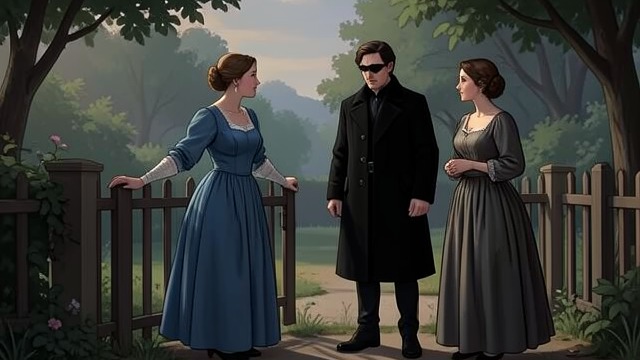
The Cost of Mephistopheles’s Lie
A convenient pretext
The staged testimony helps create access for Faust and Margaret’s relationship, while Martha’s request for a certificate remains a comic practical concern.
Mephistopheles treats truth as an obstacle to be managed rather than a duty.
A pattern of manipulation
The episode anticipates later scenes in which Faust and Mephistopheles use other people’s trust to pursue private ends.
Martha’s grief becomes a tool in a plan she does not understand.
After the second jewelry casket appears
During Mephistopheles’s visit to Martha’s house
At the end of Mephistopheles’s first visit
That evening in Martha’s garden
After the garden meeting
