
The Cathedral’s Accusation
FaustAn evil spirit turns Margaret’s private guilt into an overwhelming public and religious crisis, bringing the losses surrounding her into consciousness.
increasing Bearing strength in each event
 decreasing
Bearing strength in each eventdecreasingA Formerly Innocent Place

Returning to the Cathedral
Memory of earlier prayer
Margaret remembers coming to the altar when she was innocent and praying with the faith of childhood.
The familiar space now holds the contrast between her past self and her present fear.
A changed refuge
The cathedral’s solemnity no longer comforts her automatically.
Her spiritual surroundings become the setting for a confrontation with what she has done and lost.
The Evil Spirit Appears

Guilt Given a Voice
Accusations assembled
An evil spirit asks Margaret about the blood at her door and the hidden life stirring beneath her heart.
The questions join her mother’s death, pregnancy, and fear into a single indictment.
No private escape
The voice makes visible what Margaret has tried to bear alone.
Her inward unease becomes an assault intensified by the public setting and the mass around her.
The Requiem Intensifies

Judgment in Sound
The service’s language
The chorus sings of judgment, hidden sins revealed, and nothing left unpunished.
The sacred music that once might have offered comfort now amplifies Margaret’s dread.
Body under pressure
She feels the pillars and vaults close around her and struggles to breathe.
The architecture, music, and accusation converge into a single overwhelming experience.
The Collapse

A Public Breakdown
Margaret calls for help
Unable to endure the spirit’s accusations, Margaret asks a neighbor for a cordial and falls into a swoon.
The collapse makes her hidden distress visible to the congregation.
The path toward confinement
The scene foreshadows her later imprisonment by showing how guilt and social exposure leave her increasingly vulnerable.
The crisis is not resolved by the service; it drives the tragedy onward.
Faith After Accusation
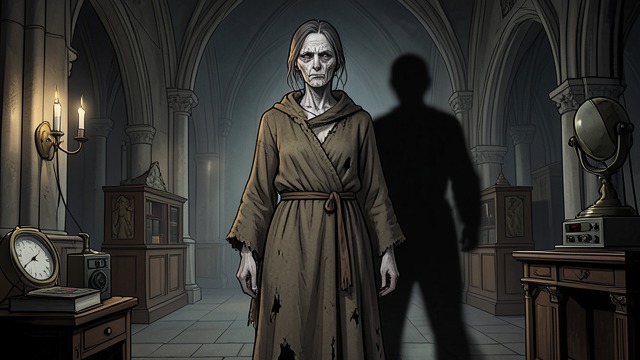
A Spiritual Thread Survives
Guilt remains real
Margaret’s later terror and fragmented speech show that the cathedral’s accusations have not simply passed away.
Her suffering continues to involve both memory of wrongdoing and fear of punishment.
A final appeal
In prison she turns to God rather than to Mephistopheles, and a heavenly voice calls her saved.
The play distinguishes spiritual hope from an easy denial of earthly consequences.
After Valentine’s death
During the cathedral service
As the cathedral chorus continues
At the end of the cathedral scene
Near the final dungeon scene
