
The Drama’s Argument About Art
FaustThe prologue debates whether theatrical success should follow popular appetite or preserve artistic form, then frames Faust as a work whose changing rhythms carry meaning.
increasing Bearing strength in each event
 decreasing
Bearing strength in each eventdecreasingThe Manager’s Crowd
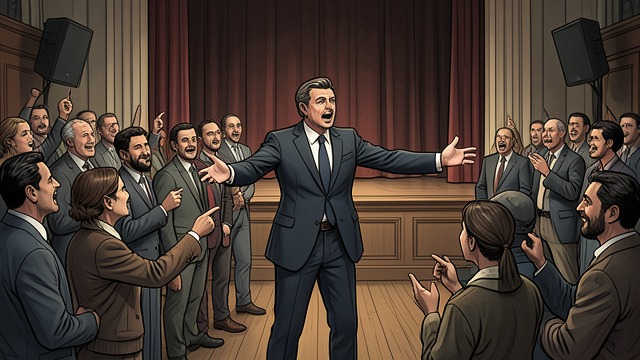
Popularity as a Goal
The audience imagined
The Manager wants a play that draws crowds, satisfies curiosity, and gives patrons enough spectacle to enjoy.
His concern is not simply commerce: he imagines theatre as a public event shaped by varied tastes.
Quantity over unity
He recommends abundant incident and material that audiences can select for themselves.
The argument establishes a tension between immediate popularity and artistic coherence.
The Poet’s Resistance
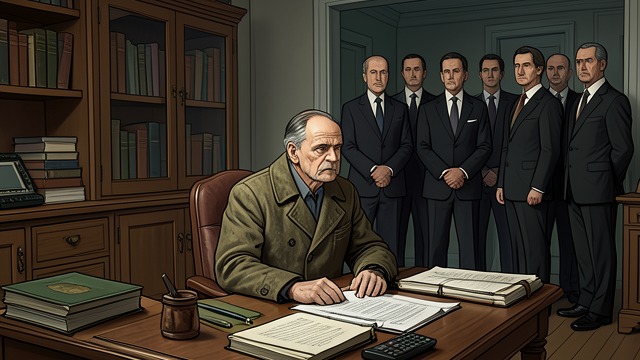
Art Against the Market
A quieter audience
The Poet longs for the private, enduring conditions in which love and friendship nurture creative work.
He believes that genuine art may be understood only after the fleeting moment of performance has passed.
A different measure
Against the Manager’s demand for mass appeal, the Poet values integrity and a work’s lasting life.
Their disagreement asks what an artist owes to audiences and what audiences can do to art.
The Comic Defense
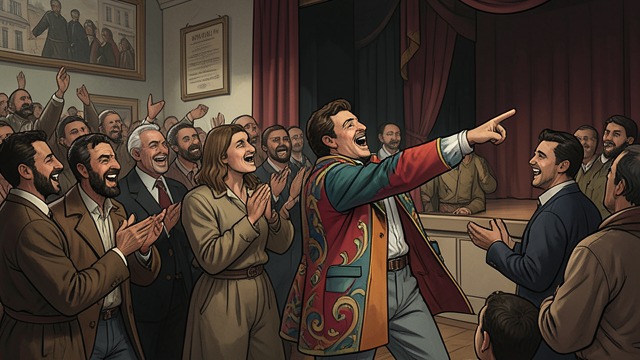
Popular Pleasure Defended
The present audience
The Merry-Andrew argues that a living audience matters more than an abstract future generation.
He wants imagination joined with sense, reason, sentiment, passion, and comedy.
Mixed entertainment
His defense accepts confusion, error, and partial truth as ingredients in a popular performance.
The exchange prevents the prologue from treating either pure idealism or pure commerce as an adequate answer.
The Manager’s Production Plan
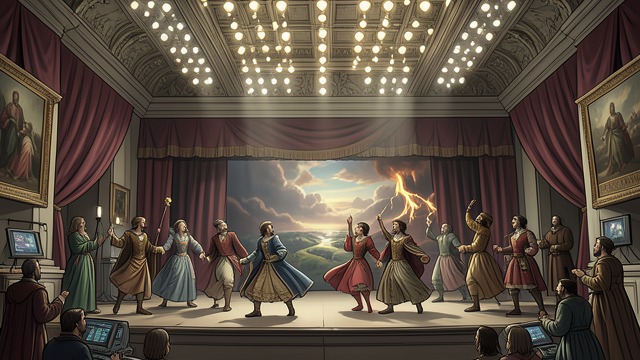
A World on Stage
Spectacle assembled
The Manager urges the company to use celestial lights, natural elements, and settings that can carry the audience from Heaven through the world to Hell.
His proposal turns the theatre itself into a miniature universe.
The play begins
The expansive plan prepares for a work that will shift between domestic scenes, magic, comedy, and spiritual debate.
Form becomes part of the drama’s attempt to represent a life that cannot be confined to one tone.
Form as Meaning
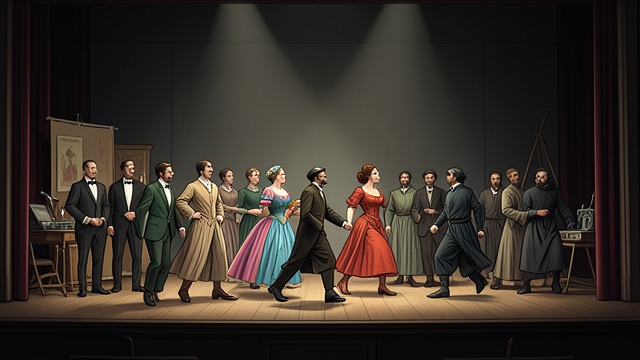
Rhythm and Thought
Form carries meaning
The introduction argues that poetic form is not a detachable decoration but part of how a poem thinks and feels.
It defends the effort to reproduce the original’s changing metres and rhythms.
The drama’s variety
The play’s shifts between songs, speeches, comic scenes, and grave confrontations embody the very variety the prologue debates.
Its form asks readers to experience changes of tone rather than reduce the work to a bare plot outline.
The theatrical prologue
During the prologue’s debate
After the Poet’s objection
At the close of the prologue
In the translator’s introduction before the drama
