
The Play’s Changing Worlds
FaustThe drama moves from an enclosed study to public and supernatural spaces, using each setting to alter the pressure on Faust and Margaret.
increasing Bearing strength in each event
 decreasing
Bearing strength in each eventdecreasingThe Gothic Study
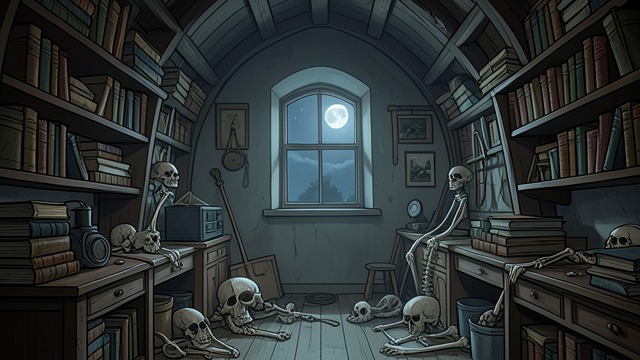
Enclosure and Abstraction
A room of dead learning
Faust’s narrow, vaulted study is crowded with books, instruments, and ancestral remains.
The setting makes scholarship feel physically airless and detached from living nature.
A pressure to leave
Faust’s longing for moonlit landscapes begins as a response to the room’s confinement.
The stage’s first world is therefore a psychological boundary as well as a location.
The City Gate
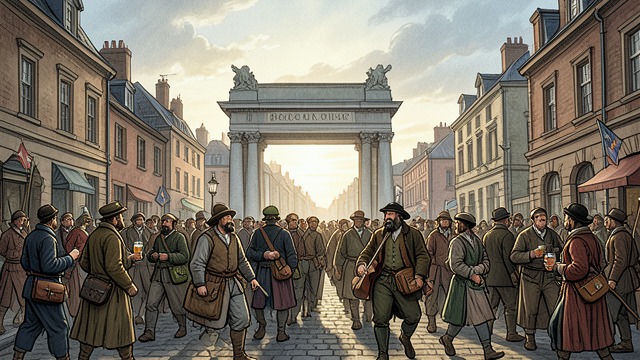
Public Life in Spring
A crowded threshold
People stream through the city gate toward outdoor festivities, filling the scene with work, leisure, music, and social exchange.
Faust experiences the crowd as a form of renewed human belonging.
Wagner’s resistance
Wagner hears noise where Faust hears vitality.
The public setting makes visible the difference between retreat into books and participation in common life.
The Domestic Chamber
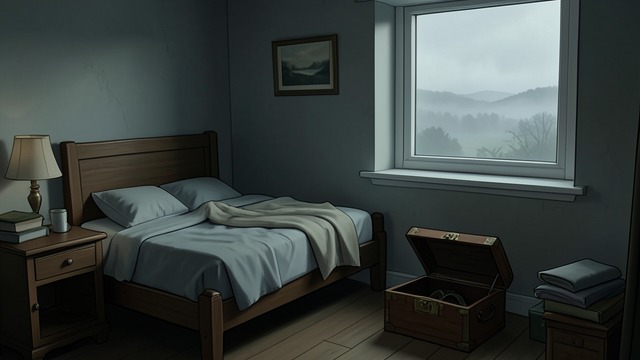
A Smaller World
Order and poverty
Margaret’s neat room contains little wealth but a sense of careful order and family memory.
Faust experiences the space as a refuge from the grand ambitions and restlessness of his own life.
A secret intrusion
The jewelry casket introduces Mephistopheles’s deception into the domestic setting.
The room’s intimacy becomes part of the machinery of seduction.
The Brocken Summit
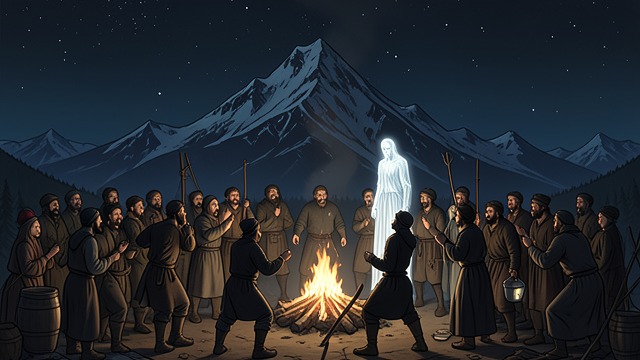
A Mountain of Reversal
Ordinary order suspended
The Brocken gathering surrounds Faust with witches, songs, and shifting appearances.
Its crowded spectacle makes confusion feel festive and briefly normal.
Distraction exposed
The pale apparition that recalls Margaret breaks into the revel.
Even in a setting devoted to escape, the human consequences Faust avoided return to view.
The Prison Threshold
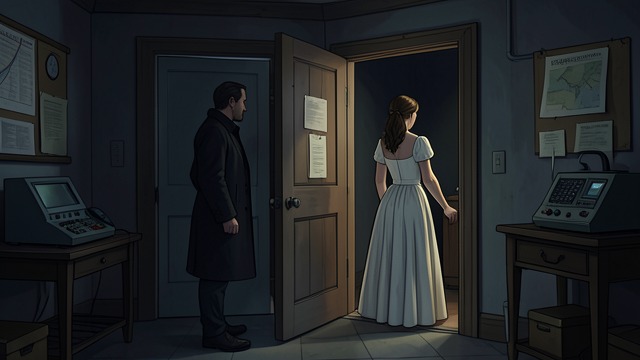
A Door Between Lives
An opened cell
Faust unlocks Margaret’s prison door, but the space remains charged with fear, guilt, and memories that cannot be escaped by crossing a threshold.
The setting turns rescue into a moral test rather than a simple physical task.
Opposed departures
Faust leaves with Mephistopheles, while Margaret remains and turns toward God.
The final threshold separates their futures and gives the ending its spiritual force.
At the opening of Part One
Easter Day after Faust leaves the study
The evening Margaret finds the jewelry
On Walpurgis Night
Near dawn at the end of Part One
