
Knowledge, Words, and Action
FaustFrom Faust’s failed scholarship to his reinterpretation of scripture, the play tests whether language and systems can contain living reality.
increasing Bearing strength in each event
 decreasing
Bearing strength in each eventdecreasingKnowledge Declared Empty

Learning Under Judgment
The learned man’s confession
Faust lists his studies but concludes that he is no wiser than before.
The declaration challenges the assumption that accumulated disciplines necessarily produce wisdom.
A crisis of authority
Because Faust cannot trust his knowledge, he doubts his right to teach others.
The gap between professional authority and inner certainty becomes the pressure behind his search.
The Word Reconsidered

Translating the Beginning
A text under pressure
Faust reads the opening of the Gospel of John and struggles with the claim that the Word was in the beginning.
He tests successive alternatives, moving from Word to Thought and Power.
Action chosen
He finally writes that in the beginning was the Act.
The change expresses his impatience with abstraction and his desire to make action the foundation of meaning.
The Student’s Lesson
Words Without Understanding
A false teacher
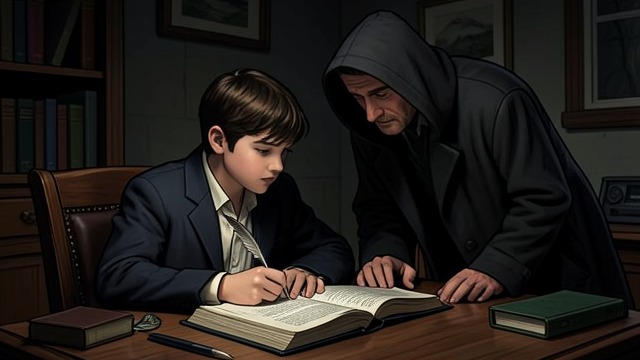
Mephistopheles, disguised in Faust’s clothes, advises a student through logic, theology, and medicine.
His lessons expose the possibility that institutions can teach terms and procedures without supplying understanding.
A bitter joke
The student records a Latin motto about becoming like God through knowledge.
Mephistopheles answers with a warning that the promise of godlike knowledge can still produce a poor human example.
The Name of God

Naming the Divine
Margaret asks for belief
Margaret asks Faust directly whether he believes in God and finds his reluctance troubling.
For her, belief belongs to a lived religious community and moral life.
Feeling over definition
Faust describes a divine force present in nature and human feeling but refuses to give it a fixed name.
The exchange contrasts experiential spirituality with Margaret’s need for recognizable faith.
The Whole Remains Unmastered
Knowledge Cannot Cancel Consequence
Theory meets suffering
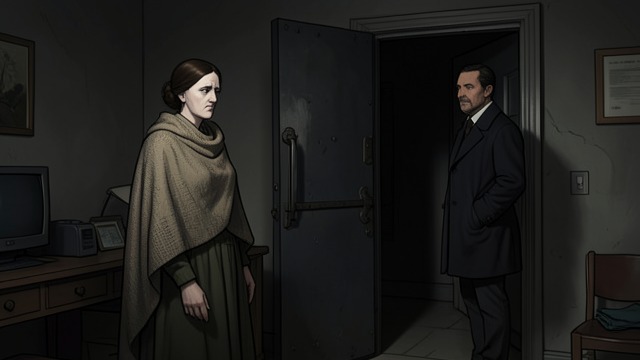
Faust’s intellectual and magical experiments have not given him command over the lives affected by his choices.
Margaret’s prison forces abstract claims about action and freedom to face concrete harm.
An open question
The play ends with Margaret’s salvation but leaves Faust’s own fate unresolved.
The search for understanding continues beyond the certainty of any single doctrine or experiment.
At the opening of Part One
During the study scene after Mephistopheles’s arrival
After Faust signs the pact
During Margaret and Faust’s garden conversation
At the close of Part One
