
The Lord and Faust’s Unresolved Future
FaustThe heavenly wager frames Faust’s earthly struggles but Part One ends before the promised test of his ultimate destiny is decided.
increasing Bearing strength in each event
 decreasing
Bearing strength in each eventdecreasingThe Lord’s Servant

Faust Seen from Above
A troubled servant
The Lord identifies Faust as a servant whose work remains confused but whose capacity for direction has not been exhausted.
This view differs from Mephistopheles’s image of a foolish creature driven by appetite.
A future still open
The Lord anticipates that Faust may be led toward clearer understanding.
His confidence establishes the possibility of development without guaranteeing that Faust will avoid suffering.
The Devil’s Challenge
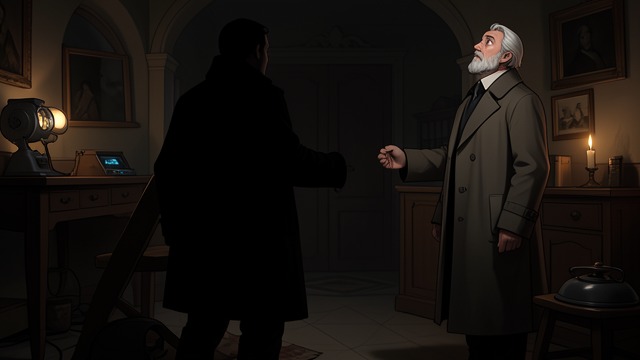
A Wager About Direction
Mephistopheles asks permission
Mephistopheles argues that Faust’s longing for the highest things makes him easy to disturb and offers to guide him down a destructive path.
He expects that Faust will mistake restless desire for wisdom.
The Lord permits the trial
The Lord allows the test while asserting that striving people can err without losing every instinct for the right way.
The conflict concerns moral direction as much as obedience.
The Earthly Trial
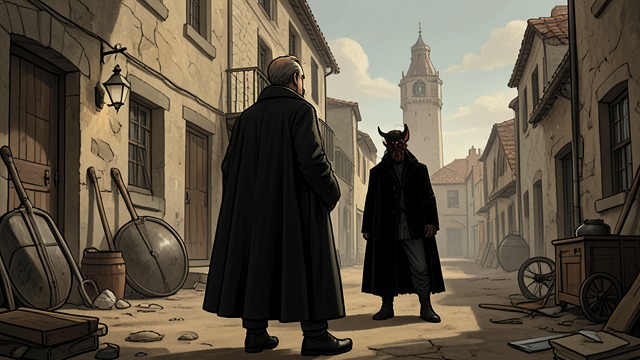
The Contest Enters Life
A human agreement
Faust’s pact with Mephistopheles establishes a second, earthly form of the contest.
He wagers that no moment of satisfaction will ever persuade him to stop striving.
Two measures of success
Mephistopheles seeks to exhaust Faust’s appetite, while the heavenly wager concerns whether Faust can retain a way toward good.
The two contests overlap but are not identical.
A Life with Victims

The Trial Exceeds the Self
Others bear the cost
Faust’s pursuit of Margaret contributes to deaths and imprisonment beyond his own spiritual struggle.
The heavenly wager’s abstract question acquires concrete human consequences.
A question of agency
Faust accuses Mephistopheles, but cannot deny his own choices.
The test therefore measures not only desire but willingness to recognize responsibility.
No Final Answer Yet

The Wager Remains Open
Margaret’s outcome
A heavenly voice declares Margaret saved after Mephistopheles claims that she is judged.
Her outcome demonstrates that the Devil cannot decide every spiritual question.
Faust’s future withheld
Faust leaves with Mephistopheles, and Part One supplies no final verdict on his fate.
The original contest continues beyond this ending, preserving striving and uncertainty as the work’s central tension.
During the heavenly prologue
Later in the heavenly prologue
After Faust’s blood pact
After Margaret’s family is devastated
At the close of Part One
