
Margaret’s Moral Fall and Salvation
FaustMargaret moves from modest household life through love, guilt, public shame, and imprisonment to a final act of spiritual surrender.
increasing Bearing strength in each event
 decreasing
Bearing strength in each eventdecreasingThe Household Daughter
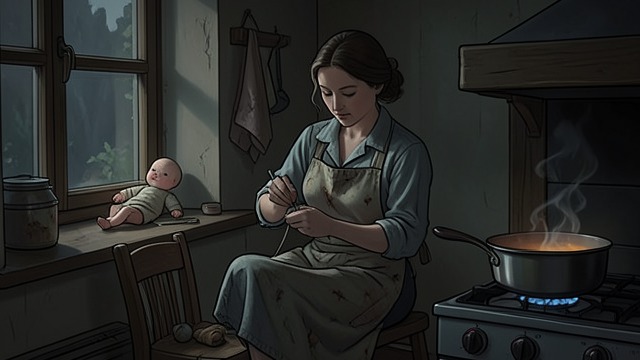
A Life of Duty
Work and family
Margaret describes sewing, cooking, and caring for her household, including the younger sister she once nursed.
Her days reveal a modest but active life shaped by family affection and practical labor.
A moral center
Margaret’s concern for belief and reputation is not mere convention; it gives her choices a framework of responsibility.
That framework will make the consequences of Faust’s courtship especially painful.
The First Casket

The Lure of Ornament
A secret discovery
Margaret finds a jewelry casket in her locked room and adorns herself before the mirror.
The ornaments let her imagine how beauty and social attention might change her prospects.
Doubt beneath delight
She wonders who brought the treasure and whether it can truly belong to her.
Her response combines innocent pleasure with a warning sense that the gift is not straightforward.
The Social Warning

Another Woman’s Scandal
Gossip at the fountain
Margaret hears Lisbeth condemn Barbara for becoming pregnant outside marriage and being abandoned by her lover.
The conversation exposes the harsh social punishment imposed on women, while offering Margaret a grim reflection of her own danger.
Recognition and shame
Margaret recalls how readily she once judged women in Barbara’s position.
She now recognizes herself as implicated in the same moral vulnerability, even while insisting that her love felt sincere.
The Dungeon Rescue

Love in the Cell
A broken recognition
Faust reaches Margaret with the keys, but her thoughts move between terror, memories of their courtship, and grief for her child.
She struggles to distinguish the present from the emotional world that has vanished.
Flight refused
Faust urges her to escape, but Margaret fears pursuit and believes she has no path back to an ordinary life.
Her fear and guilt make freedom more complicated than an opened door.
The Voice of Salvation

Margaret’s Final Choice
Turning toward judgment
When Mephistopheles appears, Margaret recoils and calls upon God rather than following Faust out.
Her refusal is an act of conscience, even though she has suffered devastating consequences.
Beyond the Devil’s verdict
Mephistopheles says she is judged, but a heavenly voice answers that she is saved.
The ending grants her spiritual hope without denying the earthly tragedy that brought her to prison.
Before Faust approaches her
The evening after she meets Faust
After the garden courtship begins
Near dawn, after Margaret is imprisoned
At the close of the dungeon scene
