
From Confederation to Crisis
Federalist PapersThis thread follows the essays’ account of how weak enforcement under the Confederation turned formal authority into practical incapacity.
increasing Bearing strength in each event
 decreasing
Bearing strength in each eventdecreasingFormal Obligations

Formal Obligations
Law without reach
Hamilton argues that the Confederation addresses States as corporate bodies instead of governing citizens directly. Its resolutions may be binding in theory, yet States can ignore them in practice.
A structural diagnosis
The weakness is not presented as a minor flaw in administration. It lies in a system that depends on voluntary compliance while lacking an ordinary means to secure it.
Requisitions Fail

Requisitions Fail
Uneven compliance
States respond to national demands according to local interests and immediate convenience. As some fail to contribute, others gain incentives to reduce their own support.
A descending spiral
Hamilton describes delinquency spreading until the national machinery nearly stops. The argument makes accumulated noncompliance evidence that good faith alone cannot sustain a government.
Coercion's Dead End

Coercion's Dead End
The sword against States
If the federal government tried to compel a State as a political body, Hamilton argues, enforcement would become military conflict. A large State might attract allies, turn enforcement into a partisan struggle, and invite foreign support.
A different foundation
The essay rejects force as the ordinary sanction of a federal system. National laws, it concludes, must reach individual citizens and operate through magistrates and courts.
A Government of Individuals

A Government of Individuals
Direct operation
Hamilton contrasts governmental law with a treaty among sovereigns. A government must be able to address citizens directly, without depending on each State legislature to translate national decisions into action.
Practical authority
Direct operation promises regular execution through ordinary legal institutions rather than recurring military compulsion. It is the central remedy offered for the Confederation’s inability to enforce its own measures.
The Constitutional Remedy
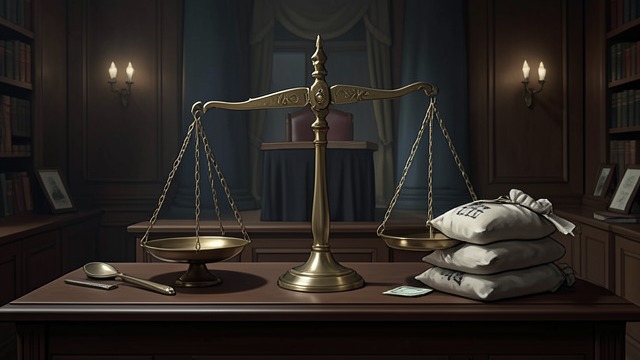
The Constitutional Remedy
Defects assembled
Hamilton adds the absence of a dependable sanction, a judiciary, and adequate revenue to the problems of requisitions and unequal State voting. Together, these weaknesses leave national responsibilities unsupported by reliable means.
Powers matched to duties
The proposed Constitution is defended as a system whose authority must be proportionate to the tasks assigned to it. The diagnosis of failure thus becomes an argument for a more energetic national government.
Federalist No. 15, December 1, 1787
Federalist Nos. 15–16, December 1–4, 1787
Federalist No. 16, December 4, 1787
Federalist Nos. 15–16, December 1–4, 1787
Federalist Nos. 21–23, December 12–18, 1787
