
The Foreign Security Argument
Federalist PapersThis thread tracks how the essays build a case that national unity reduces both the causes of foreign conflict and the temptation of outside powers to exploit division.
increasing Bearing strength in each event
 decreasing
Bearing strength in each eventdecreasingTreaty Credibility
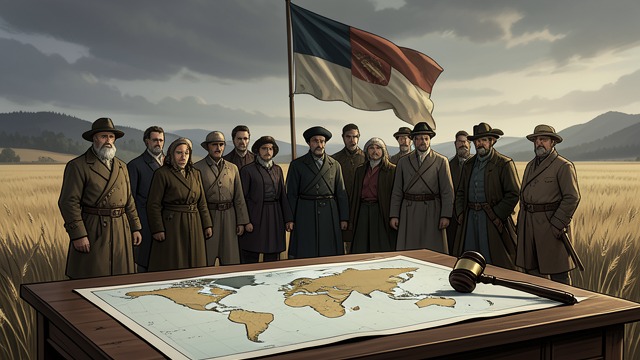
Treaty Credibility
One national voice
Jay argues that one government can interpret treaties and the law of nations consistently. Separate courts and local political pressures could produce conflicting decisions that foreign states would regard as breaches.
The cost of fragmentation
A divided country would make its commitments less credible and increase the risk of conflict. Union is presented as a way to protect both national honor and public safety.
Commerce Creates Rivalries
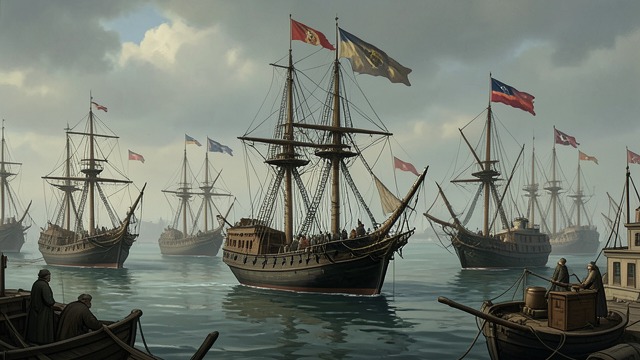
Commerce Creates Rivalries
Competing interests
Jay identifies fisheries, shipping, trade with Asia, and access to waterways as sources of rivalry with foreign powers. Commercial success could provoke restrictions or hostility when other nations see their own interests threatened.
Strength as deterrence
A united government can coordinate resources and defense, making opportunistic aggression less attractive. Division, by contrast, would leave separate governments exposed to pressure and manipulation.
The Foreign Divide
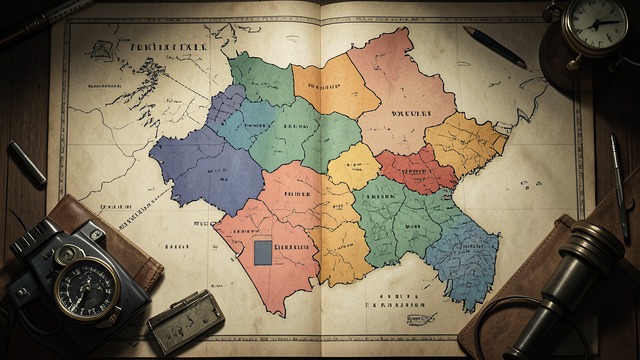
The Foreign Divide
Neighboring rivals
Jay uses the history of divisions among the kingdoms of Britain to warn that separate American confederacies could develop mutual suspicion. Their distinct commercial interests could pull them toward different foreign partners.
Intervention becomes easier
A foreign power might enter as an ally and remain as a master. The essay presents division as a condition in which outside influence can turn neighboring governments against one another.
Neutrality Needs Strength
Neutrality Needs Strength
Commercial leverage
Hamilton argues that a united America could use access to its markets and a future navy to negotiate with maritime powers. Shared policy might allow the country to influence commercial arrangements rather than simply accept them.
Weakness invites seizure
Without adequate power, neutrality would not be respected. Hamilton warns that foreign states could exploit a divided America and reduce its commerce to a passive dependence.
External Pressures Reconsidered
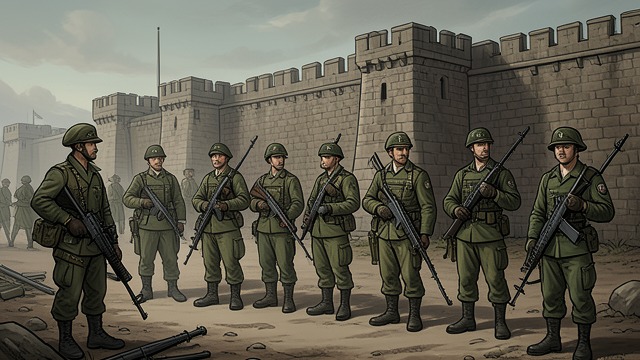
External Pressures Reconsidered
Defenses and preparedness
Hamilton argues that geography does not eliminate danger from neighboring powers or changes in foreign affairs. He defends national authority to prepare forces and protect vulnerable borders before an attack occurs.
Union as protection
Madison later argues that the Union itself reduces the pretext for extensive military establishments. The foreign-security case thus supports both preparedness and the hope that unity will lessen the need for permanent forces.
Federalist No. 3, November 3, 1787
Federalist No. 4, November 7, 1787
Federalist No. 5, November 10, 1787
Federalist No. 11, November 24, 1787
Federalist Nos. 24–25 and 41, December 19, 1787–January 19, 1788
