
Petro’s Art of Making Life
Felix AustriaThis flow traces Petro’s sculptural practice from memorial work to his relationship with Felix and the destruction of his artistic refuge.
increasing Bearing strength in each event
 decreasing
Bearing strength in each eventdecreasingThe Memorial Commission
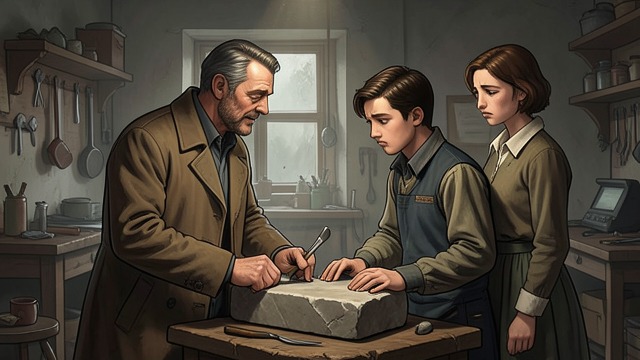
A Sculptor Enters the Household
A meeting through grief
Docteur Anger commissions Petro to carve a memorial for Thérèse. The doctor visits the young sculptor as he works, telling him intimate stories about his dead wife.
Stone as preservation
Petro’s art gives grief a visible form and makes stillness feel almost alive. The commission establishes his ability to hold memory in matter.
A Memorial Made Lifelike
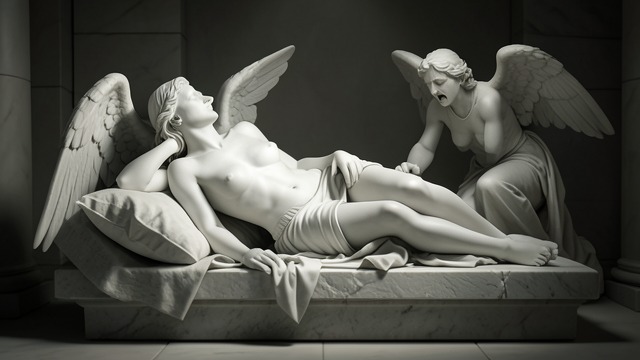
The Figure in the Marble
A body released
Petro gradually shapes Thérèse reclining in a stone bed, attended by an anguished angel. The finished memorial captures peacefulness rather than merely depicting death.
Art’s ambiguous power
Stefania sees that Petro can make a cold material seem to contain life. That power later complicates the appearance of Felix beside a stone angel.
Building a Private World
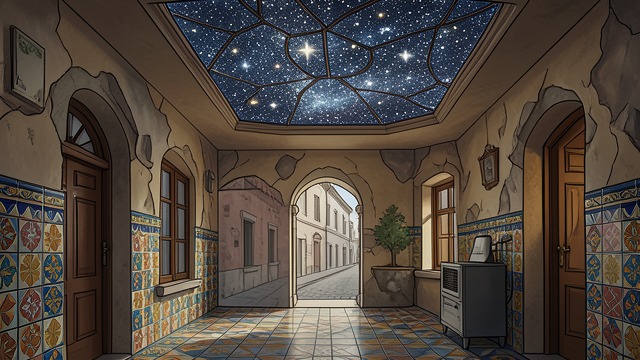
Architecture as Sculpture
The villa takes shape
Petro builds a distinctive house with colored tiles, unusual contours, and a starry glass ceiling. Its form expresses a world unlike the orderly streets around it.
Beauty and neglect
He devotes himself to artistic projects while Stefania handles leaks and daily maintenance. His imaginative achievement depends on labor he rarely notices.
A New Apprentice
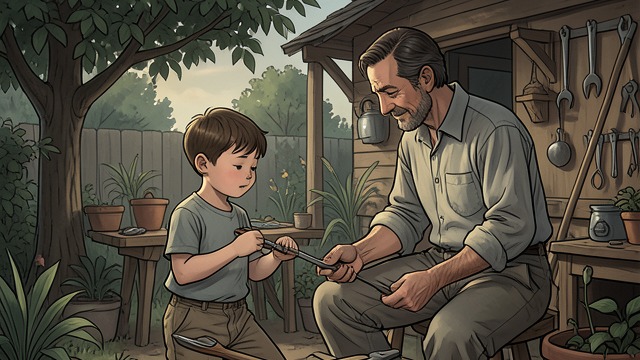
Felix Joins the Work
Shared concentration
Felix begins helping Petro in the garden and workshop, passing tools and clearing debris. Petro’s expression softens, and he accepts the boy’s assistance without demanding speech.
A relationship through making
Felix becomes more present in the household through artistic work. Petro’s craft turns from memorializing the dead toward building a relationship with a living child.
The Artist in the Ruins
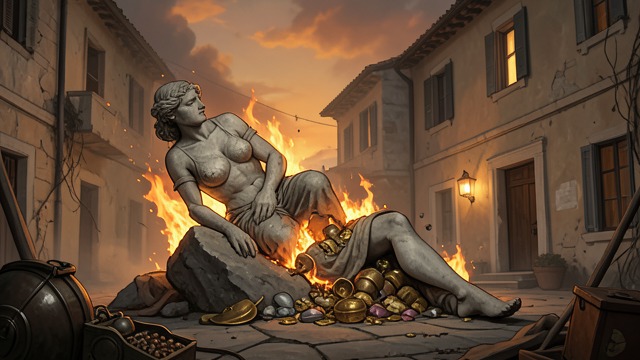
Creation Meets Destruction
A final collapse
Fire destroys Petro’s villa and brings down the stone woman that he made. The falling sculpture exposes the treasures concealed within it.
A world cannot be held still
Petro’s art can preserve forms, but it cannot prevent change or protect the household from catastrophe. The destruction tests the belief that making something beautiful can keep it safe.
Twenty years after Thérèse’s death
During Petro’s early work for Docteur Anger
After Petro marries Adèle
Autumn 1900
Near the novel’s ending
