L’oiseau s’est échappé de sa cage
Felix AustriaThe escaped bird is an image of release at the close of the novel, joining the theft of a hidden watch to Stefania’s recognition that she no longer has to carry its burden. The cage is not merely an ornament on the watch: as the watch disappears, the image turns loss into liberation.
The Watch and Its Hidden History
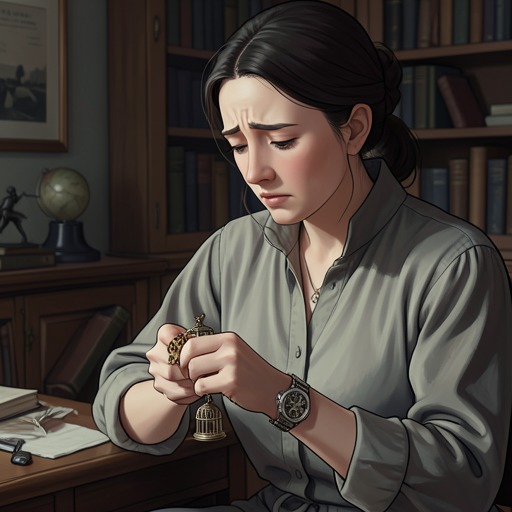
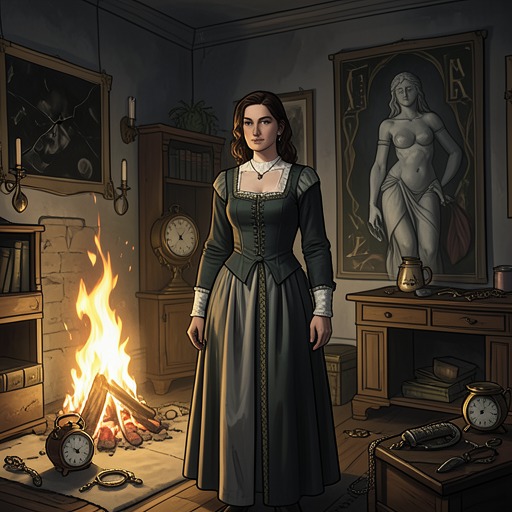
Amid the collapse of the burning building, treasures spill from the stone woman’s jar. Among them, the narrative singles out a Tissot watch, its fine chain curled around the case and a birdcage-shaped charm attached to it. Stefania sees even the scratches on the watch, which resemble the delicate patterns of fingerprints. The close attention to its surface makes the object feel intimate and particular, not just one more item among the scattered valuables.
The watch belonged to Doctor Anger and, in Stefania’s view, should have been buried with him. Instead, she had kept it in a secret pocket close to her heart. Its concealed place and enduring presence give the watch the force of a private attachment, one she has carried without admitting what its continued possession means.
Theft and Recognition
Stefania has not noticed that the “little nimble thief” has stolen the watch. Her failure to register its disappearance is bound up with the illusions in which she has become entangled: she only understands what has happened when the wreckage reveals the object among the treasures. The revelation makes the loss concrete, while also showing that the watch had been taken from her before she consciously recognized its absence.
Her response is not to reclaim it. Instead, she links the missing watch to a sensation of lightness and to the bird that has escaped its cage. The image recasts the theft as an unlooked-for release: what Stefania had kept beside her heart is gone, and with it goes a weight she had continued to bear.
The Image’s Closing Significance
The birdcage charm makes the watch itself carry the image of confinement; its disappearance permits the counter-image of escape. That transformation gives the ending its quiet reversal. A stolen possession is also the means by which Stefania is freed from an attachment she could not bring herself to relinquish.
The scene does not explain the thief’s motives or specify every dimension of the burden Stefania names. Its force lies instead in the movement from close, almost forensic attention to the watch’s scratches, through recognition of its loss, to the simple image of an escaped bird. The image condenses the ending’s change in feeling without pretending that release was planned or chosen.