Rokitansky’s Atlas of Pathological Anatomy
Felix AustriaRokitansky’s Atlas of Pathological Anatomy is first presented as an indispensable instrument of Doctor Anger’s clinical imagination, then reappears after his death covered in Felix’s drawings. Stefania initially sees only a ruined medical book; Petro makes her look again, and the apparent defacement opens onto a detailed map of the city. Its change of use makes the Atlas a material measure of grief and perception: an object preserved as if its former owner might return, and a surface on which another kind of knowledge takes shape.
A working instrument in Doctor Anger’s study
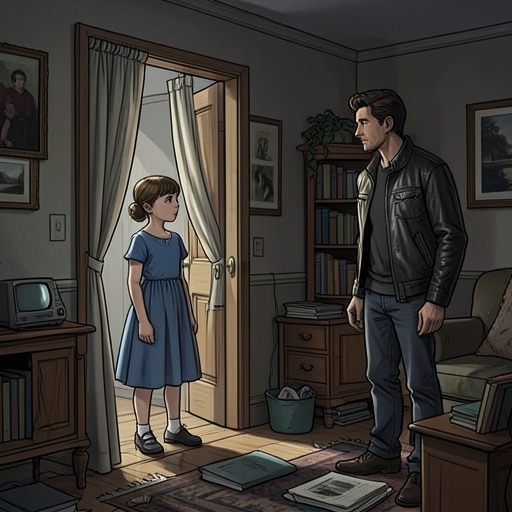
The Atlas belongs to the doctor’s cabinet, which Stefania finds unchanged after his death, as though he might come back from the hospital at any moment and ask for hot tea with rich milk. The room’s preservation gives the book more than practical value. It remains embedded in the routines and expectations of a household still organized around the absent doctor, so that disturbing it can feel like disturbing the fragile continuity of his presence.
The Atlas is identified as the work of Karel Rokitansky, associated in the narration with the study of dyscrasias, or the humours of the human body. When Doctor Anger was working, he needed to be able to see it: the book inspired him and helped him set his ideas in order. It is therefore not simply a reference volume but part of the process by which he thinks. Its illustrations and medical authority make it an ordered visual field, one that supports the doctor’s effort to interpret the body.
Felix’s drawings and Stefania’s anger
While tidying the cabinet, Stefania draws back the curtain in front of the Atlas and discovers that its pages have been covered by a dense web of black lines, tiny notes, and remarks. In her immediate judgment, the book has been disfigured and destroyed: the organs can no longer be studied. What she encounters is not a single accidental mark but an extensive alteration of the object, one that appears to erase the very purpose for which it was kept.
Her anger turns violent. Deeply hurt by what she takes to be Felix’s thoughtlessness, Stefania strikes him several times across the back and head. Felix does not move, and her fury does not subside. She feels herself burning with aggression, unable to find a way out of it, until Petro takes hold of her, leads her into the courtyard, and gives her cold water. The conflict is not only about a damaged book: the untouched cabinet holds the doctor’s past in place, and Felix’s marks have broken into that preserved space.
Petro challenges Stefania’s first reading by asking whether she has looked at what Felix actually drew. The Atlas’s new marks, he points out, depict the whole city: its streets, buildings, shops, warehouses, workshops, parks, and gardens. Stefania has seen the medical volume’s loss; Petro directs her toward the different work carried out on its pages. The shift does not undo the damage, but it changes what the damage means.
An alternative map of Stanislaviv
Felix’s drawing preserves a precise and unusually inclusive record of urban life. It includes the small figure of a beggar in a woman’s dressing gown, habitually seated in Francis Square between the Greek Catholic cathedral and the Catholic presbytery. The detail places an individual who might otherwise pass unnoticed within the same mapped world as commercial buildings and public landmarks.
The map also records the city through its addresses and services. It notes the tailoring workshop of Youzef Jalodko at 1 Kazimierzowska Street and a nearby warehouse selling French and English goods; by the savings bank, the house of Mr Dankevytch contains the city’s main flour warehouse, opposite a bicycle and wheel shop. Near the cemetery at the end of Sapieżyńska Street is Kazimierz Bembnowycz’s workshop, where Petro often works, advertising graves and vaults at prices forty per cent lower than elsewhere. The map’s attention ranges from everyday trade to the businesses that build and furnish the city.
It follows that attention into further neighborhoods and occupations. Near Gauswald’s shop on Sapieżyńska Street is a barber’s establishment selling perfumes and cosmetics. At the Weisshaus house, not far from Kwiatkowski’s shop, one can buy Swiss clocks, gold and silver goods, and even Chinese silver. A piano teacher gives lessons on the second floor of the Weingarten building at 1–3 Third of May Street; Dr Arnold Richter receives patients at 14 Sobieski Street; and a ceramic-stove warehouse stands at 5 Mickiewicz Square. The account also traces the Belvedere Street printing house of Chowaniec, which produces the Kurier Stanisławowski, and, across the street beyond the intersection, Shulem Brettholz’s parquet factory; Market Square holds Dr Beil’s pharmacy and perfumery.
These particulars make Felix’s work more than a generalized picture of streets and buildings. It turns the Atlas into a practical urban directory, holding together addresses, trades, workplaces, and the people who inhabit them. The precision of the notes—down to a workshop’s prices, a doctor’s address, or the newspaper printed on a particular street—contrasts with Stefania’s initial sense that the pages have been reduced to useless marks. What she regarded as illegible damage proves capable of preserving a different system of knowledge.
The object’s altered meaning
The Atlas undergoes a change without ceasing to be the same physical book. In Doctor Anger’s hands and sightline, it supported the study of human anatomy and the ordering of medical thought. In Felix’s, it becomes a surface for recording Stanislaviv. Those uses do not simply reconcile: the city map occupies and obscures the anatomical illustrations, and Stefania’s anger registers the real loss of the book’s former function. Yet Petro’s intervention makes room for recognition of what has been made, rather than allowing the judgment of destruction to stand as the only possible account.
The episode also gives the object a role in the household’s struggle over how the dead remain present. Doctor Anger’s cabinet has been left intact, and the Atlas is among the things Stefania expects to retain their old purpose. Felix’s drawing breaks that expectation. The book can no longer serve the doctor as it did, but it has not become empty or meaningless: it now holds the inhabited city, including workshops connected to Petro’s work and ordinary places Stefania knows. Its transformation brings the living world into a room preserved for the dead.
In this way, the Atlas makes perception itself part of the conflict. Stefania’s first gaze is fixed on the medical object she recognizes and the loss its altered pages represent. Petro asks her to see the drawing rather than only the defacement; the resulting map rewards that second look with a city rendered through its routes, institutions, businesses, and residents. The book’s significance lies in this unresolved double history: a medical work made unusable for its original purpose, and, through the very marks that damage it, a painstaking record of another world.