
The Buried and the Builders
Finnegans WakeThis flow traces how the book's burial places and monuments turn death into a material problem of civic memory, architectural ambition, and possible return.
increasing Bearing strength in each event
 decreasing
Bearing strength in each eventdecreasingA Grave Is Prepared
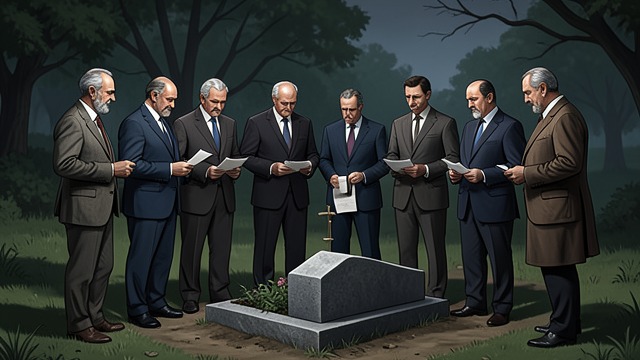
A Grave Is Prepared
Civic bodies arrange a burial
The narrative imagines committees and public institutions arranging a grave for a still-persisting body.
Burial becomes administration
Death is handled through resolutions, contracts, and civic ceremonies, as well as grief.
The Monument Takes Shape
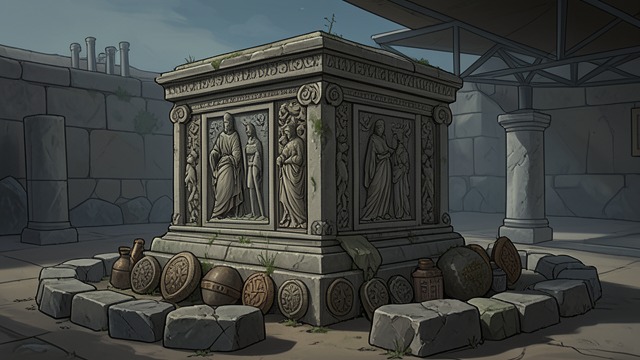
The Monument Takes Shape
Architecture shelters memory
Builders and officials prepare an elaborate resting place with public and private meanings.
The tomb becomes another structure
The burial project echoes Finnegan's building story, turning death into a fresh act of construction.
The Tomb Is Disturbed
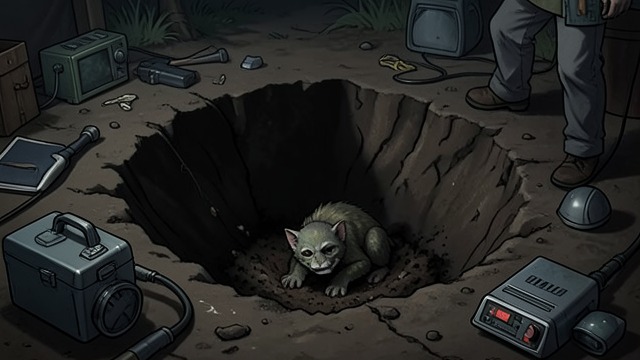
The Tomb Is Disturbed
Earth refuses finality
The burial is described through burrowing, shifting, and subterranean movement.
The dead remain generative
What should seal the past instead allows it to proliferate through the living world.
The Mound Holds Stories
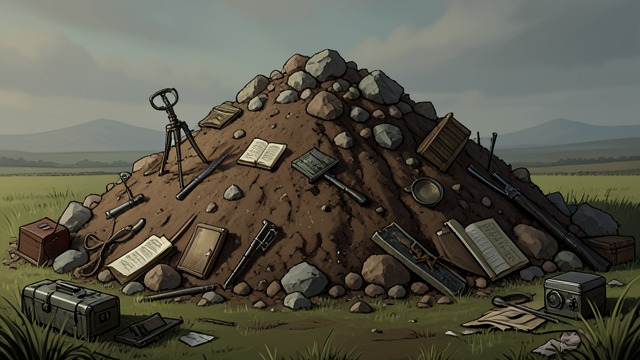
The Mound Holds Stories
Layers accumulate
The mound gathers histories, bodies, and artifacts from different eras.
Memory becomes terrain
The landscape itself functions as an archive, though no single account can claim its whole meaning.
Return Remains Possible
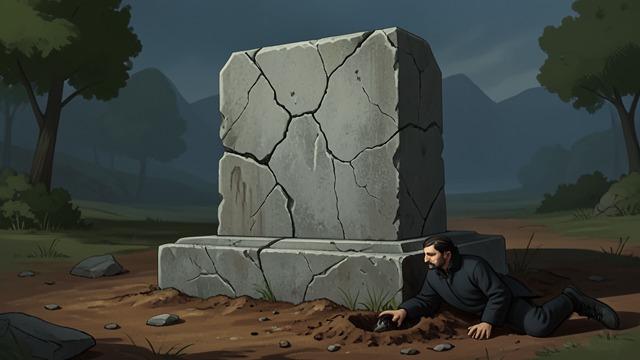
Return Remains Possible
The grave stays porous
Burial never fully separates the dead from the stories told by the living.
A future awakening is imagined
The monument preserves the possibility that the buried figure may rise again.
After the public account of Earwicker's decline
During the construction of the underground tomb
After the body is placed beneath the monument
During the mound and burial reflections
Near the concluding wake imagery
