
The Crossed-Cheque Trial
Finnegans WakeThis flow follows the legal dispute over a crossed cheque from contested payment through confusing testimony to a judgment that cannot resolve the case cleanly.
increasing Bearing strength in each event
 decreasing
Bearing strength in each eventdecreasingThe Cheque Is Disputed

The Cheque Is Disputed
Payment becomes a problem
A crossed cheque and a debt generate disagreement about whether payment was valid.
Commercial fact meets interpretation
The written instrument appears concrete, yet its status depends on competing legal readings.
The Partners Divide
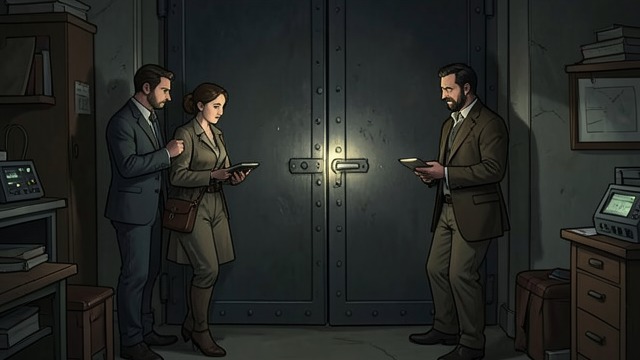
The Partners Divide
Authority is contested
The firm's partners, bank, and creditors disagree about who could issue or accept the payment.
Responsibility disperses
Each party claims a limited role, making the transaction harder to assign to one accountable actor.
Witnesses Confound the Record
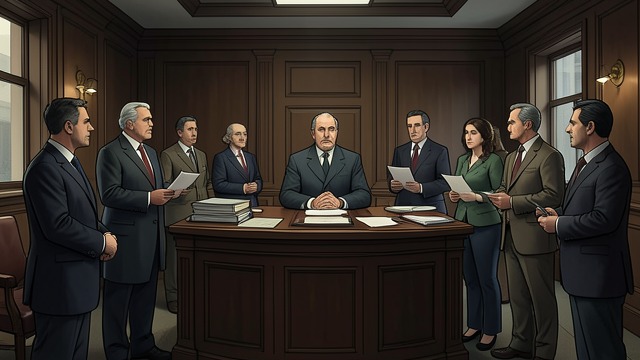
Witnesses Confound the Record
Testimony multiplies
Witnesses provide incompatible accounts of the cheque, the agreement, and its circulation.
The court inherits uncertainty
The legal proceeding becomes another performance of competing stories.
The Jury Disagrees
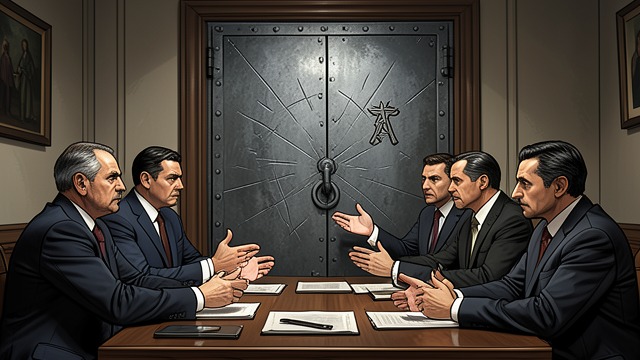
The Jury Disagrees
No consensus emerges
The jurors cannot settle the dispute, despite the apparent documentary evidence.
Procedure fails to close the case
The formal trial reproduces the instability it was meant to resolve.
Judgment Leaves a Remainder
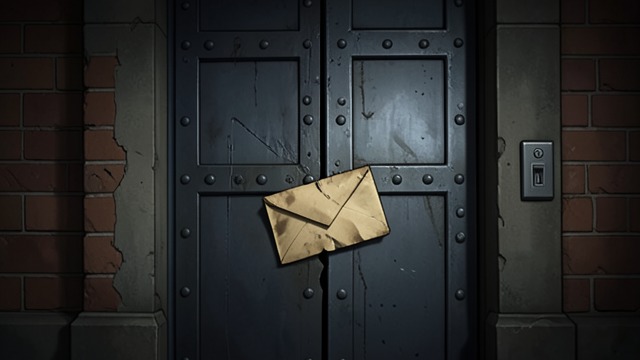
Judgment Leaves a Remainder
The ruling shifts responsibility
The judge and parties issue decisions that do not erase the unresolved financial and factual questions.
The document keeps circulating
The cheque survives as a symbol of money, debt, and uncertain ownership.
At the opening of the crossed-cheque case
During the account of the firm's dealings
During testimony at the hearing
At the jury's deliberation
At the end of the trial episode
