
The Dreamer and the Sleeping House
Finnegans WakeThis flow follows the book's central movement from an apparent waking world into a dreamlike household where identity, memory, and setting continually shift.
increasing Bearing strength in each event
 decreasing
Bearing strength in each eventdecreasingA Wake Opens Like Sleep
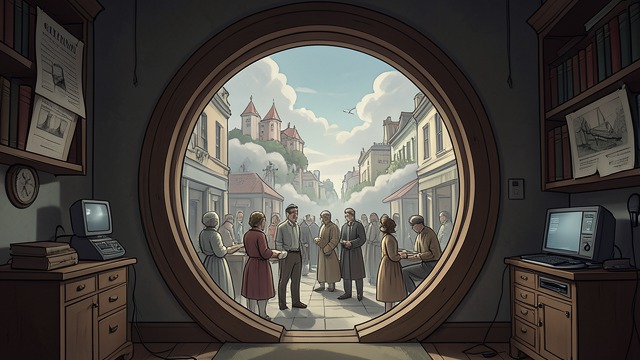
A Wake Opens Like Sleep
A circular entrance
The first sentence returns toward its own beginning, immediately loosening the boundary between ending and opening.
The world as a half-dream
People, places, and histories emerge as associations rather than as a stable, waking chronology.
The Museum Becomes a Scene
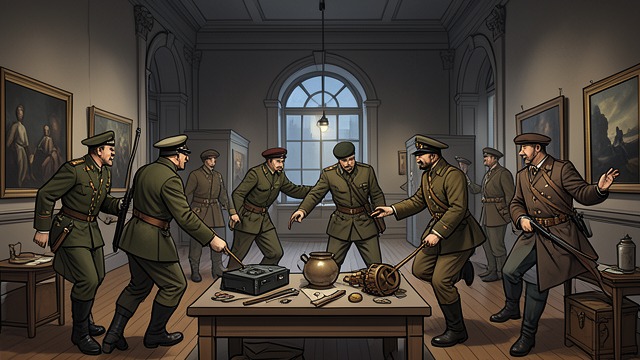
The Museum Becomes a Scene
Objects start performing
The visitors encounter a comic museum in which military images behave like stage properties and living actors.
History as dream material
The episode turns public history into a shifting spectacle rather than a detached record.
The Household Splits into Roles
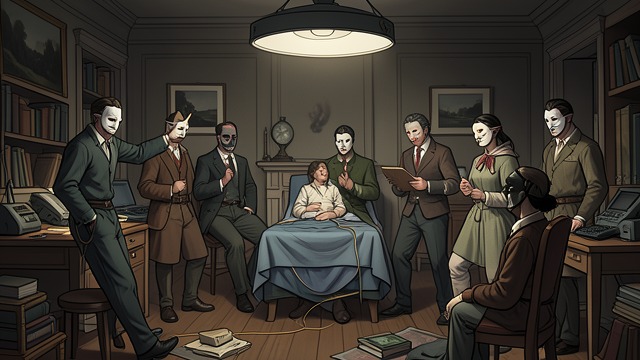
The Household Splits into Roles
A family becomes a cast
The playhouse presents familiar figures through assigned roles, masks, and repeated dramatic patterns.
Identity becomes provisional
The dream does not simply describe the family; it continually recasts its members as performers and audience.
Yawn Dreams Under Interrogation
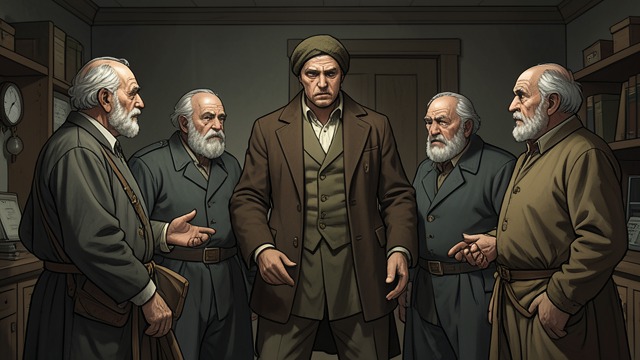
Yawn Dreams Under Interrogation
A sleeping body on trial
Four old men find a figure who may be Yawn, Finnegan, or another version of the central giant.
Questions deepen uncertainty
The interrogation makes waking knowledge less secure, since each answer opens another possible identity.
A Waking That Does Not Close
A Waking That Does Not Close
Sleep persists in language
Even as characters seem to move or speak, the narrative retains the logic of dream and repetition.
The reader remains inside
The conclusion offers no firm waking boundary; its returning patterns keep the imagined world open.
At the opening of the book
During the visit to the Willingdone Museyroom
At the opening of the playhouse episode
During the episode of the sleeping giant
Near the final pages
