Butt
Finnegans WakeButt is a figure in a recurring, unstable conflict with Taff whose appearances turn political and military language into theatrical noise. At first a clerically presented youth speaking in fragments, Butt ends as Taff’s former foe and companion in a handshake; between those moments, he is associated with the book’s mock-legal narratives and their uncertain claims about truth, blame, and proof.
Identity and Introduction
Butt first appears as a “mottledged youth” with a clerical appearance, presented as though he were about to make a motto of a “sorry dejester.” His speech is barely intelligible, but its fragments evoke an attempt at solemn declaration: “But da. But dada, mwilshsuni.” The scene gives him a public, performative identity rather than a stable biography, setting clerical display beside comic verbal breakdown.
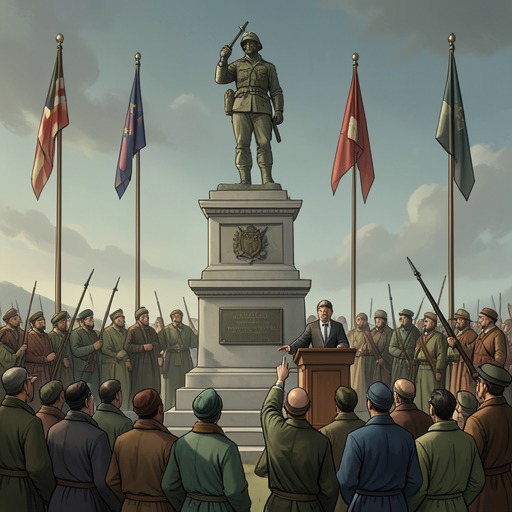
The dramatic framing later places him among “Citizen soldiers,” where he and Taff speak as figures caught in an imagined military upheaval. Butt’s words make the sea “a pool,” a brief reversal of scale that typifies the scene’s collapse of ordinary categories. He is less a consistently individualized personality than a role repeatedly refashioned by the book’s collisions of politics, war, religion, and sound.
Conflict with Taff
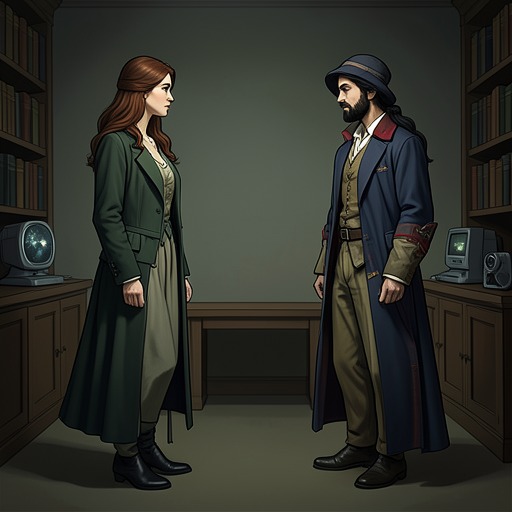
Butt and Taff are presented as opponents in a prolonged verbal and theatrical contest. In one exchange, Butt speaks of a grand figure burdened by historical and religious imagery, while Taff joins in with a song of sorrow and martial invective. Their voices accumulate allusions and invented compounds rather than clarifying a dispute, making the struggle itself a contest over who can command the language of public authority.
The conflict does not resolve through a clear victory. Its final staged turn describes Butt and Taff as “now one and the same person”: their fight has been “baffled and tottered,” and their former opposition gives way to a shared gesture. They shake hands and pledge fellowship, palms exchanging what the passage calls commodity tokens. The movement from feud to comradeship is deliberately unstable: the pair remain figures of difference even as the text momentarily makes them one.
Connection to Accusation and Evidence
Elsewhere, Butt’s name surfaces amid a mock-legal account of political pursuits and alleged danger. A speaker describes walking along Wellington Park road and approaching a public seat near a bridge “by Butt’s,” while also referring to mistaken ambush and a would-be assailant. These passing references place the name within a landscape where ordinary movement, public liberties, and possible violence are tangled together; they do not establish Butt as the agent of the described events.
The wider surrounding narrative repeatedly makes accusation difficult to separate from invention. One account questions whether outrages against a steadfast figure were planned or carried out at all; another presents the prosecution of Festy King through an indictment and theatrical testimony. A separate inquiry reconstructs identities from an unpunctuated document and puncture marks interpreted as words. Butt’s scattered appearances belong to this atmosphere of uncertain testimony, but the text does not make him the solution to any of these cases.
Narrative Role and Significance
Butt’s clearest development is structural: he begins as a distinct voice in a public spectacle and ends in a tableau where opposition turns into fellowship. That reversal compresses the book’s recurring tendency to make conflict reversible and identity permeable. His bond with Taff is not explained through personal history or motive; instead, it is enacted through competing speech, shared performance, and the final handshake.
The name also recurs in passing across very different registers, from a place marker in a legal-political account to the staged military exchange and the reconciliation scene. These shifts resist a single continuous portrait. Butt matters chiefly as one pole in a changing pair: the text first separates him from Taff through rivalry, then briefly joins them, leaving their unity as another transformation within the book’s unsettled world of public roles and unstable meanings.